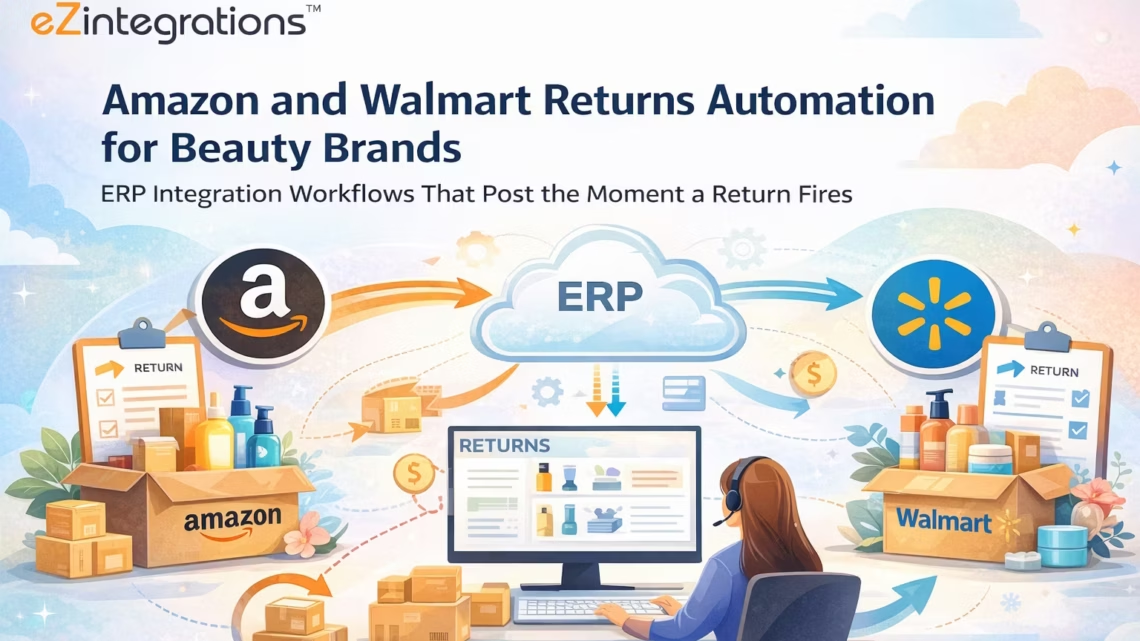
Amazon and Walmart Returns Automation for Beauty Brands: ERP Integration Workflows That Post the Moment a Return Fires
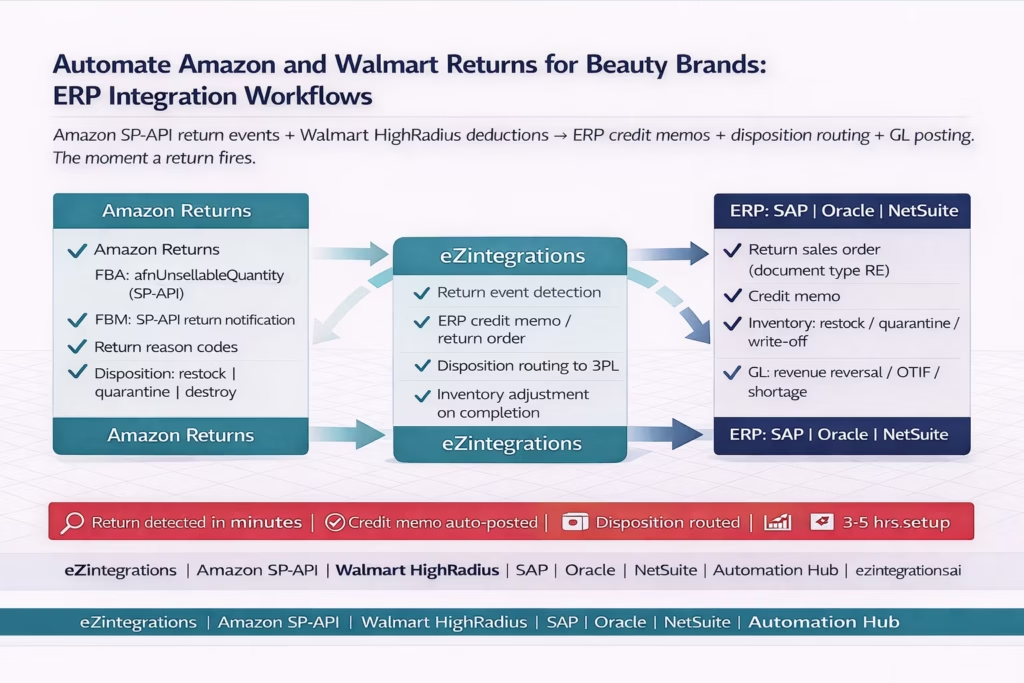
April 15, 2026To automate Amazon and Walmart returns for a beauty brand in SAP, Oracle, or NetSuite, eZintegrations monitors Amazon SP-API for return events (GET /orders/v0/orders with IsReplacementOrder flag and the FBA returns report), monitors Walmart HighRadius for return deductions and the Retail Link returns feed, and on each return event automatically: creates a return sales order or credit memo in the ERP, routes the return to the correct 3PL with disposition instructions (restock, quarantine, or destroy based on return reason and product shelf life), posts the inventory adjustment when the 3PL completes disposition, and posts the Walmart deduction to the correct GL account (OTIF, shortage, or return). For Amazon FBA returns, the afnUnsellableQuantity field in the FBA inventory summaries tracks units at Amazon FCs that have been returned and quarantined, and eZintegrations posts these to the ERP without requiring a physical return to your 3PL.
TL;DR
- Beauty brand returns are more complex than standard merchandise returns: expiry dates matter, damaged packaging makes units unsaleable, some ingredients are hazmat (cannot be restocked or donated), and a recalled lot must be traceable by order number.
- Amazon returns: two types. FBA returns (Amazon handles physically, you see them in
afnUnsellableQuantityvia SP-API FBA inventory summaries). FBM returns (customer ships back to your 3PL, you receive a return notification via SP-API). - Walmart returns: two types. Retail store returns (Walmart deducts from settlement, unit may come back via reverse logistics). Shortage claims (Walmart claims non-receipt, deducts from invoice, you need to dispute or absorb).
- The ERP actions required for every return: credit memo or return sales order, inventory adjustment (restock, quarantine, or write-off), and GL posting (revenue reversal or expense debit).
- Three return disposition outcomes for beauty brands: restock (unit is resaleable, goes back to available inventory), quarantine (unit needs QA inspection before decision), destroy (unit cannot be resold: expired, contaminated, or hazmat).
- eZintegrations automates the full return cycle for both Amazon and Walmart: detection, ERP credit memo, disposition routing to 3PL, inventory adjustment on disposition completion, and GL posting for deductions.
- Level 1 (iPaaS Workflows) handles SP-API polling, HighRadius parsing, ERP API calls, and 3PL routing. Level 2 (AI Workflows) runs shortage dispute logic and expiry/hazmat checks. Level 3 (AI Agents) monitors recalled lots and suspense accounts. Level 4 (Goldfinch AI) orchestrates the full returns cycle as a Workflow Node, with the Goldfinch AI Chat UI for finance and ops queries on return status and deduction balances.
- Automation Hub templates for Amazon returns + Walmart returns. 3-5 hours per channel to configure.
Why Beauty Brand Returns Are Harder to Automate Than Other Categories
A return sounds simple. Customer sends product back. You refund them. Done.
For a standard merchandise category, that is mostly true. For beauty, it is much more complicated.
Your customer returns a bottle of Rose Gloss to Amazon. Amazon’s FC receives it. But the bottle is half-used (customer opened it, used it several times, decided they do not like the shade). Or the bottle is sealed but the outer packaging is crushed (carrier damage). Or the bottle is sealed and undamaged, but the lot number shows it expires in 45 days. Or the bottle is an aerosol setting spray and Amazon classifies it as hazmat.
In each case, the return must follow a different disposition path:
- Half-used: destroy. Amazon cannot resell it. Your 3PL cannot resell it. Write it off.
- Damaged packaging: quarantine for QA inspection. May be resaleable if inner product is intact.
- Near-expiry (45 days remaining): FBM or off-Amazon clearance. Cannot go back to Amazon FC (90-day minimum). Cannot go to Walmart DC (category minimum). May be eligible for DTC near-expiry sales.
- Hazmat: dispose per hazmat regulations. Do not restock.
For Walmart, the return problem is different. Walmart rarely sends physical product back to you for retail returns (they typically donate, liquidate, or discard at the store level). What Walmart sends you is a deduction on your EFT settlement: a line item that reduces your payment. Your finance team must post this deduction to the correct GL account (revenue reversal for a valid return, dispute account if Walmart’s shortage claim is incorrect) and clear the corresponding AR.
Meanwhile, your ERP shows the original invoice as open. Your inventory does not reflect the unit that was returned to Amazon FC (because no one told the ERP about it). Your GL does not reflect the Walmart deduction (because no one posted it yet). Your finance close is inaccurate until someone manually reconciles all of this.
The return problem is fundamentally an ERP update problem. Every return event from Amazon or Walmart creates a data obligation in the ERP. eZintegrations automates the detection and posting of every return event so the ERP is always current.
Amazon Returns: FBA vs FBM, and What Each Means for Your ERP
Amazon FBA Returns
When a customer returns an Amazon FBA order, Amazon handles the physical return at their FC. The customer ships the product back to Amazon. Amazon inspects it and assigns a condition:
- Sellable (rare for beauty): Amazon relists the unit as “Used – Like New.” For beauty products, Amazon typically does not relist returned units as used.
- Unsellable: Amazon quarantines the unit. It appears in your FBA inventory as
afnUnsellableQuantityin the SP-API response.
For beauty brands, the vast majority of FBA returns become unsellable. Amazon will not relist a returned cosmetic. The unit sits in Amazon’s FC as unsellable inventory.
ERP obligation from an FBA return:
- Revenue reversal: the original sale must be reversed in the ERP. Amazon issues the customer refund directly. Your Amazon settlement shows the refund as a negative amount. The ERP AR balance for that order must be reduced.
- Inventory accounting: the unit that was sold (goods issued from your ERP’s Amazon FC virtual plant) is now back at Amazon FC but unsellable. The ERP Amazon FC plant inventory does not automatically increase: the unit went from “fulfillable” to “unsellable” in SP-API terms, and the ERP must reflect this. If the unit is subsequently removed from Amazon FC (removal order), the inventory either comes back to your 3PL or is disposed.
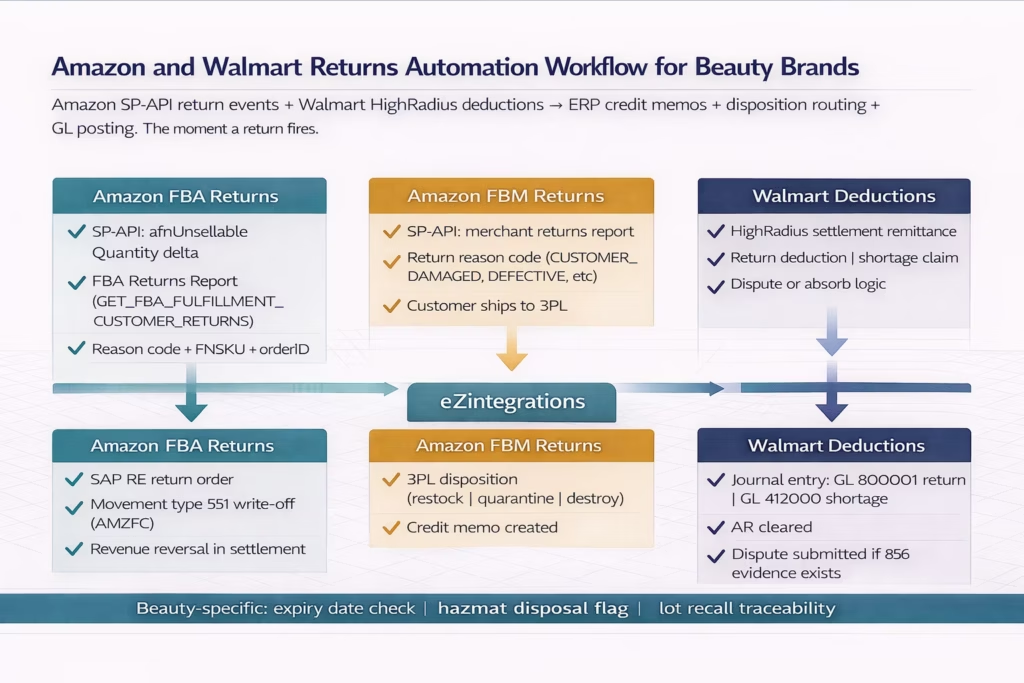
SP-API data for FBA returns: GET /fba/inventory/v1/summaries?details=true returns afnUnsellableQuantity which accumulates as FBA returns arrive. eZintegrations monitors the delta between polling cycles: when afnUnsellableQuantity increases, a return has occurred.
FBA returns also appear in the SP-API FBA Returns report (reportType=GET_FBA_FULFILLMENT_CUSTOMER_RETURNS_DATA). This report provides: return date, order ID, FNSKU, quantity, return reason, and customerReturn status.
Amazon FBM Returns
When a customer returns an Amazon FBM order, the physical return process goes to your 3PL (or your own warehouse). Amazon sends a return notification via SP-API. The customer may initiate a return via Amazon’s return centre (which generates a return label) or via direct communication.
SP-API FBM return data: Amazon Return API: GET /orders/v0/orders/{orderId} with return status, or monitor the Merchant Returns report (reportType=GET_MERCHANT_LISTINGS_DATA). The return includes: order ID, ASIN, return reason code, quantity, and return condition (CUSTOMER_DAMAGED, DEFECTIVE, NOT_AS_DESCRIBED, etc.).
ERP obligation from an FBM return:
- Return sales order: create a return order in the ERP referencing the original sales order.
- Credit memo: generate a credit memo to reverse the revenue (or process a customer refund).
- Disposition routing: when the return physically arrives at your 3PL, the 3PL inspects and assigns disposition. ERP inventory adjustment depends on the outcome.
Walmart Returns: Retail Returns vs Shortage Claims vs Chargeback Deductions
Walmart’s return system is fundamentally different from Amazon. Walmart rarely sends physical product back to you. What Walmart sends you is financial: a deduction on your EFT settlement.
Retail Store Returns
When a consumer returns your beauty product to a Walmart store, Walmart handles the physical product (donate, liquidate, or discard at the store level for most beauty items). Walmart then issues a deduction on your settlement: a charge-back against your invoice for the returned units at the agreed wholesale cost.
For beauty brands, this deduction appears in the HighRadius remittance as a return deduction with a specific reason code. The ERP must post a credit memo reversing the original invoice for the affected units and debit a returns allowance account.
Shortage Claims
A Walmart shortage claim is different from a consumer return. Walmart claims they received fewer units than your invoice stated. For example: your EDI 856 ASN showed 480 units of Rose Gloss shipped, your EDI 810 invoiced 480 units, but Walmart’s receiving claims only 460 units arrived.
The shortage claim is deducted from your settlement. Your options:
- Accept the claim (absorb the 20-unit shortage): post a credit memo for the shortage amount against the original invoice, debit a shortage expense account.
- Dispute the claim (provide evidence of full shipment): your 856 ASN has carton-level SSCC data. If the 856 shows 480 units shipped in 20 cartons × 24 units, and Walmart received 20 cartons, the shortage is likely an internal Walmart receiving error. Submit the 856 evidence to HighRadius for dispute.
OTIF and SQEP Chargebacks
OTIF fines (late or short shipment) and SQEP fines (ASN/packaging accuracy) are not returns but they appear as deductions on the same settlement. These are covered in the Walmart NetSuite integration guide.
The Three Disposition Outcomes for Beauty Product Returns
Every return from Amazon or Walmart must result in one of three ERP inventory outcomes.
Outcome 1: Restock
The returned unit is inspected and deemed resaleable. The unit goes back to available inventory at the 3PL. The ERP inventory increases at the 3PL location.
Criteria for restock (beauty brands):
- Outer and inner packaging intact and undamaged
- Expiry date meets the channel’s minimum (90 days for Amazon FBA, buyer’s minimum for Walmart, 60 days for DTC)
- No seal broken (no evidence of use)
- Lot number is not on recall
ERP action: inventory adjustment (positive) at the 3PL location. The unit becomes available for future fulfilment orders.
Frequency for beauty: low. Most returned beauty products, especially cosmetics and skincare, are not restocked due to the hygiene and seal concerns of the category. Restock rates for beauty returns are typically 10-20% at most.
Outcome 2: Quarantine
The returned unit requires inspection before a restock/destroy decision can be made. The unit is moved to a quality-hold location at the 3PL. It is not available for fulfilment.
Criteria for quarantine:
- Minor packaging damage (outer box dented, but inner product intact and sealed)
- Near-expiry but not below the minimum threshold
- Product from a lot under quality review
ERP action: inventory adjustment to a quality-hold storage location (not available inventory). The unit stays in quarantine until the QA team makes a final restock/destroy decision.
Outcome 3: Destroy
The returned unit cannot be resold and must be disposed of. The ERP inventory decreases by a write-off.
Criteria for destroy:
- Seal broken or evidence of use (opened cosmetics)
- Expired or below minimum shelf life
- Hazmat product (aerosols, nail polish, certain fragrance ingredients) that cannot be donated
- Lot under recall
- Contamination (broken product inside, other product mixed in)
ERP action: inventory write-off (negative inventory adjustment). GL debit to a shrinkage/write-off expense account. For recalled lots: the write-off triggers a product recall report by lot number.
ERP Actions Required for Every Return
Return Sales Order or Credit Memo
SAP: POST /sap/opu/odata/sap/API_SALES_ORDER_SRV/A_SalesOrder with SalesOrderType: "RE" (return order). Reference to the original sales order via ReferenceSDDocument. This creates a SAP return order that can be converted to a credit memo.
Oracle: POST /receivables/creditMemos with reference to the original transaction and line amounts for the returned quantity.
NetSuite: POST /services/rest/record/v1/creditMemo with createdFrom referencing the original invoice internal ID, and line item quantities matching the returned units.
Inventory Adjustment
SAP (restock): API_GOODSMVT_SRV movement type 501 (goods receipt without PO) to the relevant storage location. SAP (quarantine): movement type 322 (transfer to quality inspection stock).
SAP (write-off): movement type 551 (scrapping, with optional batch tracking for lot recall).
NetSuite (restock): POST /inventoryAdjustment with positive adjustQtyBy at the DTC/3PL location.
NetSuite (quarantine): POST /inventoryAdjustment moving to a NetSuite quality-hold location (not available for standard fulfilment).
NetSuite (write-off): POST /inventoryAdjustment with negative adjustQtyBy and write-off account.
GL Posting for Deductions
Amazon FBA return: revenue is reversed in the settlement reconciliation (negative ItemPrice in the settlement report). The ERP journal entry: debit Revenue or a contra-revenue account, credit Accounts Receivable.
Walmart retail return deduction: journal entry per the Walmart settlement GL mapping. Debit Returns Allowance or Revenue, credit AR.
Walmart shortage claim (accepted): debit Shortage Claims expense, credit AR.
Walmart shortage claim (disputed): hold in a suspense account (not debit to expense) until dispute resolved. If Walmart accepts dispute: reverse the suspense. If Walmart rejects: move from suspense to expense.
Amazon FBA Returns: SP-API Data and ERP Posting
Monitoring FBA Unsellable Quantity
eZintegrations polls SP-API FBA inventory summaries every 30-60 minutes. When afnUnsellableQuantity increases from the previous poll, a return event has occurred.
GET https://sellingpartnerapi-na.amazon.com/fba/inventory/v1/summaries
  ?details=true
  &granularityType=Marketplace
  &marketplaceIds=ATVPDKIKX0Der

Authorization: Bearer {lwa_access_token}
Response delta detection:
Previous poll: afnUnsellableQuantity = 4
Current poll:  afnUnsellableQuantity = 6
Delta: +2 units → FBA return event detected
FBA Returns Report for Order-Level Detail
For per-order detail (which orders triggered the return, what return reason):
POST https://sellingpartnerapi-na.amazon.com/reports/2021-06-30/reports
Content-Type: application/json

{
  "reportType": "GET_FBA_FULFILLMENT_CUSTOMER_RETURNS_DATA",
  "marketplaceIds": [
    "ATVPDKIKX0Der"
  ],
  "dataStartTime": "{previous_run_timestamp}"
}
This report provides return date, amazonOrderId, fnsku, sku, quantity, reason (CUSTOMER_RETURN, DEFECTIVE, etc.), and disposition (SELLABLE, UNSELLABLE).
ERP Posting for FBA Returns
For each FBA return detected:
SAP return order:
POST /sap/opu/odata/sap/API_SALES_ORDER_SRV/A_SalesOrder
Content-Type: application/json

{
  "SalesOrderType": "RE",
  "SalesOrganization": "1000",
  "SoldToParty": "AMAZON-US",
  "PurchaseOrderByCustomer": "{amazonOrderId}_RETURN",
  "to_Item": [
    {
      "Material": "{sap_material}",
      "RequestedQuantity": "2",
      "ReferenceSDDocument": "{original_sap_sales_order}",
      "ReferenceSDDocumentItem": "000010"
    }
  ]
}
SAP inventory write-off (for unsellable FBA returns):
POST /API_GOODSMVT_SRV/A_GoodsMovement
Content-Type: application/json

{
  "items": [
    {
      "Material": "{sap_material}",
      "Plant": "AMZFC",
      "Quantity": "2",
      "MovementType": "551",
      "Batch": "{lot_number}"
    }
  ]
}
NetSuite credit memo:
POST /services/rest/record/v1/creditMemo
Content-Type: application/json

{
  "customer": {
    "id": "{amazon_customer_id}"
  },
  "tranDate": "{return_date}",
  "createdFrom": {
    "id": "{original_invoice_id}",
    "type": "invoice"
  },
  "memo": "Amazon FBA Return - Order {amazonOrderId}",
  "item": {
    "items": [
      {
        "item": {
          "id": "{netsuite_item_id}"
        },
        "quantity": 2,
        "rate": "{original_unit_price}"
      }
    ]
  }
}
Amazon FBA Removal Orders
When you decide to remove unsellable FBA units from Amazon FCs (either to your 3PL for disposal or direct disposal by Amazon), a removal order is created via Seller Central or SP-API:
POST https://sellingpartnerapi-na.amazon.com/orders/v0/orders
(FBA removal order type)
When Amazon confirms the removal, the ERP Amazon FC plant inventory decreases (the units leave Amazon’s system). If the units are returned to your 3PL, the 3PL goods receipt posts and the 3PL location increases (for inspection and potential restock/destroy decision).
Amazon FBM Returns: SP-API Notification and 3PL Disposition
Detecting FBM Returns
For FBM orders, the return notification arrives via the Amazon Merchant Returns reporting. eZintegrations monitors the merchant returns report:
POST /reports
Content-Type: application/json

{
  "reportType": "GET_MERCHANT_LISTINGS_DATA"
}
Or for order-level return status:
GET /orders/v0/orders/{orderId}
Authorization: Bearer {lwa_access_token}
The return reason code determines the initial disposition recommendation:
CUSTOMER_DAMAGED: quarantine → likely destroyDEFECTIVE: quarantine → investigate lotNOT_AS_DESCRIBED: quarantine → assess and restock if undamagedFOUND_BETTER_PRICE: likely resaleable if unused and sealed → quarantine → restockUNWANTED_ITEM: likely resaleable → quarantine → restock
FBM Return to 3PL
When the customer ships the return back to your 3PL (using the return label Amazon generated):
- 3PL receives the return, inspects the unit.
- 3PL assigns disposition: restock, quarantine, or destroy.
- 3PL push event fires (REST API or EDI 944 equivalent for returns).
- eZintegrations receives the disposition event.
- ERP inventory adjustment posted based on disposition.
- If restock: unit available for future FBM orders.
- If destroy: write-off posted. If beauty hazmat: hazmat disposal recorded.
Walmart Return Deductions: HighRadius Parsing and GL Posting
The Walmart HighRadius Remittance
Walmart processes settlements via HighRadius (their deduction management system). The settlement remittance (available via HighRadius API or EIPP portal) lists every deduction by type. For returns and shortages:
Return deduction (retail store return):
DeductionType: RETURN_ALLOWANCE
PurchaseOrderNumber: 4500882411
InvoiceNumber: INV-2026-WM-0441
ItemUPC: 847654321001
Quantity: 24
UnitCost: 6.99
Amount: -167.76
Shortage claim:
DeductionType: SHORTAGE
PurchaseOrderNumber: 4500882411
InvoiceNumber: INV-2026-WM-0441
ClaimedShortage: 19
InvoicedQuantity: 360
ReceivedQuantity: 341
Amount: -132.81
Automated GL Posting Logic
For each deduction in the HighRadius remittance, eZintegrations:
-
Matches the deduction to the corresponding ERP invoice using
PurchaseOrderNumbercross-referencingotherRefNum(NetSuite) orPurchaseOrderByCustomer(SAP). -
For return deductions: creates a credit memo or applies a reduction to the original invoice.
-
For shortage claims: checks the EDI 856 ASN record for the corresponding PO. If the 856 carton totals equal the invoiced quantity, the shortage is disputable. If the 856 quantity matches Walmart’s claimed received quantity, the shortage is likely valid.
-
Posts the journal entry:
Return deduction:
POST /services/rest/record/v1/journalEntry
Content-Type: application/json

{
  "lines": [
    {
      "account": {
        "id": "800001"
      },
      "debit": 167.76,
      "memo": "Walmart Return - PO 4500882411 - Rose Gloss 24 units"
    },
    {
      "account": {
        "id": "130000"
      },
      "credit": 167.76,
      "memo": "Clear AR: INV-2026-WM-0441"
    }
  ]
}
Shortage claim (disputed):
{
  "lines": [
    {
      "account": {
        "id": "199000"
      },
      "debit": 132.81,
      "memo": "Shortage Suspense - PO 4500882411 - DISPUTED"
    },
    {
      "account": {
        "id": "130000"
      },
      "credit": 132.81,
      "memo": "Clear AR: INV-2026-WM-0441"
    }
  ]
}
When the dispute resolves:
- Walmart accepts:
debit 199000 (Suspense), credit 412000 (Shortage Recovered)or reverse the suspense. - Walmart rejects:
debit 412000 (Shortage Claims), credit 199000 (Suspense)to move the loss to expense.
Beauty-Specific Return Logic: Expiry, Hazmat, and Lot Traceability
Expiry Date Check on Every Return
Before routing any return to restock, eZintegrations checks the lot expiry date against channel requirements:
IF return_lot.expiryDaysRemaining >= 90 THEN
    eligible_channels = ['Amazon FBA', 'Walmart', 'DTC', 'FBM']

IF return_lot.expiryDaysRemaining >= 60 THEN
    eligible_channels = ['DTC', 'FBM only']

IF return_lot.expiryDaysRemaining < 60 THEN
    disposition = 'DESTROY'
    reason = 'Below minimum shelf life for all channels'
This logic prevents the common error of restocking a return to available inventory only for it to be rejected by Amazon or Walmart at the next shipment for near-expiry.
Hazmat Return Handling
Beauty products classified as hazmat (aerosol sprays, nail polish, certain fragrances, hydrogen peroxide treatments) cannot be donated or resold through most channels if returned. The ERP return record flags hazmat items based on the product’s hazmat classification field (maintained in the item master).
For hazmat returns:
- Disposition is automatically set to DESTROY regardless of condition.
- A hazmat disposal record is created in the ERP with the lot number and quantity for regulatory compliance.
- The write-off is posted to a hazmat disposal expense account (separate from standard shrinkage for regulatory reporting).
Lot Traceability for Product Recalls
If a production lot is recalled, every return from that lot must be identified and their disposition tracked. eZintegrations cross-references the FNSKU (Amazon FBA) or the lot number captured at the 3PL (FBM) against the recall lot list.
For recall-flagged returns:
- All inventory from the recalled lot at your 3PL is quarantined automatically (regardless of condition).
- The ERP recall report lists: lot number, total units affected, units at 3PL (quarantined), units at Amazon FC (unsellable), units in transit, units already shipped and potentially in consumer hands.
- The write-off from recall disposal posts to a product recall expense account.
Before vs After: Manual Returns Processing vs Automated
| Process Step | Manual Returns Processing | Automated with eZintegrations |
|---|---|---|
| Amazon FBA return detection | Manual Seller Central checks or periodic review | SP-API afnUnsellableQuantity delta monitored every 30–60 minutes |
| FBA return order-level detail | Manual report download and order matching | FBA returns report ingested automatically per cycle |
| ERP credit memo creation | Manual return order or credit memo entry | Auto-created from return data with original order reference |
| FBA inventory write-off | Manual ERP posting (e.g., SAP MIGO) | Auto-posted immediately on return detection |
| FBM return notification | Manual portal monitoring | Merchant returns report monitored automatically via SP-API |
| 3PL disposition instruction | Manual email or portal instruction | Auto-routed with predefined disposition logic |
| ERP inventory adjustment after disposition | Manual posting after 3PL confirmation | Auto-posted on 3PL disposition event |
| Expiry date validation | Not consistently performed | Level 2 validation before restock routing |
| Hazmat return handling | Manual verification | Auto-routed to destroy based on item master flag |
| Lot traceability | Manual matching of lot numbers | FNSKU-to-lot mapping applied automatically |
| Walmart return deduction detection | Manual HighRadius portal checks | Remittance parsed automatically on settlement |
| Walmart shortage claim handling | Manual review of shipment vs claim | Level 2 logic compares ASN vs claim and auto-decides dispute or absorb |
| Walmart deduction GL posting | Manual journal entry (2–4 hours per cycle) | Auto-mapped deduction type to GL and posted |
| Accounts receivable clearing | Manual payment application | Auto-cleared after journal posting |
| Walmart suspense account management | Manual tracking via spreadsheets | Auto-managed with movement to expense or reversal on resolution |
Step-by-Step: An Amazon FBA Return and a Walmart Shortage Claim Through the ERP
Two simultaneous return events for Lumière Cosmetics on the same settlement day. Both handled automatically.
Event 1: Amazon FBA Return
6:00 AM: SP-API FBA inventory poll. afnUnsellableQuantity for ASIN B09X4JT2Z1 (Rose Gloss): previous poll 4, current poll 7. Delta: +3 units. Three FBA returns detected.
6:00 AM: FBA returns report requested.
POST /reports
Content-Type: application/json

{
  "reportType": "GET_FBA_FULFILLMENT_CUSTOMER_RETURNS_DATA",
  "dataStartTime": "2026-03-29T00:00:00Z"
}
Report returns:
- Order 113-9284756-1234567: 2 units Rose Gloss, reason CUSTOMER_RETURN, disposition UNSELLABLE
- Order 113-8374651-9876543: 1 unit Rose Gloss, reason DEFECTIVE, disposition UNSELLABLE
6:02 AM: Three simultaneous ERP actions.
Action 1: SAP return orders created. Two SAP return orders (document type RE) created via API_SALES_ORDER_SRV:
- RE-2026-AMZ-0081: referencing original SAP sales order for Order 113-9284756 (2 units)
- RE-2026-AMZ-0082: referencing original SAP sales order for Order 113-8374651 (1 unit)
Action 2: SAP inventory write-off from AMZFC plant.
POST /API_GOODSMVT_SRV/A_GoodsMovement
Content-Type: application/json

{
  "items": [
    {
      "Material": "LGLOSS-04",
      "Plant": "AMZFC",
      "Quantity": "3",
      "MovementType": "551",
      "Batch": "LOT-2025-0882"
    }
  ]
}
SAP AMZFC plant: Rose Gloss decremented by 3 unsellable units. Material document 5100001092 created.
Action 3: Level 4 Goldfinch AI Chat UI notification. Goldfinch AI logs: “3 FBA returns detected for Rose Gloss B09X4JT2Z1: 2 units CUSTOMER_RETURN, 1 unit DEFECTIVE. SAP return orders RE-2026-AMZ-0081 and RE-2026-AMZ-0082 created. AMZFC inventory reduced by 3 units. Defective return flagged for lot quality review: LOT-2025-0882.”
Level 3 checks: is LOT-2025-0882 under any quality hold? No current hold. Standard defective return, no lot-wide action triggered.
Event 2: Walmart Shortage Claim
March 28: Walmart HighRadius settlement arrives. Settlement for Q1 includes PO 4500882411 invoice INV-2026-WM-0441. Deduction line:
DeductionType: SHORTAGE
InvoiceNumber: INV-2026-WM-0441
ClaimedShortage: 19
InvoicedQuantity: 360 (Berry Gloss)
ReceivedQuantity: 341
Amount: -$132.81
March 28: Dispute logic fires. Level 2 queries the EDI 856 record for PO 4500882411: Berry Gloss line shows 341 units shipped (14 cartons × 24 units + 5 units loose), which matches Walmart’s claimed received quantity of 341. This is NOT a Walmart receiving error: Lumière Cosmetics actually shipped 341 units (the 5-unit shortage confirmed in the Kenco EDI 945 back in January). The shortage is VALID.
March 28: Journal entry posted.
POST /services/rest/record/v1/journalEntry
Content-Type: application/json

{
  "lines": [
    {
      "account": {
        "id": "412000"
      },
      "debit": 132.81,
      "memo": "Shortage: PO 4500882411 Berry Gloss 19 units - VALID (matched 856)"
    },
    {
      "account": {
        "id": "130000"
      },
      "credit": 132.81,
      "memo": "Clear AR: INV-2026-WM-0441 partial"
    }
  ]
}
March 28: AR cleared. NetSuite customer payment applied to INV-2026-WM-0441 for the net amount (invoice total minus $132.81 shortage). Invoice status: PAID.
Total ops team involvement for both events: reviewing the DEFECTIVE return flag on LOT-2025-0882 (2 minutes) and approving the shortage acceptance on PO 4500882411 (1 minute). Everything else automated.
Key Outcomes and Results
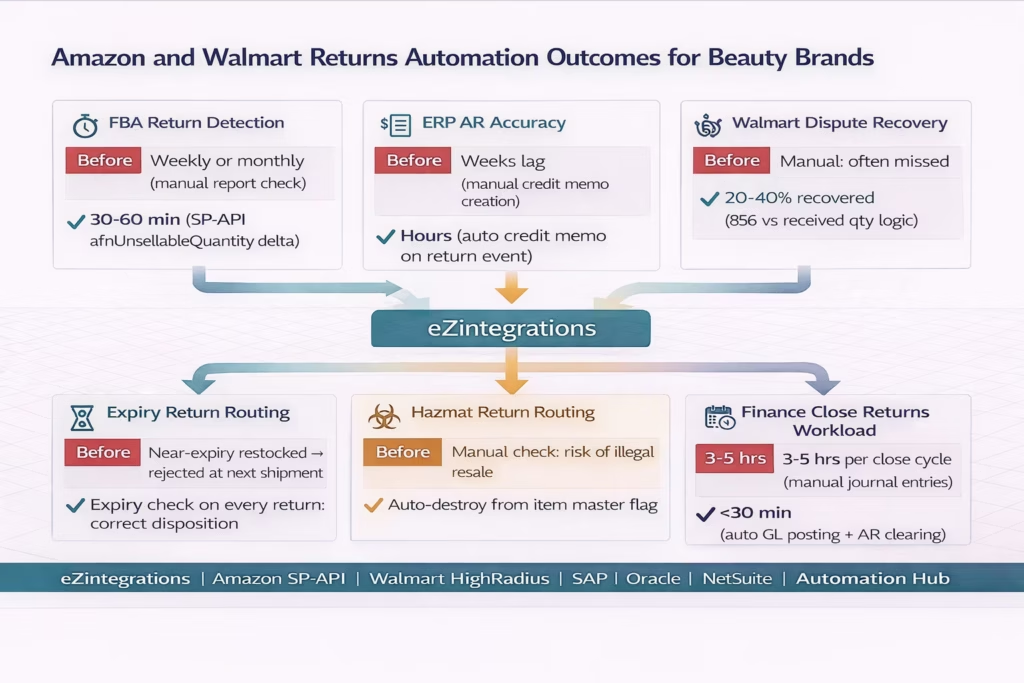
Return detection speed: Amazon FBA returns detected within 30-60 minutes of SP-API polling (versus weekly or monthly in manual processes). FBM return notifications processed within minutes of the SP-API merchant returns report update. Walmart deductions processed on the settlement date (versus 2-4 weeks lag in manual quarterly reconciliation).
ERP accuracy: credit memos and return sales orders created automatically for every return event. The ERP AR balance is accurate within hours of a return, not weeks. For beauty brands running monthly financial closes, accurate AR is critical to close on schedule.
Inventory accuracy: FBA unsellable write-offs post to the SAP AMZFC plant or NetSuite Amazon FC location within 30-60 minutes of detection. FBM restock, quarantine, and destroy adjustments post within hours of 3PL disposition confirmation. Inventory is not overstated by units that have been returned but not yet written off.
Expiry date return routing: automated expiry check prevents the recurring problem of restocking a near-expiry return to “available” inventory, only for it to fail the minimum shelf life check at the next Amazon FBA or Walmart shipment. Beauty brands estimate this error generates 5-15% of their FBA prep rejection events.
Walmart dispute recovery: automated shortage dispute logic (comparing 856 carton data against Walmart’s claimed received quantity) identifies disputable shortages systematically. Beauty brands report recovering 20-40% of disputed shortage claims when evidence is submitted correctly. Manual processes miss disputable claims because the finance team does not have time to review 856 data for every deduction.
Finance close time: automated credit memos, journal entries, and AR clearing reduce the returns-related close workload from 3-5 hours per close cycle to under 30 minutes of exception review.
How to Get Started
Step 1: Map Your Return Types and Disposition Rules
Before configuring the integration, document your return landscape: which Amazon channels have returns (FBA, FBM, or both), your Walmart deduction history (return allowances vs shortage claims vs OTIF), and your disposition rules per beauty category (which product types can be restocked, which always destroy, which go to quarantine first). Confirm your expiry date minimums per channel (Amazon FBA: 90 days, Walmart: buyer-confirmed, DTC: typically 60 days). Identify any hazmat SKUs in your portfolio.
Step 2: Import the Returns Automation Templates
Go to the Automation Hub and import:
- Amazon Returns template: covers FBA
afnUnsellableQuantitydelta detection, FBA returns report ingestion, FBM merchant returns report monitoring, ERP credit memo or return order creation, 3PL disposition routing, inventory adjustment on completion, and expiry/hazmat disposition logic. - Walmart Returns template: covers HighRadius settlement parsing for return deductions and shortage claims, 856 dispute logic, ERP journal entry per deduction type, AR clearing, and suspense account management for disputed claims.
Both templates connect to the same ERP (SAP, Oracle, or NetSuite). Import both if you sell on both channels.
Step 3: Configure ERP Credentials, Return Order Types, and GL Accounts
Add SP-API credentials (LWA Client ID and Secret, Seller ID) and ERP credentials (SAP BTP, Oracle OAuth, NetSuite TBA). Configure the ERP return order document type (SAP RE, Oracle credit memo type, NetSuite creditMemo record). Map ASIN to SAP Material or NetSuite item for return order creation. Configure disposition GL accounts: write-off/shrinkage account, shortage claims account, dispute suspense account, hazmat disposal account. For Walmart: add HighRadius API or SFTP credentials and configure the deduction type to GL account mapping.
Step 4: Test with Low-Volume Return Events
Run the Amazon FBA returns detection against your historical FBA inventory data to confirm afnUnsellableQuantity delta detection works correctly. Create a test FBM return in the Amazon sandbox. Submit a test Walmart remittance file with a sample return deduction and shortage claim. Validate: credit memos are created correctly, GL accounts are debited/credited correctly, inventory adjustments match the disposition outcome, and the dispute logic fires on a shortage where 856 data confirms full shipment. Allow 2-3 business days for test validation.
Total configuration time: 3-5 hours per return channel (Amazon or Walmart) from template import to live automated returns processing.
FAQs
eZintegrations automates returns across Amazon FBA FBM and Walmart workflows. For Amazon FBA returns the system monitors afnUnsellableQuantity and ingests returns reports to create ERP credit memos and inventory write offs. For Amazon FBM returns merchant return reports trigger ERP return records and route disposition instructions to the 3PL with inventory adjustments posted on completion. For Walmart HighRadius settlements are parsed and return deductions automatically generate credit memos journal entries or dispute actions based on shipment and ASN data. All return transactions are posted to ERP systems without manual processing.
Setup typically takes three to five hours per return channel from template import to production. This includes API credential setup ERP return configuration item mapping disposition rule configuration and validation testing. End to end testing usually takes two to three business days depending on settlement cycles and return data availability.
Yes, the platform supports Amazon FBA returns via inventory and returns reports Amazon FBM returns via merchant return reports and Walmart retail return deductions via HighRadius settlement data. All return types are processed through the same workflow and posted to ERP systems such as SAP Oracle or NetSuite with appropriate financial and inventory records.
The system applies expiry and hazmat logic before any restock decision. Returned items are checked against channel minimum shelf life requirements and if they do not meet thresholds they are automatically routed to destroy. Hazmat flagged products override all rules and are sent directly to compliant disposal with audit records created. Lot numbers are also validated against recall lists and recalled inventory is quarantined automatically.
When a shortage claim is received the system compares Walmart claim data with the EDI 856 ASN shipment record. If shipment data confirms full delivery the claim is flagged for dispute and posted to a suspense account while evidence is submitted. If accepted by Walmart the amount is reversed back to accounts receivable. If rejected the amount is moved to shortage expense. If shipment data confirms the shortage the claim is accepted immediately and posted directly to expense. 1. How does Amazon and Walmart returns automation work for beauty brands using eZintegrations
2. How long does it take to set up returns automation for Amazon and Walmart
3. Does eZintegrations support both Amazon FBA FBM returns and Walmart deductions
4. How does the integration handle expiry dates and hazmat return logic for beauty products
5. What happens when a Walmart shortage claim is disputed versus accepted
Returns Are a Data Problem. Your ERP Is the Solution.
Every Amazon return and every Walmart deduction creates a data obligation in your ERP: a credit memo, an inventory adjustment, a GL entry. These obligations do not disappear if you ignore them. They accumulate. They distort your AR balance, your inventory valuation, your COGS, and your financial close.
The only scalable answer is to automate the detection and posting of every return event the moment it fires. Amazon FBA returns detected within 30-60 minutes. Walmart deductions posted on settlement date. Credit memos created without human intervention. Inventory adjusted based on disposition with expiry and hazmat logic applied automatically.
eZintegrations handles the complete return cycle for both channels, for all three ERPs, with beauty-specific logic built in.
Import the Amazon and Walmart Returns Automation Templates from the Automation Hub. Or book a free demo with your Amazon Seller ID, Walmart Supplier ID, and ERP type. We will walk through your return volume, your disposition rules, and the GL account configuration in the session.
For the forward order flow that precedes returns, see the Amazon Seller Central SAP S/4HANA integration guide and the Walmart NetSuite integration guide.