How to Automate Real Estate Portfolio Management Using Multi-Agent AI Systems
$150.00
| System Name: |
Autonomous Real Estate Portfolio Management |
|---|---|
| Architecture: |
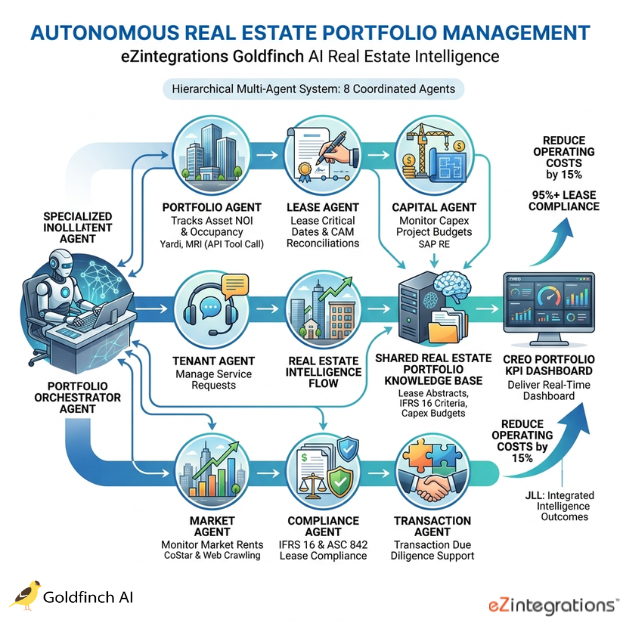
Hierarchical Multi-Agent System – 1 Portfolio Orchestrator (Coordinator) + 7 specialized Worker Agents (Portfolio; Lease; Capital; Tenant; Market; Compliance; Transaction; Analytics) operating through continuous real estate signal processing from Yardi; MRI; CoStar; SAP RE; and Snowflake DW; shared real estate intelligence vector knowledge base; and human-in-the-loop approval gates at lease execution; capital commitment; acquisition/disposition decisions; and compliance finding remediation; 8 total agents |
| Coordinator Agent: |
Portfolio Orchestrator – continuously receives portfolio signal events from all 7 Worker Agents; cross-correlates asset performance intelligence (a Market Agent rent growth signal combined with a Lease Agent renewal upcoming creates an optimal re-leasing strategy opportunity; a Compliance Agent IFRS 16 finding combined with a Lease Agent CAM reconciliation error creates a compound financial reporting risk); decomposes the portfolio goal (maximize NOI; maintain compliance; execute capital plan; retain tenants) into domain-specific sub-tasks per Worker Agent; enforces cross-agent consistency (Market Agent rent benchmarks inform the Lease Agent’s renewal negotiation parameters; Compliance Agent IFRS 16 valuations inform the Analytics Agent’s financial reporting); and routes the monthly portfolio KPI dashboard and material alerts to the Chief Real Estate Officer (CREO) and CFO |
| Extensibility Note: |
Beyond the 9 native Goldfinch AI tools; users can add custom tools self-service – including Argus Enterprise https://www.argus.com/ valuation model connectors; building management system APIs for energy and ESG performance monitoring; property insurance management connectors; legal contract management platform connectors (Ironclad); and real estate investment management platform connectors (Juniper Square; AppFolio Investment Management). |
| On-Premise Supported: |
Yes – eZintegrations connects to on-premises systems (Yardi Voyager on-prem; MRI Software on-prem; SAP RE on-prem; on-premises property management systems) via IPSec Tunnel. eZintegrations is a browser-based; cloud-hosted platform and does not require any on-premises software installation. |
| Tags: |
Goldfinch AI real estate; real estate portfolio AI; IFRS 16 ASC 842 compliance AI; lease administration AI; NOI tracking AI agent; cap planning AI real estate; tenant management AI; Yardi AI agent; MRI Software AI; CoStar market data AI; real estate analytics AI; Goldfinch AI REIT |
| AI Credits Required: |
Yes – Goldfinch AI agentic systems consume credits across the Portfolio Orchestrator and all 7 Worker Agents per portfolio event processed, per document analyzed, per lease computation, and per reflection/retry loop. Document Intelligence is the primary credit consumer due to the document-intensive nature of commercial real estate portfolio management. |
| Worker Agents: |
Capital Agent: Plans and monitors capital expenditure (capex) projects across the portfolio – tracking project budgets, commitments, expenditures, and completion timelines in the ERP (SAP RE or equivalent), identifying budget variance trends, and alerting the Asset Manager when capex projects are over-budget or behind schedule; Tenant Agent: Manages tenant communications and service requests – triaging incoming tenant service requests, routing each request to the appropriate property management function (maintenance, leasing, accounting), tracking resolution status, generating tenant satisfaction metrics, and escalating recurring issues or high-severity requests to the Property Manager, Market Agent: Monitors market rents, vacancy rates, and asset valuation changes for all portfolio markets – crawling CoStar, LoopNet, and local market report publications for market rental rate data, computing the portfolio’s rent-to-market ratio per asset and submarket, and alerting the Lease Agent and Portfolio Agent when market conditions create re-leasing risk or opportunity; Compliance Agent: Tracks IFRS 16 and ASC 842 lease accounting compliance, local regulatory requirements, and portfolio-specific compliance obligations – monitoring lease classification, right-of-use asset and lease liability computations, disclosure requirements, CAM audit rights, and property tax appeal deadlines, and flagging compliance risks to the CFO and Legal Counsel for HITL review, Portfolio Agent: Tracks asset performance, vacancy, and Net Operating Income (NOI) across the portfolio – pulling occupancy, rent roll, operating expense, and NOI data from Yardi or MRI, computing NOI variance vs. budget and prior period, identifying underperforming assets and vacancy risk, and publishing performance alerts to the Portfolio Orchestrator for CREO awareness; Lease Agent: Administers the full lease lifecycle – tracking all lease critical dates (commencement, expiration, renewal options, rent escalation dates, CAM reconciliation periods), computing CAM charges and reconciliations, flagging upcoming lease events 90, 60, and 30 days in advance, drafting renewal option exercises and lease amendment notices from approved templates, and routing all executed document actions to the Lease Manager for HITL sign-off before any tenant communication, Transaction Agent: Supports acquisition and disposition due diligence – assembling lease abstracts, environmental summary, capital history, NOI history, and market rent analysis from the portfolio Knowledge Base and connecting systems for new acquisition underwriting or disposition package preparation, and routing the assembled due diligence package to the CREO and CFO for HITL review before any transaction commitment; Analytics Agent: Maintains the real-time portfolio KPI dashboard – tracking NOI by asset and portfolio, occupancy rate, lease expiration schedule, capex spend vs. budget, tenant retention rate, market rent vs. in-place rent, IFRS 16 right-of-use asset balance, and total portfolio valuation – delivering the monthly CREO and CFO portfolio performance brief |
| Safety Layer: |
Transaction Agent completes a due diligence package for an acquisition or disposition – CREO and CFO review required before any transaction commitment; Portfolio Orchestrator cross-agent confidence falls below 0.75 on any NOI or valuation assessment. Max 3 retries before CREO escalation. All HITL decisions logged with reviewer identity, asset or lease reference, and timestamp for IFRS 16/ASC 842, SOX, and property management audit documentation., Human-in-the-loop gate triggers when: Lease Agent drafts any lease renewal, amendment, or new lease communication – Lease Manager and Legal Counsel review required before any document is sent to or executed with a tenant; Capital Agent identifies a capex project budget overrun above the configured threshold (default: 10% over approved budget) – Asset Manager and CFO approval required before additional spend is committed; Compliance Agent identifies an IFRS 16 or ASC 842 classification error or a material compliance breach – CFO and external auditor review required before any corrected financial statement is published; |
| Goldfinch AI Native Tools Used: |
API Tool Call: All 7 Worker Agents use API Tool Call – Portfolio Agent (Yardi Voyager https://www.yardi.com/products/yardi-voyager/ or MRI Software https://mrisoftware.com/ NOI and occupancy data API, SAP RE https://help.sap.com/docs/SAP_S4HANA_ON-PREMISE real estate module for financial data), Lease Agent (Yardi or MRI lease administration API for critical date extraction and CAM computation, SAP RE lease posting API), Capital Agent (SAP RE or Yardi capex tracking API for project budgets and expenditures), Tenant Agent (property management platform service request API, tenant communication system), Market Agent (CoStar https://www.costar.com/ market data API, commercial real estate market data feeds), Compliance Agent (IFRS 16 computation engine API, SAP RE accounting data), Transaction Agent (Yardi or MRI property financial history API, CoStar comparable transaction data), Analytics Agent (Snowflake DW https://docs.snowflake.com/ portfolio KPI aggregation, Yardi or MRI reporting API), Data Analysis: Portfolio Agent computes NOI variance and occupancy trend per asset and portfolio; Lease Agent computes CAM reconciliation amounts and lease escalation schedules; Capital Agent computes capex budget variance and project completion timeline risk; Market Agent computes rent-to-market ratio per asset and renewal rate recommendation; Compliance Agent computes IFRS 16 right-of-use asset and lease liability balances per lease; Transaction Agent computes property underwriting metrics (cap rate, NOI yield, price-per-square-foot vs. comparable sales); Analytics Agent computes portfolio-level KPIs; Portfolio Orchestrator computes cross-agent portfolio health score, Data Analytics with Charts/Graphs/Dashboards: Analytics Agent generates the real-time portfolio KPI dashboard (NOI by asset and portfolio vs. budget, occupancy rate trend, lease expiration schedule heat map, capex spend vs. approved budget, market rent vs. in-place rent, IFRS 16 right-of-use asset balance, total portfolio valuation); Market Agent generates the market rent comparison chart (in-place rent vs. market rent per asset and submarket); Compliance Agent generates the IFRS 16/ASC 842 lease liability schedule and right-of-use asset roll-forward; Portfolio Orchestrator generates the CREO monthly portfolio performance brief dashboard, Document Intelligence: The primary tool across the Lease, Compliance, and Transaction Agents – extracting structured data from lease agreements, lease amendments, CAM reconciliation statements, estoppel certificates, SNDA agreements, environmental phase reports, property condition reports, title reports, and prior due diligence packages; each agent receives only the document set relevant to its domain task, with structured data extracted for analysis and action, Integration Workflow as Tool: Portfolio Orchestrator and Worker Agents call pre-built real estate sub-workflows – Lease Agent (Yardi/MRI lease critical date alert and CAM reconciliation computation sub-workflow, lease renewal notice draft assembly sub-workflow), Capital Agent (SAP RE capex budget variance alert and project status update sub-workflow), Compliance Agent (IFRS 16 right-of-use asset and lease liability computation sub-workflow, SAP RE accounting entry creation sub-workflow), Analytics Agent (Snowflake DW portfolio KPI write and CREO digest delivery sub-workflow), Knowledge Base Vector Search: All 8 agents share a persistent real estate portfolio knowledge base containing: all lease abstracts and critical date schedules for the full portfolio, IFRS 16 and ASC 842 lease classification criteria and computation methodology, property-level NOI budgets and historical actuals, market rent benchmarks by submarket and asset class, capex project plans and approved budgets, tenant communication templates and escalation protocols, transaction underwriting models and comparable sale data, portfolio investment strategy parameters and return threshold criteria – each agent retrieves context relevant to its current asset, lease, or market domain task, Watcher Tools: Portfolio Orchestrator monitors Yardi/MRI lease administration for critical date events (lease expiry within 90 days, rent escalation due, CAM reconciliation deadline), SAP RE for capex budget events, CoStar for market vacancy rate threshold breaches, and Snowflake DW for NOI variance threshold breaches – triggering the appropriate Worker Agent within 24 hours of each portfolio signal event, Web Crawling: Market Agent crawls CoStar market reports, LoopNet https://www.loopnet.com/ comparable lease listings, local commercial real estate brokerage market publications, CBRE https://www.cbre.com/insights/books/us-cap-rate-survey, JLL https://www.jll.com/en/trends-and-insights/research, and Cushman and Wakefield https://www.cushmanwakefield.com/en/research-and-insight market research for market rental rates, vacancy rates, and cap rate trends per submarket and asset class; Compliance Agent crawls local property tax assessment authority websites and regulatory publication databases for new compliance requirements applicable to the portfolio’s geographies |
Table of Contents
| Planning: |
The Portfolio Orchestrator uses portfolio-calendar-driven goal decomposition – at the start of each reporting period; the Orchestrator decomposes the portfolio management goal (maximize NOI; execute lease renewals ahead of expiry; complete capex plan on budget; maintain IFRS 16/ASC 842 compliance; monitor market positioning) into domain-specific sub-tasks per Worker Agent. Continuous monitoring runs in parallel for real-time NOI variance; lease critical date proximity; capex budget variance; and market rent drift. Schema-driven rules govern lease critical date alert windows (90/60/30-day advance triggers); IFRS 16 recomputation triggers (new lease; modification; or remeasurement event); and capex budget variance thresholds; LLM reasoning governs market rent opportunity narrative; tenant retention strategy; due diligence package narrative; and CREO executive portfolio brief synthesis. |
|---|---|
| Messaging: |
All 8 agents communicate via structured portfolio event messages – the Lease Agent publishes a structured critical date event (asset ID; tenant name; lease expiry date; renewal option details; current rent; market rent from Market Agent; recommended action) to the Portfolio Orchestrator; which evaluates the renewal strategy against the portfolio’s investment objectives and routes the renewal recommendation with full context to the Lease Manager for HITL decision; the Compliance Agent publishes structured compliance risk events (lease ID; IFRS 16 computation issue; financial reporting impact; remediation action required) to the Portfolio Orchestrator for CFO routing. |
| Reflection: |
The Portfolio Orchestrator applies a reflection cycle when cross-agent findings create compound portfolio risk – when the Market Agent identifies a significant market rent decline in a submarket at the same time the Lease Agent has multiple leases expiring within 12 months in that submarket; the Orchestrator re-evaluates the portfolio’s rent risk exposure; queries the Knowledge Base for comparable market downswing scenarios and retention strategies; retries up to 3 times with expanded market data context; and routes the compound risk narrative to the CREO with a structured retention and re-leasing strategy. The Compliance Agent applies a mandatory reflection cycle before publishing any IFRS 16 lease liability recomputation – re-querying the IFRS 16 standard criteria and prior computation to ensure the remeasurement trigger and discount rate applied are correct before any SAP RE accounting entry is created. |
| Knowledge: |
All 8 agents share a persistent real estate portfolio vector knowledge base containing: lease abstracts and critical date schedules for all portfolio leases; IFRS 16 and ASC 842 lease classification criteria and computation documentation (discount rates; incremental borrowing rates per currency and tenor); property-level NOI budgets and 3-year historical actuals; market rent benchmarks by submarket and asset class (updated from Market Agent Web Crawling weekly); approved capex project plans and budget authorizations; tenant communication templates and escalation protocols; transaction underwriting model parameters and return threshold criteria; comparable sale and lease transaction data; and prior CREO and CFO portfolio performance commentary. Indexed by asset ID; lease ID; submarket; asset class; and compliance standard. |
| Execution: |
The Portfolio Agent pulls NOI and occupancy data from Yardi or MRI via API Tool Call continuously. The Lease Agent monitors critical dates via Watcher Tools and computes CAM reconciliations via Data Analysis. The Capital Agent tracks capex budgets and expenditures via SAP RE API Tool Call. The Tenant Agent manages service requests via the property management platform API. The Market Agent monitors market rents via Web Crawling and CoStar API weekly. The Compliance Agent computes IFRS 16 right-of-use asset and lease liability balances via Data Analysis and creates SAP RE accounting entries via Integration Workflow as Tool. The Transaction Agent assembles due diligence packages via Document Intelligence. The Analytics Agent delivers the monthly CREO portfolio KPI dashboard via Data Analytics on Snowflake DW. |
| Business Impact: |
CBRE Global Real Estate Markets research: corporate real estate portfolios represent 10 to 15% of total operating costs for large enterprises – the largest asset class after human capital. JLL Corporate Real Estate survey: organizations with integrated portfolio intelligence reduce real estate operating costs by 15% and improve lease compliance rates to 95%+. KPMG IFRS 16/ASC 842 research: 40% of organizations that adopted IFRS 16 reported material errors in their initial lease liability computations – the average restatement cost from IFRS 16 errors: $2M to $8M per restatement. The Goldfinch AI real estate intelligence platform converts the historically fragmented; reactive; and document-intensive corporate real estate function into a continuously monitored; compliance-assured; intelligence-driven portfolio operation. |
The Goldfinch AI real estate intelligence platform from eZintegrations deploys 8 coordinated AI agents – a Portfolio Orchestrator plus 7 specialized Worker Agents – to continuously track asset NOI and occupancy from Yardi or MRI, administer lease critical dates and CAM reconciliations, monitor capex project budgets in SAP RE, manage tenant service requests, monitor market rents via CoStar and Web Crawling, maintain IFRS 16 and ASC 842 lease accounting compliance, support transaction due diligence, and deliver the real-time CREO portfolio KPI dashboard — reducing real estate operating costs by 15% and achieving 95%+ lease compliance. eZintegrations is an enterprise automation platform covering iPaaS, AI Workflows, AI Agents, and Goldfinch AI agentic automation.
What Is Goldfinch AI Real Estate Intelligence Automation?
Goldfinch AI real estate intelligence automation is a hierarchical multi-agent system where a Portfolio Orchestrator coordinates 7 domain-specific Worker Agents simultaneously – from portfolio NOI monitoring through lease compliance, capex management, and transaction due diligence – through a shared real estate portfolio Knowledge Base containing lease abstracts, IFRS 16 criteria, market benchmarks, and capex budgets. Unlike Yardi or MRI property management platforms that require real estate teams to manually extract lease critical dates, compute CAM reconciliations, and monitor compliance, the Goldfinch AI real estate system autonomously monitors all critical dates, computes all lease accounting balances, and surfaces compound portfolio risks across domains.
How Does Goldfinch AI Real Estate Intelligence Use 8 Agents Across Yardi, MRI, SAP RE, CoStar, and Snowflake to Reduce Real Estate Operating Costs 15% and Achieve 95% Lease Compliance?
The Portfolio Agent tracks NOI from Yardi or MRI via API Tool Call. The Lease Agent monitors critical dates via Watcher Tools and computes CAM via Data Analysis. The Capital Agent tracks capex in SAP RE. The Tenant Agent manages service requests. The Market Agent monitors rents via CoStar API and Web Crawling. The Compliance Agent computes IFRS 16 and ASC 842 balances via Data Analysis and Document Intelligence. The Transaction Agent assembles due diligence packages via Document Intelligence. The Analytics Agent delivers the CREO dashboard from Snowflake DW via Data Analytics.
Goldfinch AI ships with 9 native out-of-the-box agent tools. Users can add custom tools self-service beyond the 9 native tools. JLL: integrated portfolio intelligence reduces real estate operating costs 15% and achieves 95%+ lease compliance. This Goldfinch AI real estate system delivers those outcomes through continuously coordinated multi-agent portfolio intelligence.
Watch Demo
| Video Title: |
Goldfinch AI Real Estate Intelligence | 8 Agents; NOI Tracking to IFRS 16 Compliance Across Yardi; CoStar; and SAP RE |
|---|---|
| Duration: |
7 to 10 minutes |
Outcome & Benefits
| Autonomy: |
85%+ of portfolio monitoring tasks executed autonomously (NOI variance tracking; lease critical date monitoring and advance notification; CAM reconciliation computation; capex budget variance tracking; market rent monitoring; IFRS 16 right-of-use asset balance computation; tenant service request triage); all lease document execution; compliance remediation actions; capex budget overrun approvals; and transaction commitments require Lease Manager; CFO; or CREO HITL sign-off |
|---|---|
| Time Saved: |
Lease critical date monitoring from manual spreadsheet tracking (miss rate: 15 to 25% of critical dates for large portfolios) to automated 90/60/30-day advance monitoring with zero misses; CAM reconciliation from 4 to 8 weeks of manual lease document review per reconciliation to automated computation within days of period-end; IFRS 16 lease liability computation from quarterly manual calculation by accounting team to continuously maintained balances updated on each lease event; CREO portfolio report from 2 to 3 weeks of manual consolidation to automated monthly generation |
| Cost Reduction: |
15% real estate operating cost reduction (JLL Corporate RE benchmark) from improved lease administration; reduced vacancy from proactive renewal management; and capex budget control; IFRS 16 restatement risk avoidance – the average cost of an IFRS 16 restatement: $2M to $8M (KPMG); property tax appeal deadline tracking – missing a property tax appeal deadline costs an average of $150,000 to $500,000 per missed appeal (BOMA research); early vacancy cost avoidance from 90-day lease expiry proactive monitoring |
| Reliability: |
100% of lease critical dates monitored with 90/60/30-day advance alerts; zero IFRS 16 recomputation triggers missed through Watcher Tools continuous monitoring; capex budget tracked against approved authorization for 100% of active projects; market rent benchmarked vs. in-place rent for 100% of portfolio leases weekly |
Performance Metrics
| KPI | Before (Manual Portfolio Management) | After (Goldfinch AI Real Estate Intelligence) | Impact |
|---|---|---|---|
| Lease Critical Date Miss Rate | 15 to 25% (manual tracking) | 0% (continuous monitoring) | Full coverage |
| CAM Reconciliation Time | 4 to 8 weeks per asset | Days from period-end | 90%+ faster |
| IFRS 16 Compliance Error Rate | 40% initial error rate (KPMG) | Near-zero from continuous computation | Restatement risk eliminated |
| Real Estate Operating Cost | Baseline | 15% reduction (JLL benchmark) | $3M to $30M per portfolio |
| Market Rent Monitoring | Quarterly manual survey | Continuous weekly monitoring | Real-time positioning |
| CREO Portfolio Report | 2 to 3 weeks manual | Automated monthly | Full automation |
Technical Details
| Scheduling: |
Portfolio Orchestrator monitors Yardi/MRI; SAP RE; and Snowflake DW via Watcher Tools continuously – Lease Agent critical date monitoring at 24-hour intervals (immediate trigger when any lease enters the 30-day expiry window); Portfolio Agent NOI monitoring daily (immediate trigger on NOI variance above 10% of budget); Compliance Agent IFRS 16 recomputation trigger monitoring continuously (immediate trigger on any new lease; lease modification; or remeasurement event); Capital Agent capex budget monitoring daily (immediate trigger on budget overrun above threshold); Market Agent Web Crawling weekly for all monitored submarkets; Tenant Agent monitors service request queue continuously; Transaction Agent activates on CREO or CFO acquisition or disposition initiation; Analytics Agent delivers monthly CREO portfolio KPI dashboard and updates the portfolio health score daily. |
|---|---|
| Evaluation Metrics: |
Lease critical date advance warning coverage (% of lease events captured with 90+ days of lead time); CAM reconciliation completion time (days from lease year-end to reconciliation delivery); IFRS 16 computation accuracy (% of right-of-use asset and lease liability balances validated by external auditor without material restatement); NOI variance detection time (hours from Yardi/MRI data update to Portfolio Agent NOI alert); market rent-to-in-place-rent ratio per asset (% of portfolio leases at or below market rent); capex project on-budget rate (% of projects within approved budget at completion); tenant service request resolution time vs. SLA; property tax appeal deadline compliance (% of eligible appeals filed by deadline); Portfolio Orchestrator compound risk identification rate and HITL escalation acceptance rate. |
| Planner Type: |
Portfolio-calendar-driven goal decomposition with continuous event-driven monitoring and LLM-hybrid cross-domain synthesis – the Portfolio Orchestrator uses schema-driven rules for lease critical date alert windows (90/60/30-day advance triggers from Yardi/MRI lease data), IFRS 16 recomputation triggers (new lease, lease modification, remeasurement event, discount rate update), capex budget variance thresholds (default: 10% over approved budget triggers CFO alert), and CAM reconciliation period-end triggers; LLM reasoning governs market rent opportunity narrative, lease renewal strategy recommendation, tenant retention action, transaction due diligence narrative, and CREO executive portfolio brief synthesis. |
| Agent Roles: |
Analytics Agent: API Tool Call (Snowflake DW portfolio KPI aggregation, Yardi or MRI reporting API for portfolio-level metrics), Data Analytics with Charts/Graphs/Dashboards (real-time portfolio KPI dashboard: NOI by asset and portfolio vs. budget, occupancy rate trend, lease expiration schedule heat map, capex spend vs. budget, market rent vs. in-place rent, IFRS 16 right-of-use asset balance, total portfolio valuation), Knowledge Base Vector Search (portfolio KPI benchmarks, prior CREO and CFO performance commentary), Integration Workflow as Tool (Snowflake DW portfolio KPI write and CREO monthly digest delivery sub-workflow), Capital Agent: API Tool Call (SAP RE or Yardi capex tracking API for project budgets, commitments, and expenditures), Data Analysis (capex budget variance: actual vs. approved budget; project completion timeline risk; cost-to-complete projection), Knowledge Base Vector Search (approved capex project plans and budget authorizations per asset), Integration Workflow as Tool (SAP RE capex budget variance alert and project status update sub-workflow); Tenant Agent: API Tool Call (property management platform service request API, tenant communication system, Yardi or MRI tenant billing API), Data Analysis (service request response time, tenant satisfaction scoring, recurring issue pattern identification), Knowledge Base Vector Search (tenant communication templates, escalation protocols, service level agreement requirements per lease), Lease Agent: API Tool Call (Yardi or MRI lease administration API for critical date extraction and CAM data, SAP RE lease posting API), Document Intelligence (lease agreements, lease amendments, CAM reconciliation statements, estoppel certificates for structured data extraction), Data Analysis (CAM reconciliation computation, lease escalation schedule, renewal option valuation), Knowledge Base Vector Search (lease abstracts and critical date schedules, IFRS 16 lease classification criteria, approved renewal negotiation parameters), Integration Workflow as Tool (Yardi/MRI critical date alert and CAM reconciliation computation sub-workflow, lease renewal notice draft assembly sub-workflow after Lease Manager HITL), Market Agent: Web Crawling (CoStar market reports, LoopNet comparable lease listings, CBRE/JLL/Cushman and Wakefield market research publications, local commercial real estate brokerage market reports), API Tool Call (CoStar https://www.costar.com/ market data API for rental rates and vacancy by submarket and asset class), Data Analysis (rent-to-market ratio computation per asset; market rent growth trend; optimal renewal rate recommendation; submarket vacancy trend), Knowledge Base Vector Search (market rent benchmarks by submarket and asset class, comparable lease transaction data), Data Analytics with Charts/Graphs/Dashboards (market rent comparison chart: in-place vs. market rent per asset and submarket), Portfolio Orchestrator (Coordinator): portfolio calendar management, cross-agent compound risk assessment, CREO/CFO escalation routing, portfolio health dashboard assembly; Portfolio Agent: API Tool Call (Yardi Voyager https://www.yardi.com/products/yardi-voyager/ or MRI Software https://mrisoftware.com/ NOI and occupancy data API, SAP RE https://help.sap.com/docs/SAP_S4HANA_ON-PREMISE real estate financial data), Data Analysis (NOI variance computation per; asset and portfolio: actual vs. budget, actual vs. prior period; occupancy rate trend; vacancy risk scoring), Knowledge Base Vector Search (NOI budgets, historical actuals, portfolio performance benchmarks), Transaction Agent: Document Intelligence (lease abstracts, environmental phase reports, property condition reports, title reports, prior due diligence packages for transaction due diligence extraction), API Tool Call (Yardi or MRI property financial history API for NOI history retrieval, CoStar comparable transaction data); Data Analysis (property underwriting metrics: cap rate, NOI yield, price-per-square-foot vs. comparable sales, debt yield, cash-on-cash return), Knowledge Base Vector Search (transaction underwriting model parameters, return threshold criteria, comparable sale data, portfolio investment strategy parameters), Data Analytics with Charts/Graphs/Dashboards (transaction due diligence summary dashboard for CREO and CFO review) |
| Tool Router: |
API Tool Call for Yardi/MRI/SAP RE/CoStar/Snowflake DW reads and writes; Document Intelligence for lease agreements, due diligence documents, and compliance texts; Data Analysis for financial computations and scoring; Knowledge Base for portfolio context, lease terms, and benchmarks; Web Crawling for market intelligence and regulatory monitoring; Data Analytics for portfolio dashboards; Watcher Tools for continuous portfolio event monitoring; Integration Workflow as Tool for Yardi/MRI/SAP RE/Snowflake sub-workflows., The Portfolio Orchestrator routes each portfolio signal event to the appropriate Worker Agent based on event type and asset domain – new lease critical date within 90 days triggers Lease Agent advance notice workflow; NOI variance above threshold triggers Portfolio Agent performance analysis and CREO alert; IFRS 16 recomputation event triggers Compliance Agent balance update and SAP RE entry; capex budget overrun triggers Capital Agent variance alert and CFO escalation; market vacancy rate breach triggers Market Agent submarket analysis and Lease Agent renewal strategy update; tenant service escalation triggers Tenant Agent routing. Each Worker Agent selects its tools: |
| Auditability: |
Every agent action is logged with: agent name, asset ID or lease ID, portfolio event type (NOI variance, critical date alert, IFRS 16 recomputation, capex variance, market rent alert, service request, due diligence assembly), tool invoked, data source (Yardi/MRI record ID, SAP RE document number, CoStar report reference, lease document reference), computation methodology applied (IFRS 16 present value calculation rate, CAM reconciliation methodology, NOI computation formula), recommendation generated, confidence score, HITL status (autonomous monitoring or Lease Manager/CFO/CREO-reviewed), system write confirmation (Yardi/MRI record update, SAP RE accounting entry document number), and timestamp., The Portfolio Orchestrator maintains a per-asset and per-lease audit trail from lease commencement through expiry and disposition. IFRS 16/ASC 842 audit trail: every lease liability recomputation is logged with the triggering event, discount rate applied, computation methodology, and prior balance for external auditor review. SOX compliance: all capex commitment approvals above the configured threshold are logged with the approver identity, amount, and authorization reference. Portfolio Orchestrator audit dashboard is accessible to the CREO, CFO, and external auditors. |
Connectivity and Deployment
| Supported Protocols: |
REST API (Yardi Voyager API; MRI Software REST API; SAP RE OData v2/v4; CoStar API; Snowflake DW JDBC; tenant communication system REST API; property management service request platform API); Web Crawling (CoStar market reports; LoopNet comparable listings; CBRE/JLL/Cushman and Wakefield market research; local commercial real estate brokerage publications; local property tax assessment authority websites; state and local regulatory databases); SMTP (CREO portfolio performance brief; CFO IFRS 16 compliance alerts; Lease Manager critical date advance notices; Asset Manager capex overrun alerts; Tenant service request routing); HTTPS; OAuth 2.0; IPSec Tunnel (on-premises Yardi; MRI; SAP RE; and property management system connectivity) |
|---|---|
| Tenancy Model: |
Single-tenant is strongly recommended for real estate portfolio management deployments. Lease data; NOI financials; capex plans; transaction due diligence; and portfolio valuation constitute highly confidential financial and strategic data subject to IFRS 16/ASC 842 audit requirements; SOX compliance for public companies; and commercial confidentiality. Single-tenant provides dedicated infrastructure with full data segregation; configurable data residency per regulatory jurisdiction; and immutable audit trail protection. Multi-tenant is available for smaller portfolios without strict financial data confidentiality requirements. |
| On-Premise Supported: |
Yes – eZintegrations connects to on-premises systems (Yardi Voyager on-prem; MRI Software on-prem; SAP RE on-prem; on-premises property management systems) via IPSec Tunnel. eZintegrations is a browser-based; cloud-hosted platform and does not require any on-premises software installation. |
| Security & Compliance: |
SOC Type II certified; IFRS 16 and ASC 842-compliant lease accounting audit trail (every right-of-use asset and lease liability computation logged with triggering event, discount rate, methodology, and prior balance for external auditor review — designed to the IAASB audit evidence standards for lease accounting); SOX-compliant capex commitment and approval audit trail (all capex commitments above the configured threshold logged with approver identity and authorization reference for SOX IT general controls); GDPR-compliant tenant data handling (tenant personal data processed under GDPR Article 6 legitimate interest for property management purposes; data minimization applied;, tenant data accessible only to authorized property management staff). RBAC enforced: CREO has full portfolio view; CFO accesses financial performance and compliance data; Asset Managers access their assigned properties; Lease Managers access lease administration data; Compliance team accesses IFRS 16/ASC 842 computation records; external auditors have read-only access to IFRS 16 audit trail and capex approval records. |
AI Credits
| Credit Consumption Model: |
Portfolio-calendar-driven: continuous daily monitoring (Portfolio Agent NOI; Capital Agent capex; Tenant Agent service requests; Compliance Agent IFRS 16 trigger monitoring) with weekly cycles for Market Agent and event-triggered high-credit cycles for Lease Agent critical date events; Compliance Agent IFRS 16 recomputations; and Transaction Agent due diligence packages Estimated Credits per End-to-End Run: Per lease critical date event end-to-end (Lease Agent processing through Lease Manager HITL notice): ~15 to 30 credits per event Per IFRS 16 lease liability recomputation: ~15 to 30 credits per lease Per transaction due diligence package (acquisition or disposition): ~100 to 300 credits per transaction (scales with document volume) Monthly portfolio monitoring cycle (100-lease portfolio; standard event volume): ~600 to 1,200 credits per month Annual total (100-lease portfolio; 2 transactions; standard lease events): ~10,000 to 20,000 credits per year |
|---|---|
| Retry / Reflection Credit Cost: |
Each Portfolio Orchestrator compound risk reflection cycle: ~5 to 8 additional credits per retry. Compliance Agent IFRS 16 mandatory reflection: ~6 to 10 additional credits per recomputation. At 12% complex event rate (events requiring reflection due to borderline lease classification or conflicting market data); add approximately 12 to 18% to the annual credit estimate. |
| Monthly Credit Estimate (at Typical Volume): |
Small portfolio (25 to 50 leases; 1 transaction per year): ~400 to 900 credits per month Mid-market portfolio (100 to 300 leases; 2 to 4 transactions per year): ~1,200 to 3,500 credits per month Large enterprise or REIT portfolio (500 to 2,000 leases; frequent transactions): ~5,000 to 20,000 credits per month |
| Pricing Model: |
Static Platform Fee + AI Credits. Platform fee covers unlimited non-LLM orchestration across all agents (Yardi/MRI connection management; SAP RE connection; CoStar API connection; Snowflake DW writes; lease critical date calendar management; SMTP notification dispatch; audit log writes). AI Credits consumed only by Goldfinch AI tool invocations and LLM reasoning cycles. |
| Credit Optimization Notes: |
Configure Compliance Agent Document Intelligence to process only lease clauses relevant to IFRS 16 classification (variable lease payments; renewal options; purchase options) rather than full lease text analysis – reduces Document Intelligence credits 50 to 70% per lease while maintaining IFRS 16 accuracy. Cache Knowledge Base lease abstract data per property for 30 days (lease terms change only on amendment). Batch Portfolio Agent Yardi/MRI API calls for all assets in a single daily extraction rather than per-asset sequential queries. Configure Market Agent Web Crawling to target only the organization’s active submarkets (not all coverage) – reduces Web Crawling credits 40 to 60%. Apply Transaction Agent Document Intelligence only on confirmed acquisition or disposition initiations; not on preliminary screening (reduces Document Intelligence credits by avoiding analysis of deals that do not progress). |
| AI Credits Required: |
Yes – Goldfinch AI agentic systems consume credits across the Portfolio Orchestrator and all 7 Worker Agents per portfolio event processed, per document analyzed, per lease computation, and per reflection/retry loop. Document Intelligence is the primary credit consumer due to the document-intensive nature of commercial real estate portfolio management. |
| LLM Steps Count: |
12 to 24 LLM-invoking steps per monthly portfolio cycle (Portfolio Orchestrator cross-agent risk assessment: 2 to 4 steps; Lease Agent critical date processing: 2 to 4 steps; Compliance Agent IFRS 16 computation narrative: 2 to 4 steps; Market Agent rent opportunity narrative: 2 to 3 steps; Transaction Agent due diligence narrative: 3 to 6 steps; Analytics Agent portfolio brief synthesis: 2 to 3 steps; reflection/retry: 1 to 2 steps per retry) |
| Per-Agent Credit Breakdown: |
Market Agent: 4 to 8 credits per weekly market monitoring cycle (Web Crawling + CoStar API + rent-to-market Data Analysis + Data Analytics market chart); Compliance Agent: 8 to 16 credits per IFRS 16 recomputation event (Document Intelligence lease agreement + present value Data Analysis + SAP RE entry via Integration Workflow) – highest per-event credit consumer due to computation complexity; Transaction Agent: 20 to 50 credits per transaction due diligence package (Document Intelligence multiple property documents + underwriting Data Analysis + Data Analytics transaction dashboard) – highest overall credit consumer; scales with document volume; Analytics Agent: 3 to 6 credits per monthly portfolio KPI dashboard (Snowflake DW + Data Analytics dashboard render + CREO digest delivery), Portfolio Orchestrator: 3 to 6 credits per monthly cycle (cross-agent risk assessment + portfolio health score + CREO brief assembly); Portfolio Agent: 2 to 4 credits per daily NOI monitoring cycle (Yardi/MRI API Tool Call + NOI variance Data Analysis); Lease Agent: 6 to 15 credits per lease critical date or CAM reconciliation event (Document Intelligence lease agreement + CAM computation Data Analysis + Knowledge Base renewal parameters retrieval); Capital Agent: 2 to 4 credits per daily capex monitoring cycle (SAP RE API Tool Call + variance Data Analysis); Tenant Agent: 1 to 3 credits per service request processed (API Tool Call routing + Knowledge Base escalation protocol) |
| Goldfinch AI Tool(s) Consuming Credits: |
Document Intelligence (Lease Agent lease agreements and CAM statements; Compliance Agent lease agreement IFRS 16 classification; Transaction Agent all due diligence documents – primary credit consumer; scales with lease page count and transaction document volume), API Tool Call (all 7 Worker Agents per Yardi/MRI/SAP RE/CoStar/Snowflake call), Data Analysis (Portfolio Agent NOI variance; Lease Agent CAM computation; Capital Agent variance; Market Agent rent-to-market; Compliance Agent IFRS 16 present value;, Transaction Agent underwriting metrics per computation), Knowledge Base Vector Search (all 8 agents per portfolio context and benchmark query), Web Crawling (Market Agent weekly market monitoring; Compliance Agent regulatory monitoring per crawl), Watcher Tools (Portfolio Orchestrator continuous lease date and portfolio event monitoring), Data Analytics with Charts/Graphs/Dashboards (Market Agent rent comparison; Compliance Agent IFRS 16 schedule; Analytics Agent portfolio KPI dashboard; Transaction Agent due diligence summary per render), Integration Workflow as Tool (Lease Agent renewal notice assembly; Compliance Agent SAP RE entry; Capital Agent variance alert; Analytics Agent Snowflake write and CREO digest per sub-workflow) |
FAQ
1. What is the Autonomous Real Estate Portfolio Management system and what does it automate end to end?
The Goldfinch AI real estate intelligence platform from eZintegrations deploys 8 coordinated AI agents — a Portfolio Orchestrator and 7 domain Worker Agents — to continuously track asset NOI and occupancy from Yardi or MRI (Portfolio Agent), administer lease critical dates and CAM reconciliations (Lease Agent), monitor capex project budgets in SAP RE (Capital Agent), manage tenant service requests (Tenant Agent), monitor market rents from CoStar and Web Crawling (Market Agent), maintain IFRS 16 and ASC 842 lease accounting compliance (Compliance Agent), support transaction due diligence (Transaction Agent), and deliver the real-time CREO portfolio KPI dashboard (Analytics Agent) — reducing real estate operating costs 15% and achieving 95%+ lease compliance. JLL: integrated portfolio intelligence reduces RE operating costs 15%.
2. How does the multi-agent architecture work?
The Portfolio Orchestrator coordinates 7 Worker Agents through a shared real estate portfolio Knowledge Base containing lease abstracts, IFRS 16 criteria, NOI budgets, market rent benchmarks, and capex authorizations. Cross-agent intelligence is the defining capability: when the Market Agent identifies a significant market rent decline in a submarket at the same time the Lease Agent has multiple leases expiring within 12 months in that submarket, the Orchestrator computes the compound portfolio rent risk, queries comparable market downswing scenarios from the Knowledge Base, and routes a structured retention and re-leasing strategy to the CREO — a risk that no single Yardi/MRI module can surface proactively.
3. Which Goldfinch AI tools does this system use?
The system uses 8 of Goldfinch AI's 9 native tools: Document Intelligence (Lease Agent lease agreements and CAM statements; Compliance Agent IFRS 16 classification; Transaction Agent all due diligence documents — primary credit consumer), Knowledge Base Vector Search (all 8 agents — lease abstracts, IFRS 16 criteria, NOI budgets, market benchmarks, capex authorizations), API Tool Call (all 7 Worker Agents — Yardi/MRI, SAP RE, CoStar, Snowflake DW), Data Analysis (NOI variance; CAM computation; IFRS 16 present value; capex variance; rent-to-market; transaction underwriting), Watcher Tools (Portfolio Orchestrator continuous lease date and portfolio event monitoring), Web Crawling (Market Agent CoStar/CBRE/JLL/LoopNet; Compliance Agent local tax and regulatory authority sites), Data Analytics (portfolio KPI dashboard; market rent chart; IFRS 16 schedule; transaction due diligence dashboard), and Integration Workflow as Tool (lease renewal notice; Compliance Agent SAP RE entry; Capital Agent alert; Analytics Agent Snowflake write and CREO digest). Users can add Argus Enterprise, building management systems, Juniper Square, and AppFolio Investment Management self-service.
4. How does the system ensure data accuracy and handle errors?
The Portfolio Orchestrator applies a reflection cycle when cross-agent portfolio signals create compound risk — if confidence falls below 0.75 on any NOI or market rent assessment, it re-queries the Knowledge Base for comparable scenarios, retries up to 3 times, and escalates to the CREO with full context. The Compliance Agent applies a mandatory reflection cycle before every IFRS 16 lease liability recomputation — re-querying the classification criteria, verifying the discount rate, and confirming the remeasurement trigger before any SAP RE accounting entry is created. All lease document execution, compliance remediation, capex overrun approvals, and transaction commitments require Lease Manager, CFO, or CREO HITL sign-off. No autonomous IFRS 16 accounting entries without CFO review.
5. What types of data and documents does this system process?
The system processes: Yardi or MRI NOI, occupancy, and lease administration data; SAP RE real estate financial and capex data; CoStar market rental rates and vacancy data; lease agreements, lease amendments, and CAM reconciliation statements (Lease Agent and Compliance Agent Document Intelligence); estoppel certificates and SNDA agreements; environmental phase reports, property condition reports, and title reports (Transaction Agent Document Intelligence); prior IFRS 16 computation workpapers; capex project budgets and expenditure records; tenant service request records; and Snowflake DW historical portfolio performance data.
6. Who uses this system and in which departments?
Daily operators include the Chief Real Estate Officer (CREO) (receives Portfolio Orchestrator compound risk alerts and monthly portfolio KPI dashboard), Lease Manager (receives Lease Agent critical date advance notices and CAM reconciliation summaries for review and HITL sign-off on any tenant communication), Asset Manager (receives Capital Agent capex variance alerts and Portfolio Agent underperforming asset alerts), CFO (receives Compliance Agent IFRS 16 compliance findings and financial reporting impact alerts), and Property Manager (reviews Tenant Agent service request routing). External auditors access the IFRS 16 computation audit trail and capex approval records for audit purposes.
7. How does the safety layer and human oversight work?
HITL is mandatory for all consequential real estate actions: every lease document execution (renewal, amendment, new lease communication) requires Lease Manager and Legal Counsel review; capex overruns above 10% of approved budget require Asset Manager and CFO approval; IFRS 16 classification errors and material compliance breaches require CFO and external auditor review; transaction due diligence packages require CREO and CFO review before any commitment; Portfolio Orchestrator confidence below 0.75 triggers reflection/retry (max 3) then CREO escalation. The Compliance Agent applies a mandatory IFRS 16 reflection before any SAP RE accounting entry. No autonomous lease execution or financial statement entries.
8. What are the key business benefits and executive KPIs improved?
Key benefits: lease critical date miss rate from 15 to 25% (manual tracking) to 0% (continuous monitoring), CAM reconciliation from 4 to 8 weeks to days, IFRS 16 compliance error rate from 40% (KPMG benchmark) to near-zero, real estate operating cost reduction of 15% (JLL benchmark, $3M to $30M per portfolio depending on size), IFRS 16 restatement risk avoidance ($2M to $8M average restatement cost per KPMG), property tax appeal deadline compliance (100% vs. 75 to 85% manual tracking), and the CREO shifts from compiling fragmented portfolio data from Yardi, MRI, SAP RE, and CoStar separately to reviewing a continuously updated, cross-domain real estate intelligence dashboard.
Resources
| Blog: |
What is Data Integration and why it is Important in 2026 |
|---|---|
| Platform Overview: |
eZintegrations Platform – Enterprise iPaaS, AI Workflows & Agentic AI |
| Demo: |
Book a Demo |
| Goldfinch AI Platform: |
Agentic AI Platform — Goldfinch AI by eZintegrations |
Case Study
| Industry: |
Healthcare / Integrated Health System Corporate Real Estate |
|---|---|
| ROI: |
Lease critical date compliance (avoided future lapsed events; estimated at $8.4M/3 years = $2.8M/year): 9-month value $2.1M. CAM dispute recovery: $5.8M. IFRS 16 restatement avoidance (prior restatement was $8.1M impact; ongoing compliance eliminates future restatement risk): estimated $4.2M risk value (12-month). IFRS 16 accounting team time savings: 18 to 4.2 FTE-days/month x 12 months x $650/day blended cost = $108,000 annually (9-month: $81,000). Market rent benchmark value: 9 renewals negotiated below market using Market Agent data – estimated $3.2M in avoided excess rent commitment over lease terms. Capex variance prevention: 6 overruns prevented; estimated $1.2M in avoided budget overrun cost. Total 9-month |
| Problem: |
IFRS 16: the organization had adopted IFRS 16 in FY2021. External auditors identified 34 lease classification errors and 12 discount rate application errors in the first year – resulting in a material restatement ($4.2M right-of-use asset and $3.9M lease liability restatement). The accounting team was spending 18 FTE-days per month on IFRS 16 lease liability maintenance; CAM reconciliation: 68 of 480 leases had CAM reconciliation disputes outstanding for more than 12 months – representing $7.2M in disputed CAM charges where the health system could not substantiate its position due to inadequate lease document tracking; Market rent: the CREO had no systematic process to track whether in-place rents were at, above, or below market – 3 prior lease renewals had been executed at above-market rents (estimated $1.8M in excess rent commitment over the lease terms) because the negotiating team had no current market benchmarks at the time of renewal., A large integrated health system with a 480-property real estate portfolio (hospitals, medical office buildings, clinics, and administrative facilities), $2.1B in total lease and owned asset value, and an annual real estate operating expense of $312M operated its corporate real estate function with a team of 22 (6 Lease Administrators, 4 Asset Managers, 4 Property Managers, 4 Compliance/Finance staff, 2 Transaction staff, and 2 CREO support). Key operational failures: Lease compliance: 23 critical lease events (renewal options, co-tenancy requirements, ROFO provisions) had lapsed without action in the prior 3 years – estimated lost negotiating leverage and financial impact: $8.4M across the 23 events; |
| Solution: |
(incremental borrowing rates per currency, tenor, and credit rating – 6 rate tiers), NOI budgets for all 480 properties (FY2024 and FY2025), market rent benchmarks by submarket and asset class (38 submarkets, 4 asset classes), approved capex project plans (142 active projects, $48M total authorized), and 3 years of historical IFRS 16 computation workpapers. Compliance Agent: IFRS 16 mandatory reflection cycle on every recomputation; CFO HITL required before any SAP RE accounting entry. Lease Agent: 90/60/30-day advance critical date alerts; Lease Manager and Legal Counsel HITL required before any tenant communication. HITL authority: all lease document execution requires Lease Manager and Legal Counsel; capex overrun above 8% requires Asset Manager and CFO; IFRS 16 compliance finding requires CFO and external auditor review; transaction commitment requires CREO and CFO., Deployed the eZintegrations Goldfinch AI real estate intelligence platform across all 480 properties in 26 business days. Yardi Voyager connected via REST API (all 480 property records, 1,240 active leases, full rent roll and NOI data). SAP RE connected via OData (financial data, capex projects, IFRS 16 accounting entries). CoStar API connected for Market Agent (market rental rates for all 38 active submarkets across 12 states). Knowledge Base Vector Search loaded with: lease abstracts for all 1,240 active leases (critical date schedules, renewal option mechanics, co-tenancy requirements, ROFO provisions, CAM reconciliation terms), IFRS 16 right-of-use asset and lease liability computation methodology |
| Outcome: |
68 outstanding disputes resolved using Lease Agent Document Intelligence extraction of lease-specific CAM provisions – $5.8M of the $7.2M in disputed CAM charges substantiated and collected (recovery rate: 80.6%). Market rent monitoring: 38 submarkets monitored continuously; 14 upcoming renewal leases identified as below-market (market rent above in-place rent); 9 renewals negotiated using Market Agent benchmark data – average rent below market secured vs. prior renewal approach. Capex projects: all 142 active projects tracked with monthly budget variance alerts; 8 projects flagged for potential overrun in advance; 6 of 8 remediated before overrun occurred., After 9 months: Lease critical date compliance: 0 critical events lapsed in 9 months (vs. 23 in prior 3 years). All 1,240 active leases monitored with 90/60/30-day advance alerts. 47 critical date events processed in 9 months – all actioned on time. IFRS 16 compliance: external auditors issued a clean opinion on IFRS 16 disclosures in the first post-deployment audit period (Q3 FY2024), citing “improved completeness and accuracy of lease liability schedules compared to prior periods.” IFRS 16 accounting team time: from 18 FTE-days/month to 4.2 FTE-days/month (77% reduction). CAM reconciliation disputes: |
Related products
-
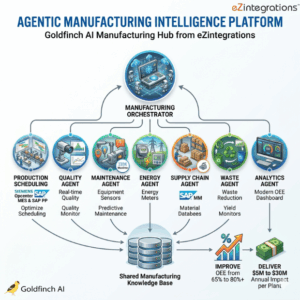
How to Automate Manufacturing Operations Using Multi-Agent AI Systems
 $150.00
Download
$150.00
Download
-
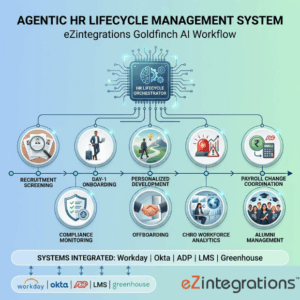
How to Automate Employee Lifecycle Management Using Multi-Agent AI Systems
 $150.00
Download
$150.00
Download
-
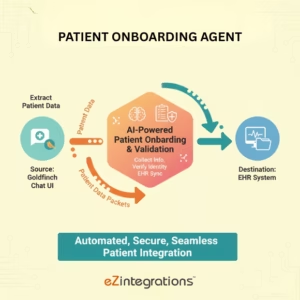
Patient Onboarding Agent
 $0.00
Download
$0.00
Download
-
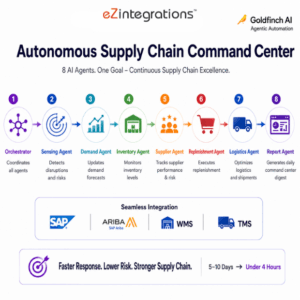
How to Automate Supply Chain Operations Using a Multi-Agent AI Command Center
 $150.00
Download
$150.00
Download