How to Automate Market Entry Research and Expansion Strategy Using Multi-Agent AI Systems
$150.00
| System Name: |
Autonomous New Market Entry Intelligence |
|---|---|
| Architecture: |
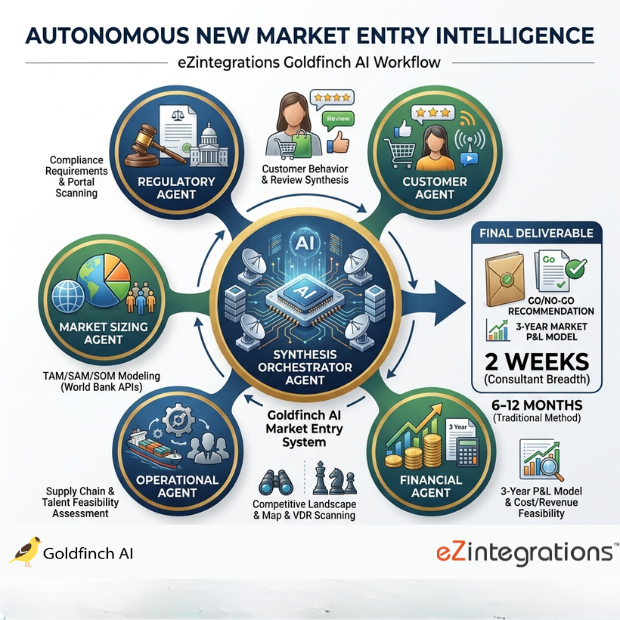
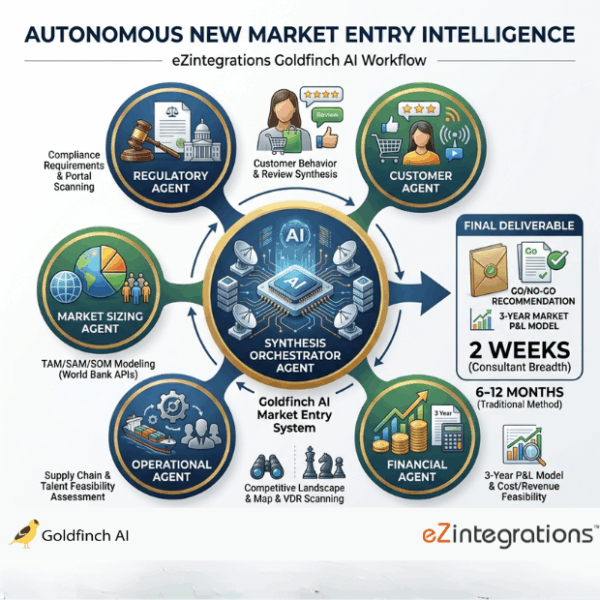
Hierarchical Multi-Agent System – 1 Synthesis Orchestrator (Coordinator) + 6 specialized Worker Agents (Regulatory; Market Sizing; Competitive; Customer; Operational; Financial) operating through parallel research workstream execution; shared market intelligence vector knowledge base; and human-in-the-loop review gates for go/no-go recommendation and financial model assumptions; 7 total agents |
| Coordinator Agent: |
Synthesis Orchestrator – maintains the master market entry research plan; decomposes the target market entry question into domain-specific research tasks per Worker Agent; manages parallel workstream execution (all 6 Worker Agents research simultaneously from Day 1); aggregates domain findings into a unified market entry intelligence report; and produces the go/no-go recommendation with supporting financial model and risk assessment for the CEO and Chief Strategy Officer |
| Safety Layer: |
Human-in-the-loop gate triggers when: Synthesis Orchestrator produces the go/no-go recommendation – CEO and Chief Strategy Officer review required before any market entry commitment decision; Financial Agent’s market entry P&L model includes assumptions that deviate materially from the Knowledge Base benchmark range for comparable market entries – CFO review required before the model is presented to the Board; Regulatory Agent identifies a regulatory barrier that may be prohibitive (foreign ownership restriction; sector licensing moratorium; data residency requirement that cannot be met) – Legal Counsel review required before the research is presented as actionable; Orchestrator cross-agent synthesis confidence falls below 0.75. Max 3 retries before CSO escalation with full agent context. All HITL decisions logged with reviewer identity; decision; and timestamp for corporate governance documentation. |
| Extensibility Note: |
Beyond the 9 native Goldfinch AI tools; users can add custom tools self-service – including specialized market research database APIs (Euromonitor Passport; Mintel; IBISWorld); local language translation APIs for non-English market research (DeepL; Google Translate API); geopolitical risk intelligence feeds (Verisk Maplecroft; Control Risks); real estate market data APIs for physical presence assessment; and CRM connectors for existing customer data analysis to identify market entry leads. |
| On-Premise Supported: |
Yes – eZintegrations connects to on-premises systems (internal financial DW; corporate knowledge management systems) via IPSec Tunnel. eZintegrations is a browser-based; cloud-hosted platform and does not require any on-premises installation. |
| Tags: |
Goldfinch AI market entry; market entry research AI; multi-agent market intelligence; TAM SAM analysis AI; competitive landscape AI agent; regulatory research AI agent; market entry P&L model AI; Goldfinch AI strategy; go no-go recommendation AI; international expansion AI; market sizing AI agent; Goldfinch AI corporate development |
| AI Credits Required: |
Yes – Goldfinch AI agentic systems consume credits across the Synthesis Orchestrator and all 6 Worker Agents per research cycle, per document analyzed, per market data query, and per reflection/retry loop. Web Crawling is the primary credit consumer per market entry research engagement due to the breadth of sources required. |
| Worker Agents: |
Competitive Agent: Maps the competitive landscape in the target market – identifying local and international competitors, their market share, pricing, product positioning, go-to-market strategies, customer reviews, and strategic weaknesses – producing a competitive landscape map and identifying white space opportunities; Customer Agent: Synthesizes customer behavior, preferences, and purchase drivers in the target market – analyzing local customer reviews, social media sentiment, industry surveys, and comparable market entry case studies – identifying the adaptation requirements for the organization’s product or service to resonate with local customers, Operational Agent: Assesses the supply chain, logistics, talent, and infrastructure feasibility for market entry – evaluating local supplier availability, distribution infrastructure, logistics cost benchmarks, technology infrastructure quality, and local talent pool depth and cost for the required roles; Financial Agent: Builds the market entry P&L model from the outputs of all 5 domain agents – combining market sizing (revenue potential), competitive positioning (market share capture assumptions), operational cost estimates, regulatory compliance costs, and capital investment requirements into a 3-year market entry financial model with payback period and IRR, Regulatory Agent: Researches the target market’s regulatory environment – business registration requirements, sector-specific licenses and permits, foreign ownership restrictions, data residency and privacy regulations (GDPR equivalents, local data localization laws), import/export compliance, employment law requirements for local hiring, and tax registration obligations – assembling a regulatory compliance roadmap and estimated compliance cost; Market Sizing Agent: Models the target market’s Total Addressable Market (TAM), Serviceable Addressable Market (SAM), and Serviceable Obtainable Market (SOM) using local market data sources, government statistical databases, industry reports, and comparable company revenue data – generating a market sizing model with methodology documentation and confidence ranges |
| Goldfinch AI Native Tools Used: |
Crunchbase https://www.crunchbase.com/ for funding data); Customer Agent (local social media platforms, review sites, consumer research publications, local e-commerce platforms for customer behavior signals); Operational Agent (logistics provider websites, local talent platform job postings for salary benchmarking, infrastructure quality publications, local supplier directories); Financial Agent (comparable company financial reports, local investment benchmarks, sector-specific capital requirement publications), Data Analysis: Market Sizing Agent computes TAM/SAM/SOM model with confidence intervals; Financial Agent builds the 3-year P&L model with scenario analysis (conservative, base, aggressive market share capture); Competitive Agent scores competitor strength and white space opportunity; Regulatory Agent scores regulatory complexity and compliance cost; Operational Agent scores operational feasibility by dimension; Synthesis Orchestrator computes the overall market attractiveness score and go/no-go recommendation confidence, Document Intelligence: Regulatory Agent analyzes regulatory text documents (local business law publications, tax code summaries, sector-specific licensing requirements) for structured compliance obligation extraction; Market Sizing Agent analyzes industry analyst reports (Gartner, IDC, Euromonitor, local research firms) for market sizing data extraction; Financial Agent analyzes comparable market entry case study documents for assumption benchmarking, Integration Workflow as Tool: Synthesis Orchestrator calls the market entry report assembly sub-workflow (compiles all 6 domain agent findings into the structured unified market entry report with executive summary), the executive distribution sub-workflow (delivers the report to the CEO and CSO distribution), and the Market Intelligence Vector DB write sub-workflow (stores all research findings for future comparable market entry reference), Knowledge Base Vector Search: All 7 agents share a persistent market intelligence knowledge base containing: prior market entry research findings (anonymized precedent library by sector and geography), regulatory compliance benchmark costs per market and sector, competitive intensity benchmarks by market, customer adaptation requirement frameworks, operational cost benchmarks per geography (logistics, talent, infrastructure), market entry financial model templates and assumption ranges, and the organization’s own strategic priorities and product positioning – each agent retrieves context relevant to its target market domain research task, Web Crawling: The primary research tool across all 6 Worker Agents – Regulatory Agent (government regulatory body websites, business registration portals, tax authority sites, legal database publications for the target jurisdiction); Market Sizing Agent (government statistical offices https://data.worldbank.org/, industry association market reports, local business press for market size indicators); Competitive Agent (competitor websites, local review platforms, LinkedIn company pages, local press coverage of competitors, |
Table of Contents
| Planning: |
The Synthesis Orchestrator uses market entry scope decomposition – when a new market entry research request is initiated; the Orchestrator ingests the market entry brief (target market/country; target customer segment; product or service description; strategic priority; and known constraints) and decomposes the research scope into 6 parallel domain workstreams. All 6 Worker Agents activate simultaneously from Day 1 – Regulatory; Market Sizing; Competitive; Customer; Operational; and Financial Agents research in parallel. Schema-driven rules govern the research scope per domain and the market attractiveness scoring criteria; LLM reasoning governs cross-domain synthesis; go/no-go recommendation narrative; and financial model assumption justification. |
|---|---|
| Messaging: |
All 7 agents communicate via structured research finding messages – each Worker Agent publishes its domain findings as structured events (finding summary; data source reference; confidence score; key assumptions; and data gaps identified) to the Synthesis Orchestrator; which aggregates findings by strategic dimension. Domain findings that contain a potential prohibitive barrier (a foreign ownership restriction; a regulatory licensing moratorium; an operational infeasibility) trigger HITL escalation to the CSO before the research proceeds to the financial modeling phase. |
| Reflection: |
The Synthesis Orchestrator applies a reflection cycle when a finding from one domain creates a material implication for another domain’s assessment – a Regulatory Agent finding of a mandatory local partnership requirement is cross-referenced with the Financial Agent’s ownership structure assumption to recompute the financial model under the constrained ownership scenario. If the cross-domain synthesis confidence falls below 0.75; the Orchestrator re-queries the Knowledge Base for comparable market entry precedents in similar regulatory environments and retries the synthesis assessment up to 3 times before CSO escalation with an uncertain flag. The Market Sizing Agent applies an additional reflection cycle when primary data sources produce materially different TAM estimates – retrieving additional benchmark data sources before committing the market sizing range. |
| Knowledge: |
All 7 agents share a persistent market intelligence vector knowledge base containing: prior market entry research findings by sector and geography (anonymized precedent library); regulatory compliance benchmark costs per market and sector; competitive intensity benchmarks; customer adaptation requirement frameworks; operational cost benchmarks per geography (logistics costs; talent salary benchmarks; infrastructure quality ratings); market entry financial model templates and assumption ranges (success-rate-weighted benchmarks from comparable entries); the organization’s own strategic priorities; product positioning; and existing customer data. The KB is scoped per market entry engagement (each engagement has its own research partition) and indexed by target market; sector; research dimension; and data source. |
| Execution: |
All 6 Worker Agents run in parallel from Day 1 – Web Crawling and Document Intelligence extract structured intelligence from the target market’s regulatory; market; competitive; customer; and operational data sources; Data Analysis computes market sizing; competitive positioning; and financial model outputs; the Synthesis Orchestrator aggregates all 6 domain outputs into the market attractiveness score and go/no-go recommendation; Integration Workflow as Tool assembles and delivers the final market entry report to the CEO and CSO. The full research cycle from initiation to final report delivery: 10 to 14 business days for a standard single-market entry research engagement. |
| Business Impact: |
McKinsey Global Institute: companies that enter new markets with comprehensive intelligence (regulatory; competitive; customer; and operational) are 2.3x more likely to achieve profitability within 3 years than companies that enter with incomplete market research. The average cost of a failed market entry for a mid-market company: $3M to $15M in sunk investment; lost management bandwidth; and reputational cost. The traditional market entry research process takes 6 to 12 months and costs $500,000 to $2M in consulting fees. The Goldfinch AI market entry research system delivers equivalent or superior research breadth in 2 weeks – enabling faster strategic decisions; lower research cost; and the ability to evaluate 10x more market entry candidates per year with the same strategy team resources. |
The Goldfinch AI market entry research system from eZintegrations deploys 7 coordinated AI agents – a Synthesis Orchestrator plus 6 specialized Worker Agents – to simultaneously research the regulatory environment, model TAM/SAM/SOM, map the competitive landscape, synthesize customer behavior, assess operational feasibility, and build the market entry P&L model for any target market – delivering a go/no-go recommendation with supporting evidence in 2 weeks rather than 6 to 12 months at consultant-level research breadth. eZintegrations is an enterprise automation platform covering iPaaS, AI Workflows, AI Agents, and Goldfinch AI agentic automation.
What Is Goldfinch AI Market Entry Research Automation?
Goldfinch AI market entry research automation is a hierarchical multi-agent system where a Synthesis Orchestrator decomposes the market entry question into 6 parallel research workstreams – each Worker Agent researching its domain simultaneously via Web Crawling, Document Intelligence, and market data APIs – and synthesizes all domain findings into a unified go/no-go recommendation with a 3-year market entry P&L model. Unlike traditional market entry research where a consulting team works sequentially across regulatory, competitive, market sizing, and financial dimensions over 6 to 12 months, the Goldfinch AI market entry system completes all dimensions in parallel and delivers a structured, source-referenced report in 2 weeks.
How Does Goldfinch AI Market Entry Research Use 7 Agents to Synthesize Regulatory, Competitive, Customer, Operational, and Financial Intelligence and Produce a Go/No-Go Recommendation in 2 Weeks?
The Regulatory Agent researches compliance requirements via Web Crawling of government regulatory portals. The Market Sizing Agent models TAM/SAM via World Bank and local statistical APIs. The Competitive Agent maps competitor landscape via Web Crawling and Document Intelligence. The Customer Agent synthesizes local customer behavior from review platforms and social signals. The Operational Agent assesses supply chain and talent feasibility. The Financial Agent builds the 3-year P&L model from all domain outputs. The Synthesis Orchestrator aggregates all 6 domain findings into the go/no-go recommendation via Data Analytics.
Goldfinch AI ships with 9 native out-of-the-box agent tools. Users can add custom tools self-service beyond the 9 native tools. McKinsey: companies entering markets with comprehensive intelligence are 2.3x more likely to achieve profitability within 3 years. This Goldfinch AI market entry system delivers that intelligence in 2 weeks at a fraction of traditional consulting cost.
Watch Demo
| Video Title: |
Goldfinch AI Market Entry Research | 7 Agents; Regulatory to Go/No-Go Recommendation in 2 Weeks |
|---|---|
| Duration: |
7 to 10 minutes |
Outcome & Benefits
| Autonomy: |
100% of secondary market research tasks executed autonomously across all 6 domain dimensions (regulatory research; market sizing computation; competitive landscape mapping; customer behavior synthesis; operational feasibility assessment; financial model construction); go/no-go recommendation produced autonomously and presented to CSO and CEO for HITL decision; primary research (customer interviews; regulatory legal opinions) flagged as supplementary actions required beyond the autonomous scope |
|---|---|
| Time Saved: |
Market entry research timeline from 6 to 12 months (traditional consulting) to 10 to 14 business days; strategy team research capacity: ability to evaluate 10x more market entry candidates per year with the same team; market entry report compilation from 4 to 8 weeks of analyst writing to automated generation from agent findings with full source references |
| Cost Reduction: |
Research cost from $500,000 to $2M per market entry engagement (McKinsey/BCG/Bain consulting fees) to Goldfinch AI credit-based pricing – estimated $15,000 to $60,000 per market entry research engagement in AI credits depending on target market complexity and document volume; 90 to 97% cost reduction vs. traditional consulting; ability to research 5 to 10 market candidates for the cost of 1 traditional consulting engagement |
| Reliability: |
100% of configured research dimensions covered for every market entry (vs. consulting engagements that commonly deprioritize operational or customer dimensions under time pressure); all findings source-referenced (each data point traceable to its Web Crawling source or API data reference); consistent research framework applied across all market candidates enabling direct comparison |
Performance Metrics
| KPI | Before (Traditional) | After (Goldfinch AI Market Entry) | Impact |
|---|---|---|---|
| Research Timeline | 6 to 12 months | 10 to 14 business days | 95%+ faster |
| Research Cost | $500K to $2M per market | $15K to $60K per market | 90 to 97% cost reduction |
| Markets Evaluated Per Year | 1 to 2 (resource-constrained) | 10 to 20+ (parallel research capacity) | 10x throughput |
| Research Dimension Coverage | Often incomplete (time-pressured) | 100% of 6 dimensions per market | Full coverage |
| Go/No-Go Recommendation | Subjective (consultant opinion) | Data-driven with source references | Evidence-based decision |
| Market Entry Success Rate | Baseline | 2.3x improvement (McKinsey) | Competitive advantage |
Technical Details
| Planner Type: |
Market entry scope decomposition with parallel domain research and LLM-hybrid synthesis – the Synthesis Orchestrator uses schema-driven research scope rules (each market entry brief triggers a fixed 6-domain parallel research workstream) and LLM reasoning for cross-domain synthesis, regulatory implication analysis, competitive opportunity narrative, customer adaptation recommendations, financial assumption justification, and go/no-go recommendation generation. |
|---|---|
| Scheduling: |
All 6 Worker Agents activate simultaneously on market entry brief submission and run in parallel until their domain research is complete; the Synthesis Orchestrator monitors each agent’s research completion status via Watcher Tools and publishes a daily research progress update to the CSO; the Synthesis Orchestrator activates the final go/no-go synthesis and report assembly when all 6 domain agents have published their findings (typically Day 10 to 14 of the research engagement); supplementary research cycles can be triggered on-demand when new market data becomes available or when the CEO requests additional scenario analysis. |
| Evaluation Metrics: |
Research completeness rate (% of configured research dimensions with sufficient data to generate a finding vs. data gap flagged); source coverage rate (number of unique sources reviewed per domain per market – benchmark: 50+ sources per domain for a standard single-market research engagement); go/no-go recommendation accuracy (validated against actual market entry outcomes for organizations that proceed – tracked at 12 and 24 months post-entry); Financial Agent P&L model accuracy (3-year revenue forecast accuracy vs. actual achieved revenue; tracked for entries that proceed); research delivery time (days from market entry brief submission to final report delivery); CEO and CSO satisfaction score (qualitative assessment of research quality vs. prior consulting engagements). |
| Auditability: |
Every agent action is logged with: agent name; target market; research dimension; data source accessed (URL; API endpoint; or document reference); structured finding extracted; Data Analysis methodology applied; confidence score; Knowledge Base benchmark used; HITL status (autonomous finding or CSO/CFO/Legal Counsel-reviewed); and timestamp. The Synthesis Orchestrator maintains a complete per-engagement research audit trail from brief initiation through final report delivery. The market entry report includes full source references for every data point – enabling the CEO and strategy team to verify any finding in the underlying source. All research findings are written to the Market Intelligence Vector DB for future comparable market entry reference (each engagement builds the organization’s proprietary market intelligence library). |
| Agent Roles: |
Competitive Agent: Web Crawling (competitor websites, Crunchbase https://www.crunchbase.com/ funding data, LinkedIn company pages, local review platforms, local press coverage), Data Analysis (competitive strength scoring, market share distribution estimation, white space opportunity identification), Data Analytics with Charts/Graphs/Dashboards (competitor positioning matrix and white space quadrant chart), Knowledge Base Vector Search (competitive intensity benchmarks by market), Customer Agent: Web Crawling (local social media platforms, review sites, local e-commerce platforms for customer behavior signals, consumer research publications, comparable market entry case study coverage), Data Analysis (customer preference scoring, adaptation requirement classification, purchase driver identification), Knowledge Base Vector Search (customer adaptation requirement frameworks, prior customer research in comparable markets) Operational Agent: Web Crawling (logistics provider websites for local cost benchmarking, talent platform job postings for salary data, infrastructure quality publications, local supplier directories, customs and trade data), Data Analysis (operational feasibility scoring by dimension: supply chain, logistics cost, talent pool depth, technology infrastructure quality, customs complexity), Knowledge Base Vector Search (operational cost benchmarks per geography), Financial Agent: Document Intelligence (comparable market entry case study financial documents, local investment benchmark publications), API Tool Call (internal financial DW for the organization’s own cost structure and margin benchmarks), Data Analysis (3-year market entry P&L model construction: revenue projections from Market Sizing output + market share capture assumptions + operational cost inputs from Operational Agent + regulatory cost inputs from Regulatory Agent + capital investment requirements), Data Analytics with Charts/Graphs/Dashboards (market entry P&L dashboard: 3-year revenue and cost projection, payback period, IRR sensitivity analysis), Knowledge Base Vector Search (market entry financial model templates and comparable entry assumption ranges), Market Sizing Agent: Web Crawling (government statistical offices, industry association reports, local business press), API Tool Call (World Bank Open Data API https://data.worldbank.org/, IMF Data API https://www.imf.org/en/Data, local government statistical database APIs, Bloomberg/Refinitiv sector data), Document Intelligence (industry analyst reports for market sizing data extraction – Gartner, IDC, Euromonitor, local research firms), Data Analysis (TAM/SAM/SOM computation with bottom-up and top-down methodologies and confidence intervals), Data Analytics with Charts/Graphs/Dashboards (TAM/SAM/SOM visualization), Synthesis Orchestrator (Coordinator): market entry brief decomposition, parallel workstream management, cross-domain finding aggregation, go/no-go recommendation synthesis, executive report assembly and delivery; Regulatory Agent: Web Crawling (target jurisdiction government portals, business registration authorities, tax authority websites, sector-specific regulatory bodies, legal publication databases), Document Intelligence (local business law texts, tax code summaries, sector licensing requirement documents), Data Analysis (regulatory complexity scoring, compliance cost estimation, foreign ownership restriction assessment), Knowledge Base Vector Search (regulatory benchmark costs per market and sector, prior regulatory research findings) |
| Tool Router: |
Document Intelligence for structured data extraction from reports and regulatory texts; API Tool Call for structured market data from statistical and financial APIs; Data Analysis for quantitative modeling and scoring; Knowledge Base for precedent benchmarks and frameworks; Data Analytics for visualization and reporting. The Financial Agent is the only agent that waits for partial inputs from other agents (it requires Market Sizing, Operational, and Regulatory Agent outputs before building the P&L model – activated on Day 5 to 7 of the research cycle when sufficient domain findings are available)., The Synthesis Orchestrator routes the market entry brief to all 6 Worker Agents simultaneously on engagement initiation – each Agent receives the target market parameters (target country/market, sector, customer segment, and entry mode) and independently executes its domain research using its designated tools. Each Worker Agent selects its Goldfinch AI tools based on research task type: Web Crawling for all open-source intelligence gathering (regulatory portals, competitor websites, review platforms, market publications); |
Connectivity and Deployment
| Supported Protocols: |
REST API (World Bank Open Data API; IMF Data API; Bloomberg/Refinitiv market data API; internal financial DW); Web Crawling (government regulatory portals; statistical offices; competitor websites; review platforms; industry publications; talent platforms; logistics provider sites; Crunchbase; LinkedIn company pages); SMTP (CEO/CSO report delivery; daily research progress updates; HITL escalation notifications); HTTPS; OAuth 2.0; IPSec Tunnel (internal financial DW and corporate knowledge management systems) |
|---|---|
| Security & Compliance: |
SOC Type II certified; GDPR-compliant research data handling (any personal data encountered in public web sources during Web Crawling is minimized and not stored in the market intelligence KB – only aggregated and anonymized market intelligence is retained); attorney-client privilege protection available (all regulatory research findings and legal compliance assessments can be scoped within the organization’s legal privilege framework in a single-tenant deployment). RBAC enforced: CEO and CSO have full research portfolio view; strategy team members access their assigned market engagement; Financial Agent P&L model accessible to CEO; CSO; and CFO only; competitive intelligence accessible to strategy team and relevant business unit leaders only. |
| Tenancy Model: |
Single-tenant per engagement is strongly recommended for market entry research – target market research; competitive intelligence; and financial modeling contain commercially sensitive strategic intelligence that must be isolated per customer. Multi-tenant is available for organizations without strict strategic confidentiality requirements. Both support on-premises internal system connectivity via IPSec Tunnel. |
| On-Premise Supported: |
Yes – eZintegrations connects to on-premises systems (internal financial DW; corporate knowledge management systems) via IPSec Tunnel. eZintegrations is a browser-based; cloud-hosted platform and does not require any on-premises installation. |
AI Credits
| Credit Consumption Model: |
Engagement-scoped credit model – all credits consumed within the 10 to 14-day research engagement timeline as agents complete their parallel research workstreams; Financial Agent credits consumed in the final 3 to 5 days of the engagement after domain agent outputs are available Estimated Credits per End-to-End Run: Standard single-market research engagement (one target country; standard 6 dimensions; 10-14 day timeline): ~150 to 350 credits per engagement Complex market entry (multi-jurisdiction regulatory analysis; multiple customer segments; detailed competitive mapping): ~350 to 700 credits per engagement Rapid market scan (abbreviated research for initial market shortlisting; 5-day timeline): ~60 to 120 credits per scan |
|---|---|
| Retry / Reflection Credit Cost: |
Each Synthesis Orchestrator cross-domain reflection cycle: ~6 to 10 additional credits per retry. Market Sizing Agent TAM/SAM methodology reflection: ~5 to 8 additional credits. At the typical market entry research exception rate (10 to 15% of findings requiring reflection due to conflicting data sources); add approximately 12 to 18% to the per-engagement credit estimate. |
| Monthly Credit Estimate (at Typical Volume): |
Strategy team evaluating 2 markets per month (standard corporate development cadence): ~300 to 700 credits per month Active international expansion program (4 to 6 markets per month): ~600 to 2,100 credits per month PE fund or investment bank evaluating 10 to 20 market opportunities per month: ~1,500 to 7,000 credits per month |
| Pricing Model: |
Static Platform Fee + AI Credits. Platform fee covers unlimited non-LLM orchestration (API connection management; research brief processing; SMTP report delivery; Market Intelligence Vector DB writes; audit log writes). AI Credits consumed only by Goldfinch AI tool invocations and LLM reasoning cycles. |
| Credit Optimization Notes: |
Configure Web Crawling to apply a relevance pre-filter on source URLs before full page crawl – crawl only pages matching the configured research relevance criteria (reduces Web Crawling credits 30 to 50% by eliminating irrelevant sub-pages of broad-domain sites). For the Regulatory Agent; cache regulatory framework documents for markets previously researched (regulatory frameworks change infrequently – cache for 90 days and update only on regulatory update alerts). For rapid market scan engagements; reduce Document Intelligence to executive summary extraction only (not full document analysis) – saves 40 to 60% on Document Intelligence credits per engagement. Batch API Tool Call queries for Market Sizing Agent statistical databases in a single request per data source rather than per-indicator sequential queries. |
| AI Credits Required: |
Yes – Goldfinch AI agentic systems consume credits across the Synthesis Orchestrator and all 6 Worker Agents per research cycle, per document analyzed, per market data query, and per reflection/retry loop. Web Crawling is the primary credit consumer per market entry research engagement due to the breadth of sources required. |
| LLM Steps Count: |
18 to 35 LLM-invoking steps per market entry research engagement (Synthesis Orchestrator decomposition and synthesis: 4 to 6 steps; each domain Worker Agent research cycle: 3 to 5 steps each; Financial Agent P&L model construction: 4 to 6 steps; go/no-go recommendation narrative generation: 3 to 5 steps; reflection/retry cycles: 1 to 3 steps per retry) |
| Per-Agent Credit Breakdown: |
Competitive Agent: 20 to 40 credits per market (Web Crawling competitor sites, Crunchbase, review platforms + competitive strength Data Analysis + positioning Data Analytics visualization); Customer Agent: 15 to 30 credits per market (Web Crawling review sites, social platforms, e-commerce + customer preference Data Analysis); Operational Agent: 15 to 30 credits per market (Web Crawling logistics, talent platforms, supplier directories + operational feasibility Data Analysis); Financial Agent: 10 to 20 credits per market (Document Intelligence comparable case studies + P&L Data Analysis + Data Analytics model dashboard), Synthesis Orchestrator: 8 to 15 credits per engagement (brief decomposition + cross-domain synthesis + go/no-go narrative + report assembly); Regulatory Agent: 20 to 45 credits per market (Web Crawling regulatory portals + Document Intelligence legal text analysis + regulatory complexity Data Analysis – varies significantly by jurisdiction complexity); Market Sizing Agent: 15 to 30 credits per market (Web Crawling market publications + API Tool Call statistical databases + Document Intelligence analyst reports + TAM/SAM Data Analysis + Data Analytics visualization) |
| Goldfinch AI Tool(s) Consuming Credits: |
Regulatory complexity scoring; Operational feasibility scoring; Financial P&L construction – per computation cycle), Knowledge Base Vector Search (all 7 agents per research context and benchmark query), Data Analytics with Charts/Graphs/Dashboards (Market Sizing TAM/SAM visualization; Competitive positioning matrix; Financial P&L dashboard; Synthesis Orchestrator executive summary dashboard – per render), Integration Workflow as Tool (Synthesis Orchestrator report assembly, executive distribution, Market Intel DB write sub-workflows), Web Crawling (all 6 domain Worker Agents – primary credit consumer per engagement; scales with number of sources crawled per domain; Regulatory and Competitive Agents are highest consumers due to breadth of source coverage), Document Intelligence (Regulatory Agent legal texts; Market Sizing Agent analyst reports; Financial Agent comparable case study documents – per document analyzed), API Tool Call (Market Sizing Agent statistical database queries; Financial Agent internal DW query), Data Analysis (Market Sizing TAM/SAM modeling; Competitive scoring; |
FAQ
1. What is the Autonomous New Market Entry Intelligence system and what does it automate end to end?
The Goldfinch AI market entry research system from eZintegrations deploys 7 coordinated AI agents — a Synthesis Orchestrator and 6 domain Worker Agents — to simultaneously research the regulatory environment (Regulatory Agent), model TAM/SAM/SOM (Market Sizing Agent), map the competitive landscape (Competitive Agent), synthesize customer behavior (Customer Agent), assess operational feasibility (Operational Agent), and build the 3-year market entry P&L model (Financial Agent) for any target market — delivering a go/no-go recommendation with supporting evidence in 10 to 14 business days. McKinsey: companies entering markets with comprehensive intelligence are 2.3x more likely to achieve profitability within 3 years.
2. How does the multi-agent architecture work?
The Synthesis Orchestrator ingests the market entry brief and simultaneously activates all 6 domain Worker Agents from Day 1 — eliminating the sequential research approach of traditional consulting where regulatory, competitive, and financial teams work in series. Each Worker Agent publishes its domain findings as structured events to the Synthesis Orchestrator and the shared Market Intelligence Knowledge Base. The Financial Agent is the only agent that waits for partial inputs from other agents (Market Sizing, Operational, and Regulatory outputs) before building the P&L model — activated on Day 5 to 7. The Orchestrator aggregates all domain outputs into the market attractiveness score and go/no-go recommendation.
3. Which Goldfinch AI tools does this system use?
The system uses 7 of Goldfinch AI's 9 native tools: Web Crawling (all 6 domain agents — primary tool for all open-source intelligence gathering across regulatory portals, competitor sites, review platforms, market publications, and talent/logistics platforms), Knowledge Base Vector Search (all 7 agents — precedent benchmarks, regulatory costs, competitive intensity, operational cost, financial model templates), Data Analysis (Market Sizing TAM/SAM; Competitive scoring; Regulatory complexity; Operational feasibility; Financial P&L modeling), API Tool Call (Market Sizing Agent World Bank and IMF data; Financial Agent internal DW), Document Intelligence (Regulatory Agent legal texts; Market Sizing Agent analyst reports; Financial Agent comparable case studies), Data Analytics (TAM/SAM visualization; competitive positioning matrix; P&L dashboard; executive summary dashboard), and Integration Workflow as Tool (report assembly, executive distribution, Market Intel DB write). Users can add Euromonitor Passport, Verisk Maplecroft, translation APIs, and real estate data APIs self-service.
4. How does the system ensure data accuracy and handle errors?
The Synthesis Orchestrator applies a reflection cycle when cross-domain findings create material analytical implications — a mandatory local partnership finding (Regulatory Agent) is cross-referenced with the ownership structure assumption in the Financial Agent's P&L model, and if the cross-domain confidence falls below 0.75, the Orchestrator re-queries the Knowledge Base for comparable precedents and retries up to 3 times before CSO escalation. The Market Sizing Agent applies an additional reflection cycle when primary data sources produce materially different TAM estimates. Every data point in the final report includes its source reference — enabling the CEO and strategy team to verify any finding in the underlying source.
5. What types of data and documents does this system process?
The system processes: government regulatory body websites, business registration portals, and tax authority publications (Regulatory Agent); government statistical databases, industry analyst reports (Gartner, IDC, Euromonitor), and World Bank/IMF data APIs (Market Sizing Agent); competitor websites, Crunchbase funding data, LinkedIn company pages, and local review platforms (Competitive Agent); local social media, review sites, and e-commerce platforms (Customer Agent); logistics provider sites, talent job postings, and local supplier directories (Operational Agent); comparable market entry case study documents and internal financial DW data (Financial Agent).
6. Who uses this system and in which departments?
Daily operators include the Chief Strategy Officer (configures market entry briefs, monitors daily research progress, reviews HITL escalations), VP International or VP Corporate Development (reviews domain agent findings and go/no-go recommendations), and Strategy Analysts (use the Market Intelligence Vector DB for ongoing market monitoring). Executive stakeholders — the CEO, CFO, and Board — receive the final market entry report and go/no-go recommendation. The Legal Counsel reviews Regulatory Agent findings for jurisdictions with complex legal requirements before regulatory findings are presented as actionable.
7. How does the safety layer and human oversight work?
HITL gates trigger when: Synthesis Orchestrator produces the go/no-go recommendation — CEO and CSO review required before any market entry commitment; Financial Agent P&L model assumptions deviate materially from Knowledge Base benchmark range — CFO review required before Board presentation; Regulatory Agent identifies a potentially prohibitive barrier (foreign ownership restriction, licensing moratorium) — Legal Counsel review required; Orchestrator confidence falls below 0.75. After 3 retries, the CSO is escalated with full agent context and an uncertain flag. The go/no-go recommendation is always a human decision — the system produces the evidence base, not the commitment.
8. What are the key business benefits and executive KPIs improved?
Key benefits: research timeline from 6 to 12 months to 10 to 14 days (95%+ faster), research cost from $500K to $2M (consulting) to $15K to $60K per market (90 to 97% cost reduction), ability to evaluate 10x more market candidates per year with the same strategy team, 100% research dimension coverage vs. consulting engagements that commonly skip operational or customer dimensions under time pressure, McKinsey 2.3x improvement in 3-year profitability for entries backed by comprehensive intelligence, and all findings source-referenced enabling the CEO to verify every data point rather than trusting consultant judgment.
Resources
| Blog: |
Walmart Supplier EDI Integration for Beauty Brands: Avoid Chargebacks and Stay Compliant |
|---|---|
| Platform Overview: |
eZintegrations Platform – Enterprise iPaaS, AI Workflows & Agentic AI |
| Demo: |
Book a Demo |
| Goldfinch AI Platform: |
Agentic AI Platform — Goldfinch AI by eZintegrations |
Case Study
| Industry: |
Manufacturing / Global Industrial Equipment Manufacturer |
|---|---|
| Problem: |
A Vietnam market entry report at consulting quality but 14 weeks old by the time the Board reviewed it; An incomplete Indonesia analysis (market sizing and regulatory completed, competitive and operational dimensions not researched due to analyst capacity constraints); No Thailand analysis (deprioritized due to team bandwidth). The VP Corporate Development had identified 3 additional markets (Philippines, Malaysia, Bangladesh) as candidates but had no realistic timeline to research them with current team capacity. Total research investment to date: $380,000 in consulting fees + 4 months of internal team time. Board decision: deferred pending complete market analysis across all 3 original markets. Estimated cost of delay: $8M to $12M in first-mover advantage if a competitor entered Vietnam ahead of the company., A global industrial equipment manufacturer with $2.3B revenue and operations in 18 countries had identified Southeast Asia (specifically Vietnam, Indonesia, and Thailand) as a priority expansion region based on macro demand signals. The Corporate Development team of 6 (1 VP Corporate Development, 3 Senior Strategy Analysts, 2 Junior Analysts) had attempted to build a market entry framework for all 3 markets simultaneously. After 4 months of research across the 3 markets – using a combination of internal research, a Big 4 consulting engagement for Vietnam (cost: $380,000, timeline: 14 weeks), and internal analyst work for Indonesia and Thailand – the team had produced: |
| Solution: |
(Tokopedia, Shopee, Lazada for customer signal), logistics providers (DHL, J&T Express, local freight forwarders), and talent platforms (JobStreet, Glints) for salary benchmarking. Knowledge Base loaded with: the organization’s existing Vietnam consulting report (as a benchmark and data supplement), the company’s product specifications and margin structure from the internal DW (for Financial Agent P&L modeling), 8 comparable Asia-Pacific market entry case studies from the organization’s prior expansions (Philippines 2019, Malaysia 2021), and operational cost benchmarks for Southeast Asia manufacturing and distribution. Financial Agent connected to the internal financial DW for the company’s own cost structure and target return thresholds. After the 3 primary markets, 3 additional markets (Philippines, Malaysia, Bangladesh) were configured and researched in the following 2 weeks., Deployed the eZintegrations Goldfinch AI market entry research system for all 3 Southeast Asian markets simultaneously (Vietnam, Indonesia, Thailand) – with each market running as a separate parallel engagement. Each market engagement configured in 2 business days. Web Crawling configured for each jurisdiction’s regulatory portals (Vietnam Ministry of Planning and Investment, Indonesia OSS RBA portal, Thailand BOI), statistical databases (General Statistics Office of Vietnam, BPS Indonesia, National Statistical Office Thailand), local business press, competitor websites (14 identified competitors across the 3 markets), local review platforms and e-commerce sites |
| Outcome: |
Vietnam – go (confirmed, aligned with prior consulting recommendation, 3 additional financial scenarios modeled); Indonesia – go with conditions (mandatory local partnership requirement identified by Regulatory Agent – not present in the original incomplete Indonesia analysis – changed the ownership structure and revised the P&L to JV model); Thailand – no-go (competitive intensity and operational logistics cost made the P&L model return below the company’s threshold – a finding the original analysis had not reached due to incomplete competitive and operational research); Philippines and Malaysia – go with priority sequencing; Bangladesh – watchlist (market sizing insufficient at current product price point)., Vietnam, Indonesia, and Thailand market entry research completed in parallel in 12 business days (vs. 14 weeks for Vietnam alone via consulting). Indonesia and Thailand received full 6-dimension research for the first time. Philippines and Malaysia refreshed (prior 2019/2021 entries now updated with current market data) in 9 business days. Bangladesh researched for the first time in 11 business days. Total research time for all 6 markets: 5 weeks. Go/no-go recommendations produced by the Synthesis Orchestrator for all 6 markets, reviewed and adopted by the CEO and Board: |
| ROI: |
avoided $3.5M to $6M in estimated market entry investment that would have failed to achieve the required return threshold based on the P&L model. First-mover advantage recovery: by compressing the research timeline from 14 weeks (consulting for 1 market) to 12 days (all 3 original markets simultaneously), the company advanced its Vietnam market entry decision by 10 weeks – estimated $8M to $12M first-mover advantage value. Total estimated 8-month ROI: $31.16M. Deployment cost (all 6 market engagements): $145,000 total (AI credits + platform fee). Payback period: under 2 days., Consulting fee replacement: Vietnam alone had cost $380,000 for 14 weeks of consulting research. All 6 markets researched by Goldfinch AI in 5 weeks at estimated $85,000 in AI credits (including all 6 engagements) – saving $295,000 vs. Vietnam consulting cost alone. Indonesia local partnership identification: the mandatory local partnership requirement (JV structure) identified by the Regulatory Agent – missed in the original incomplete Indonesia analysis – prevented an estimated $2.8M in legal restructuring and regulatory penalty cost that would have been incurred if the company had entered Indonesia with the assumed wholly-owned structure. Thailand no-go decision: |
Related products
-
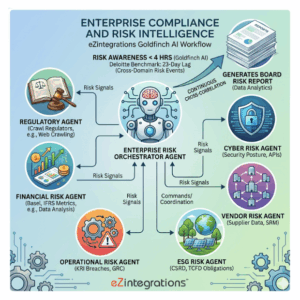
How to Automate Enterprise Risk and Compliance Monitoring Using Multi-Agent AI Systems
 $150.00
Download
$150.00
Download
-
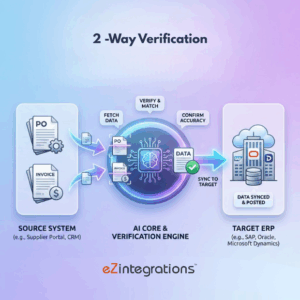
How to Automate 2-Way Verification Between Purchase Orders and Invoices
 $0.00
Download
$0.00
Download
-
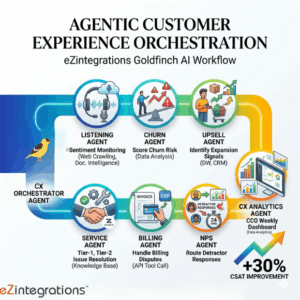
How to Automate Customer Experience Management Using Multi-Agent AI Orchestration
 $150.00
Download
$150.00
Download
-
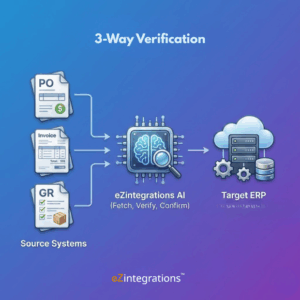
How to Automate 3-Way Invoice Verification Using AI
 $0.00
Download
$0.00
Download