Agentic AI for Pharma: Autonomous Compliance & Clinical Data Intelligence
June 8, 2026Agentic AI for pharma deploys coordinated networks of specialist AI agents aligned with Multi-agent system principles that monitor quality, compliance, pharmacovigilance, regulatory, and clinical supply operations continuously across Veeva Vault, LIMS, SAP, safety databases, and regulatory submission systems: detecting emerging risks, correlating signals across domains, and delivering synthesised intelligence to QA Directors, VP Regulatory Affairs, and CMOs via natural language Chat UI. eZintegrations’ Goldfinch AI coordinates specialist worker agents through a Chat UI and Workflow Node: moving pharmaceutical operations from reactive compliance management to autonomous compliance intelligence that surfaces issues before they become inspection findings, health authority actions, or patient safety events.
TL;DR
- Reactive pharmaceutical compliance management means discovering problems after they are already compliance failures: the CAPA trend you see in the quarterly quality review, the adverse event reporting lag you discover during an FDA inspection, the regulatory submission gap you find when the health authority issues a deficiency letter, the clinical supply risk you identify when the production schedule slips. The lag between event and discovery is where compliance exposure accumulates.
- Agentic AI for pharma closes that lag. Not by handling individual exceptions faster: that is Level 3 AI Agents: but by monitoring your entire pharmaceutical operation continuously at population level: all CAPAs, all sites, all deviations, all adverse event reporting deadlines, all regulatory submissions, all simultaneously.
- Goldfinch AI is eZintegrations’ Level 4 multi-agent coordination platform. The Chat UI gives pharmaceutical executives natural language access to live compliance intelligence in under 60 seconds. The Workflow Node runs autonomous intelligence programmes: coordinator agents dispatching parallel worker agents, delivering structured compliance briefs automatically.
- Four agentic programmes in this guide: the Pharmaceutical Quality Intelligence Network, the Pharmacovigilance Surveillance Programme, the Regulatory Intelligence Programme, and the Clinical Operations Intelligence Centre.
- All processing runs natively within eZintegrations’ 21 CFR Part 11 compliant infrastructure. No regulated pharmaceutical data is sent to external AI providers. Human-in-the-loop (HITL) gates are mandatory for all regulated decisions.
The Reactive Pharma Organisation: Where Compliance Exposure Accumulates in the Lag
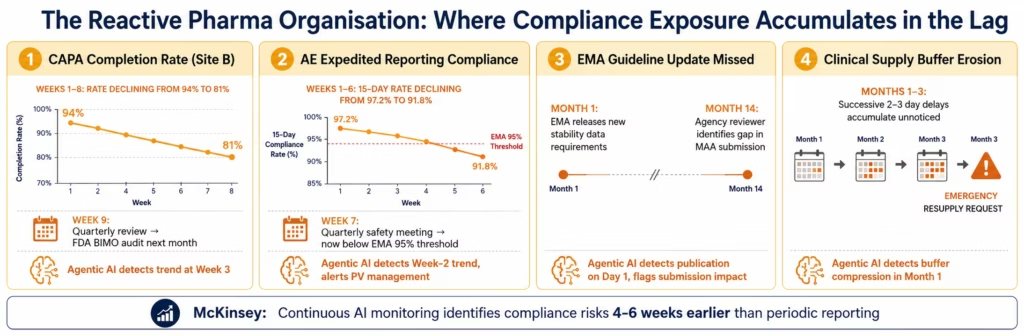
Consider four pharmaceutical compliance events that most organisations discover in the wrong order:
Event 1: Site B’s CAPA completion rate has been declining for eight weeks: from 94% on-time to 81% on-time. The individual CAPAs are being completed; they are just trending toward the due date and occasionally slipping by a few days. No individual CAPA slip is severe enough to trigger a formal escalation. The aggregate trend appears in the quarterly quality review. By then, two CAPAs with major deviation root causes are 18 days overdue. The FDA BIMO audit scheduled for next month will examine CAPA effectiveness.
Event 2: For one product, the 15-day expedited adverse event reporting rate to the EU market has declined from 97.2% to 91.8% over the last quarter. The individual late reports were each attributable to case complexity or missing information. The aggregate compliance rate appears in the quarterly safety management meeting: six weeks after the trend began. EMA’s GVP Module VI requirement is ≥95% on-time reporting. The organisation is now below threshold.
Event 3: A regulatory submission module for an upcoming MAA was last updated 14 months ago. In the intervening period, EMA released a new guideline that changes the stability data presentation requirements. Nobody flagged the update because nobody was watching the EMA guidelines publication page for this product’s therapeutic area. The agency reviewer will identify the gap.
Event 4: A clinical supply chain buffer for a Phase 3 trial has been eroding: not through any single failure, but through a succession of 2-3 day manufacturing and distribution delays that individually look like normal variability. The last time the supply buffer was explicitly assessed was three months ago. The clinical operations team will discover the constraint when sites start requesting emergency resupply.
In each case, the data existed. The CAPA completion timestamps were in Veeva. The adverse event reporting dates were in the safety database. The EMA guideline publication was on the EMA website. The clinical supply movements were in the supply management system. The data just was not being monitored continuously, correlated across domains, and routed to the right decision-maker in time.
McKinsey research on pharmaceutical digital transformation shows that organisations with continuous AI monitoring across quality and compliance domains identify compliance risks 4-6 weeks earlier than those relying on periodic reporting cycles: materially reducing the exposure window before regulatory inspection or health authority action. Gartner projects that by 2028, over 60% of top-20 pharmaceutical companies will operate with autonomous AI monitoring across at least four GxP compliance domains.
What Agentic AI Means for Pharma (and Why It Is Different from AI Agents)
The architectural distinction between individual AI agents and agentic AI is especially important in pharmaceutical operations, where each level has different implications for the compliance framework.
A Level 2 AI Workflow (covered in the AI workflow pharma guide) processes high-volume consistent pharmaceutical data at specific pipeline steps: a deviation is recorded → Document Intelligence extracts it → LLM classifies severity → Veeva QMS record created automatically.
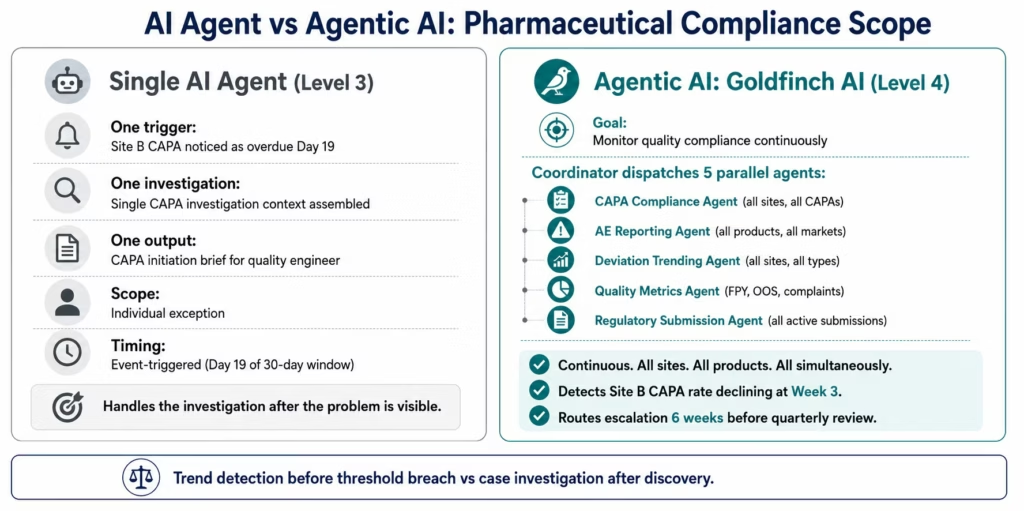
A Level 3 AI Agent (covered in the AI agents life sciences guide) handles complex investigation tasks for individual exceptions: the CAPA Investigation Agent assembles the full investigational context for one CAPA initiation. The AE Triage Agent compiles one complex adverse event case. One exception, one agent, one pre-assembled briefing package for human review.
Level 4 Agentic AI (Goldfinch AI) operates at the programme level. A coordinator agent receives a monitoring goal: not “investigate this CAPA” but “monitor our quality management system’s CAPA compliance across all sites continuously.” The coordinator dispatches parallel worker agents across all sites, all CAPA types, and all completion windows simultaneously, receives their findings, correlates across sites and product lines, and synthesises a weekly compliance intelligence brief for the QA Director.
The critical pharmaceutical difference:
Individual AI Agent: the CAPA Investigation Agent assembles the investigation context for Site B’s overdue major CAPA on Day 19 of its 30-day completion window: after someone notices it is overdue and triggers the agent.
Agentic AI: the Quality Intelligence coordinator monitors all CAPAs across all sites continuously. It detects Site B’s aggregate CAPA completion rate declining from 94% to 81% on Week 3: 5 weeks before the quarterly review, and 6 weeks before the FDA BIMO audit. It correlates this with the fact that three of Site B’s overdue CAPAs have major deviation root causes. It routes a structured escalation to the QA Director and Site B’s quality manager on Week 3: with the full CAPA risk picture, not a single overdue notice.
Population-level trend detection, 6 weeks earlier. That is the agentic AI difference in pharmaceutical quality management.
Before vs After: The Agentic AI Transformation in Pharma
| Compliance Domain | Before Agentic AI | After Agentic AI (Goldfinch AI) |
|---|---|---|
| CAPA compliance monitoring | Quarterly quality review discovers trend 6-8 weeks after it begins | Continuous monitoring flags declining completion rate at Week 3 |
| AE expedited reporting rate | Quarterly safety meeting discovers rate below threshold | Continuous monitoring detects declining compliance rate in Week 2 |
| Regulatory guideline changes | Guideline updates discovered during submission review or inspection | Policy Monitoring Agent detects EMA/FDA guideline updates on publication day |
| Stability OOT trend | Stability scientist reviews data at next scheduled pull | Stability Trend Agent detects OOT pattern between pulls, routes early alert |
| Cross-site quality correlation | Sites managed independently; systemic patterns invisible | Coordinator identifies same deviation type appearing across 3 sites: potential common cause |
| Clinical supply buffer | Assessed at quarterly operations review or on emergency request | Supply Intelligence Agent monitors coverage continuously, alerts when buffer compresses |
| QP batch release compliance | Manual tracking of release turnaround times | QP Release Agent monitors release queue and turnaround, flags delays proactively |
| Complaint rate trend | Monthly complaint summary report | Complaint Trend Agent monitors rate continuously, detects product-specific anomalies |
| Executive compliance query | 2-4 hour analyst exercise for current state | Chat UI: natural language query answered from live Veeva + safety DB in under 60 seconds |
| Pre-inspection readiness | Manual inspection preparation exercise (weeks) | Compliance Intelligence Programme runs continuously; pre-inspection brief available on demand |
The Goldfinch AI Architecture for Pharma
Goldfinch AI operates in pharmaceutical environments through two interfaces that together create continuous autonomous compliance intelligence:
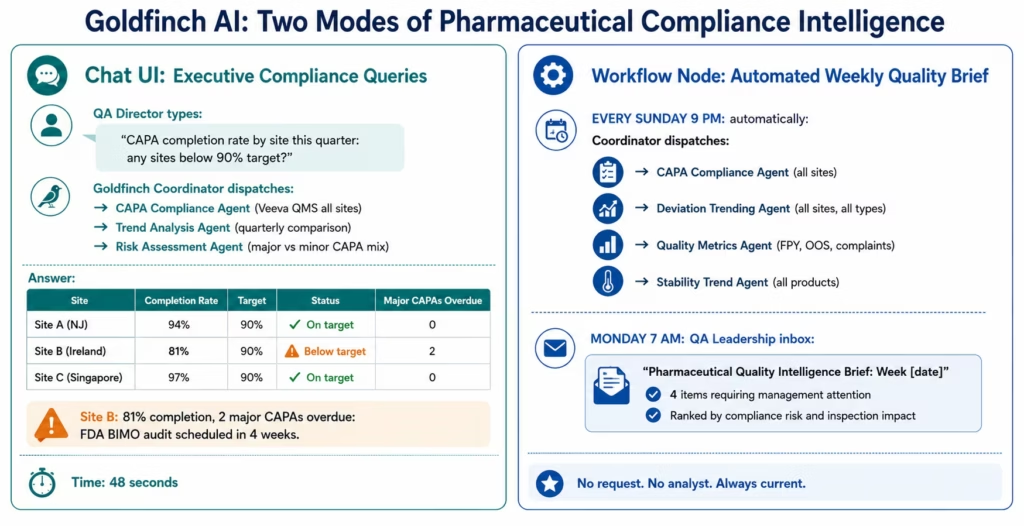
The Chat UI: natural language access to live pharmaceutical compliance and operational data for executives. The QA Director types a question. Goldfinch AI identifies which Veeva QMS, safety database, LIMS, and regulatory tracking data sources are needed, dispatches the appropriate worker agents, receives results, synthesises across agents, and returns a structured answer: typically within 30-60 seconds.
The Chat UI does not query cached data or yesterday’s report. When the VP of Quality asks about CAPA compliance rates, Goldfinch AI dispatches agents that retrieve current CAPA data from live Veeva QMS. The answer reflects the current state of the quality management system.
The Workflow Node: coordinator intelligence embedded in automated pharmaceutical intelligence programmes. This is how agentic monitoring runs continuously without executive prompting.
A Workflow Node deployed in the Quality Intelligence programme runs every week: the coordinator dispatches the CAPA compliance agent, the deviation trending agent, the quality metrics agent, and the complaint trend agent across all sites and all products. The coordinator receives findings, correlates across sites and product lines, and produces the weekly quality intelligence brief: delivered to QA leadership every Monday morning before the quality review meeting.
A Workflow Node deployed in the Pharmacovigilance Surveillance programme runs every day: the coordinator monitors adverse event reporting deadlines across all products and markets, checks aggregate reporting compliance rates, and delivers a daily safety compliance dashboard to the PV management team.
Together, the Chat UI and the Workflow Node represent the two modes of pharmaceutical agentic intelligence: on-demand executive queries from live data, and scheduled autonomous compliance monitoring programmes that never stop watching.
Agentic Programme 1: Pharmaceutical Quality Intelligence Network
The Pharmaceutical Quality Intelligence Network is the core agentic programme for pharmaceutical quality management. It monitors quality across all sites, all products, and all quality management system domains simultaneously: not just the sites or products that generate individual exceptions, but all of them, looking for the aggregate trends that individual exception monitoring misses.
Worker Agent 1: CAPA Compliance Agent Continuously monitors CAPA completion status across all sites and all CAPA types (deviations, OOS investigations, complaint investigations, audit findings). Tracks: on-time completion rate by site and CAPA source, age distribution of open CAPAs, and the risk level mix (major vs minor). The Watcher Tool triggers when any site’s CAPA completion rate declines below the configured threshold or when any major CAPA approaches its target completion date without being marked complete.
At the population level: the coordinator tracks whether CAPA completion rate declines correlate with specific event types (a spike in complex deviation root causes), specific time periods (month-end when production pressure is high), or specific sites (indicating a systemic quality culture or resource issue).
Worker Agent 2: Deviation Trending Agent Monitors deviation rates, deviation types, and deviation root cause patterns across all sites and all product lines. Tracks: deviation rate per batch by product and site, deviation type distribution (process deviations, material deviations, equipment deviations, laboratory deviations), and root cause recurrence (the same root cause appearing repeatedly, indicating a systemic issue rather than isolated incidents).
The agent detects cross-site patterns: if three geographically separate sites all begin reporting increased process deviations in the same equipment category within the same 4-week window, that is a potential signal of a common equipment supplier or maintenance protocol issue: not a coincidence.
Worker Agent 3: Quality Metrics Agent Monitors first-pass yield, OOS rate, customer complaint rate, returned goods rate, and recall/withdrawal history by product family and site. Detects statistically significant trend changes using control chart methodology: not threshold alerts, but statistical trend signals that indicate the process mean has shifted or process variation has increased.
The agent monitors stability OOT patterns: for products with ongoing stability studies, it continuously checks whether stability test results are trending toward specification limits between the scheduled review pulls: routing an alert to the stability team before the next formal pull date.
Worker Agent 4: Regulatory Compliance Agent Monitors regulatory commitments: post-approval stability commitments by product and market, annual product review due dates, periodic benefit-risk evaluation report (PBRER) submission dates, and risk management plan (RMP) updates. Uses the Watcher Tool to flag regulatory obligations approaching their due dates. Uses Web Crawling to monitor FDA and EMA for inspection-related guideline updates or warning letter themes relevant to the organisation’s product portfolio and operations.
Coordinator synthesis: The quality coordinator receives findings from all four agents. It correlates across domains: does the CAPA completion rate decline at Site B (from CAPA Compliance Agent) correlate with the deviation rate increase at Site B (from Deviation Trending Agent)? That correlation is a systemic quality signal: Site B is generating more deviations AND completing CAPAs more slowly, suggesting a quality system capacity issue, not random variability. The coordinator surfaces this composite finding: not as two separate alerts, but as a single Site B quality risk assessment with the compounding evidence from both agents.
Agentic Programme 2: Pharmacovigilance Surveillance Programme
Individual adverse event cases are handled by the AE Triage Agent (Level 3). The Pharmacovigilance Surveillance Programme operates at the population level: monitoring aggregate safety compliance, signal detection, and case management quality continuously across the full pharmacovigilance operation.
AE Reporting Compliance Agent: Monitors adverse event expedited reporting compliance rates by product and market against the applicable regulatory thresholds (FDA: ≥95% of 15-day reports filed within 15 days; EMA: ≥95% of 15-day reports filed within 15 days; PMDA: ≥90%). Tracks the trailing 90-day compliance rate continuously, flagging products and markets where the rate is trending toward the threshold before it breaches: giving the PV management team the opportunity to address systemic case processing delays before they become a regulatory compliance issue.
Safety Signal Monitoring Agent: Monitors the aggregate adverse event database for potential safety signals using disproportionality analysis (EBGM/PRR) continuously: not just at scheduled signal detection intervals, but as new cases accumulate. When a drug-event combination’s disproportionality score exceeds the configured threshold, the agent flags the potential signal for expedited review by the signal management committee, including the statistical signal strength, the contributing case count, and relevant published literature context retrieved via Web Crawling.
PSUR/PBRER Tracking Agent: Monitors the upcoming periodic safety update report (PSUR) and periodic benefit-risk evaluation report (PBRER) submission schedule across all licensed products and all markets. Flags submissions approaching their due dates. Retrieves the completion status of each data component (adverse event data, clinical study data, literature review, benefit-risk assessment) from Veeva Safety and the pharmacovigilance tracking system: alerting the PV team to data assembly gaps that could delay timely submission.
Case Quality Monitoring Agent: Monitors the quality metrics of submitted adverse event reports: completeness scores, narrative quality, medical coding accuracy (MedDRA coding consistency), and follow-up request response rates. Identifies patterns in case quality that might indicate process issues: if a specific site or a specific PV processor is consistently generating incomplete case narratives, the case quality signal surfaces before it appears in an EMA or FDA inspection finding.
Coordinator synthesis: The pharmacovigilance coordinator correlates findings across all four agents. A product with a declining AE reporting compliance rate AND an emerging statistical safety signal is a higher priority than either signal alone: the coordinator elevates this to an urgent combined signal for the Chief Medical Officer and VP of Regulatory Affairs.
Agentic Programme 3: Regulatory Intelligence Programme
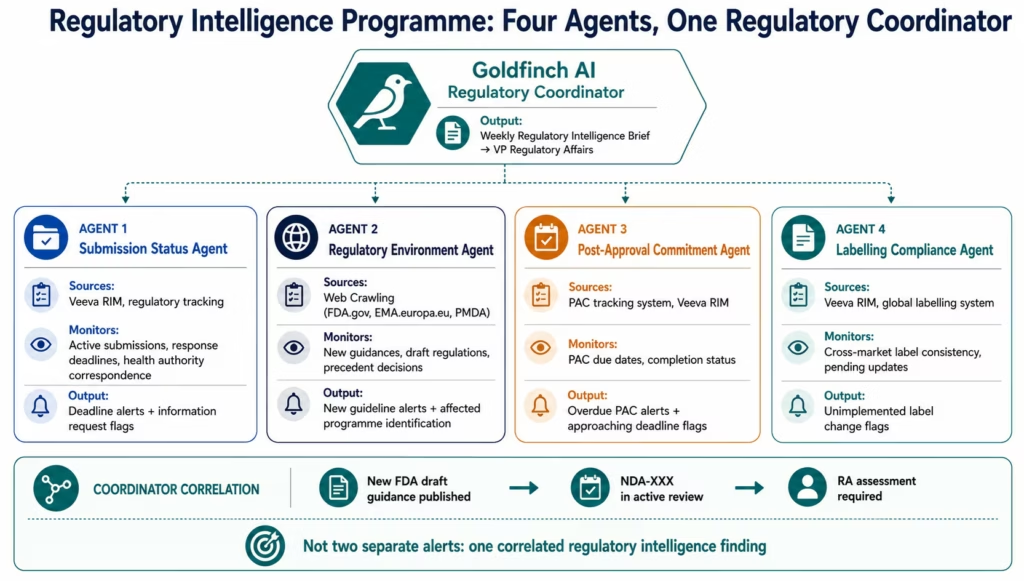
Regulatory affairs operations span multiple concurrent activities: submissions in review by health authorities, post-approval commitments, label maintenance, and proactive monitoring of regulatory environment changes that affect active programmes. Each of these is tracked in isolation in most organisations. The Regulatory Intelligence Programme monitors all of them simultaneously.
Submission Status Agent: Monitors the status of all active regulatory submissions (NDAs, BLAs, MAAs, ANDAs, PMAs, supplements, annual reports) across all health authority markets. Uses the Watcher Tool to flag submissions approaching response deadlines, submission clock stop dates, and approval target dates. Retrieves health authority correspondence from Veeva RIM and flags any information requests, deficiency letters, or questions from reviewers that require responses within specified timeframes.
Regulatory Environment Monitoring Agent: Uses the Web Crawling tool to continuously monitor the FDA, EMA, PMDA, Health Canada, and other applicable health authority websites for guideline publications, draft guidances, information requests for comments, and precedent decisions in the organisation’s therapeutic areas. When a new guideline is detected that may affect active programmes, the agent retrieves the guideline summary, identifies the affected programmes from the product portfolio knowledge base, and routes a structured regulatory impact alert to the relevant regulatory affairs team.
Post-Approval Commitment Tracking Agent: Monitors the organisation’s post-approval commitments (PACs) across all products and markets: confirmatory studies, stability commitments, labelling update commitments, and risk management plan milestones. Tracks completion status against the committed timelines. Flags any PACs approaching their committed due date without evidence of completion in the regulatory tracking system.
Labelling Compliance Agent: Monitors product labelling for consistency across markets: when a safety update is implemented in one market’s label, the agent identifies all other markets where the same update is required and flags the pending labelling actions. Uses the Watcher Tool to monitor for any unimplemented label change commitments past their implementation deadline.
Coordinator synthesis: The regulatory coordinator correlates findings across all four agents. A submission in active FDA review where a relevant new FDA draft guidance has just been published (detected by the Regulatory Environment Monitoring Agent) requires a regulatory affairs assessment: does the new guidance change what FDA is likely to ask? The coordinator identifies this intersection and routes it to the responsible regulatory affairs lead immediately: rather than having the submission team and the regulatory intelligence team operate independently.
Agentic Programme 4: Clinical Operations Intelligence Centre
Clinical trial operations span a complex, time-sensitive portfolio of activities: trial enrollment, protocol compliance, data quality, safety monitoring, and clinical supply management. Each domain has its own critical path: and failures in any domain can delay trial completion, compromise data integrity, or, most critically, affect patient safety.
The Clinical Operations Intelligence Centre monitors all of them continuously.
Clinical Enrollment Intelligence Agent: Monitors site-level enrollment rates against protocol-specified enrollment targets and trial timelines. Detects sites that are enrolling below their target rates early enough for proactive intervention (increased monitoring visits, protocol amendment to expand eligibility, or site replacement) rather than discovering enrollment shortfalls only when the overall trial timeline has already slipped.
Correlates enrollment rate with protocol deviation rate by site: sites with high deviation rates often have lower enrollment quality, suggesting training or oversight issues that affect both data quality and enrollment efficiency.
Protocol Compliance Agent: Monitors protocol deviation rates by site and by deviation type. Tracks: the proportion of minor versus major deviations, deviation rates per visit, and the recurrence of the same deviation type at the same site (suggesting a systemic training or procedure gap rather than isolated errors). Flags sites where protocol deviation rates are statistically elevated against the trial average: the clinical monitoring signal that precedes a decision about enhanced oversight or for-cause inspection.
Clinical Data Quality Agent: Monitors EDC data completeness and query resolution rates by site and by data domain. Tracks: outstanding query counts, query aging (queries open for more than the protocol-specified response window), and missing data rates by critical data field. Identifies sites where data quality is deteriorating before the deterioration affects the clinical database lock timeline.
Clinical Supply Intelligence Agent: Monitors the clinical trial material supply buffer at each site and at each depot: projecting the days of supply remaining at current enrollment and dosing rates. Flags sites where the supply buffer is compressing toward the minimum acceptable level. Correlates supply buffer with site enrollment rates to identify sites where an enrollment rate increase would create a supply constraint: allowing the supply team to pre-position stock before the constraint becomes a crisis.
Coordinator synthesis: The clinical operations coordinator correlates findings across all four agents. A site with declining enrollment AND elevated protocol deviation rate AND deteriorating data quality AND decreasing supply buffer is a composite site risk: not four separate issues. The coordinator identifies this composite risk and routes a single, comprehensive site risk assessment to the clinical operations director, rather than four separate monitoring alerts that arrive in four different channels and never get correlated.
Pharmaceutical Executive Intelligence via Chat UI
The Goldfinch AI Chat UI gives pharmaceutical operations leadership natural language access to live compliance and clinical intelligence: without waiting for weekly reports, monthly quality reviews, or the quarterly safety management meeting.
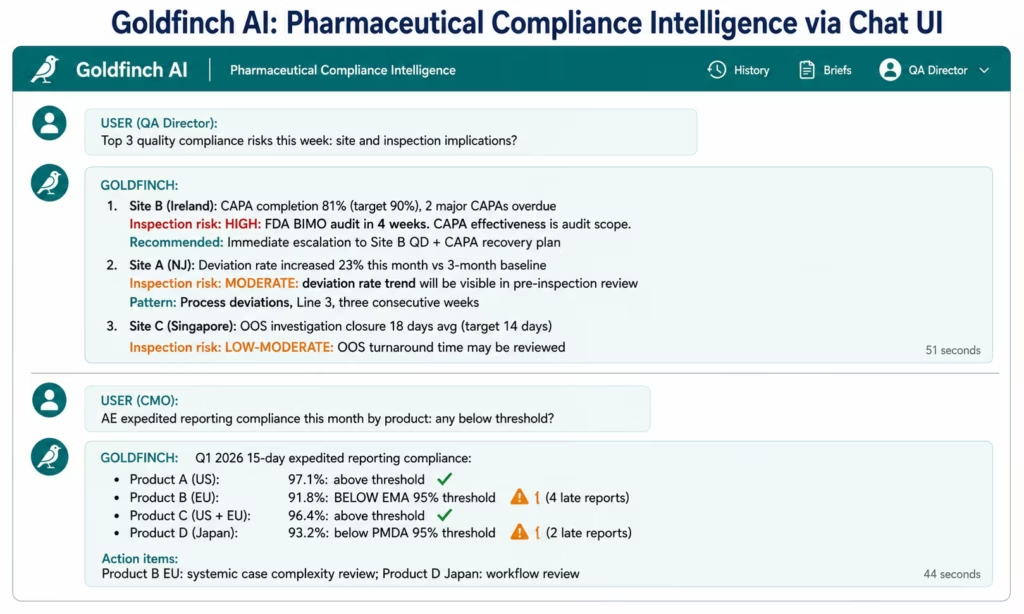
QA Director: weekly quality review preparation: “What are our top three quality compliance risks this week by site and what are the potential inspection implications?”
Goldfinch AI queries the Pharmaceutical Quality Intelligence Network, synthesises findings from the CAPA Compliance Agent, Deviation Trending Agent, and Quality Metrics Agent, ranks by inspection risk, and returns a structured compliance brief in under 60 seconds. The QA Director walks into the weekly quality review prepared, not waiting for the quality systems team to pull the report.
Chief Medical Officer: monthly safety review: “What is our adverse event expedited reporting compliance this month by product and market, and are any products currently below threshold?”
Goldfinch AI queries the Pharmacovigilance Surveillance Programme, calculates expedited reporting compliance rates by product and market against the applicable thresholds, identifies products below threshold, and returns a safety compliance dashboard in under 60 seconds.
VP of Regulatory Affairs: pre-submission preparation: “What active regulatory submissions do we have with health authority responses due in the next 60 days, and have any new relevant guidelines been published since we last filed?”
Goldfinch AI queries the Regulatory Intelligence Programme, retrieves all active submissions with upcoming response windows, checks the Regulatory Environment Monitoring Agent’s recent findings for relevant new guidances, and returns a structured submission readiness brief in under 60 seconds.
VP of Clinical Operations: trial status: “What is the current enrollment rate versus plan across all active Phase 3 trials, and which sites have the largest enrollment gaps?”
Goldfinch AI queries the Clinical Operations Intelligence Centre enrollment data, calculates site-level enrollment performance versus target, identifies the sites with the largest absolute and percentage gaps, and returns a trial enrollment performance summary in under 60 seconds.
Pre-Inspection Readiness: on-demand: “Summarise our quality compliance posture across all sites for the upcoming FDA BIMO audit at Site B.”
Goldfinch AI queries all four agentic programmes for Site B-specific data: CAPA completion history, deviation rate and root cause trends, OOS rate and investigation timelines, and regulatory commitment compliance. It returns a structured Site B pre-inspection brief: the same data an inspector would examine: in under 90 seconds. Previously: a pre-inspection readiness assessment required a dedicated preparation exercise consuming weeks of quality team time.
21 CFR Part 11 and GxP Governance for Agentic AI
Agentic AI in pharmaceutical environments introduces governance considerations proportionate to the number of compliance domains being monitored simultaneously and the regulatory consequences of the data being processed.
Data access scope per agent: minimum necessary principle:
Each worker agent is configured with the minimum data access required for its monitoring domain. The CAPA Compliance Agent accesses Veeva QMS CAPA records and completion timestamps: it does not access patient safety data, clinical trial data, or financial records. The AE Reporting Compliance Agent accesses aggregate reporting compliance metrics: it does not access individual patient case data. The minimum necessary principle, applied at the API access configuration level, limits the data exposure of each worker agent to what its monitoring function requires.
21 CFR Part 11 audit trail at programme level:
Every agent action in an agentic monitoring programme generates an immutable audit log entry. For a coordinator agent that synthesises findings from five worker agents to produce a quality intelligence brief, the audit trail documents:
- Each worker agent’s identity and the data sources it accessed
- The queries executed and the data retrieved by each agent
- The coordinator’s synthesis logic and the outputs produced
- The recipients of the intelligence brief and the delivery timestamp
- Any human reviewer actions on the brief (acknowledged, escalated, acted upon)
For FDA or EMA inspection purposes: the complete chain from source data to compliance intelligence finding is traceable in the audit log. An inspector asking “how did you identify the Site B CAPA trend before the quarterly review?” has a complete, documented answer.
Mandatory human authorisation for regulated actions:
The agentic intelligence programmes surface findings and route intelligence. They do not autonomously modify regulated records, close CAPAs, submit regulatory reports, or make batch disposition decisions. Every regulatory action that a Goldfinch AI finding might prompt still requires authorised human execution:
- The QA Director reviews the Site B CAPA risk alert and decides to escalate to the Site B Quality Director
- The PV Medical Director reviews the declining AE reporting rate alert and initiates the systemic case review
- The VP Regulatory Affairs reviews the new guideline alert and assesses the submission impact
- The QP reviews the batch quality intelligence brief and makes the batch disposition decision
The agentic intelligence informs; the qualified professional authorises.
SOC 2 Type II, HIPAA BAA, and EU GxP:
eZintegrations is SOC 2 Type II certified. All Goldfinch AI processing runs within eZintegrations’ infrastructure: adverse event data, patient information, clinical trial data, and regulatory documents are not sent to external AI providers. For pharmaceutical organisations where agentic workflows process data covered by HIPAA (clinical trial data with US subject information, adverse event data with patient identifiers), eZintegrations provides a signed HIPAA Business Associate Agreement (BAA). For EU GMP Annex 11 regulated environments, validation documentation support for the agentic AI programme (IQ/OQ/PQ templates, programme-level URS template) is available. GDPR compliance applies to all EU patient data processed through Goldfinch AI.
Key Outcomes and Results
Pharmaceutical organisations deploying agentic AI programmes across quality management, pharmacovigilance, regulatory affairs, and clinical operations report measurable improvements within 90-120 days:
Quality Management:
- CAPA compliance trend detection: 6-8 weeks (quarterly review) → 2-3 weeks (continuous monitoring)
- Cross-site quality pattern identification: not performed systematically → automated coordinator correlation
- Pre-inspection readiness assessment: weeks of manual preparation → on-demand 90-second Chat UI query
- Quality metrics executive reporting: monthly report → real-time Chat UI query
Pharmacovigilance:
- AE reporting compliance detection: quarterly meeting (below threshold for 6 weeks) → Week 2 trend alert
- Safety signal detection cycle: scheduled quarterly intervals → continuous EBGM/PRR monitoring
- PSUR/PBRER preparation lead time: improved through proactive data completeness monitoring
- PV case quality pattern identification: inspection finding → proactive continuous monitoring
Regulatory Affairs:
- Regulatory guideline change detection: discovered during submission review → publication-day alert
- Submission deadline monitoring: calendar-based → automated Watcher Tool with correlated impact analysis
- PAC compliance visibility: periodic review → continuous monitoring
- Cross-domain regulatory intelligence: siloed submission tracking → coordinated multi-domain correlation
Clinical Operations:
- Enrollment shortfall detection: monthly report → site-level weekly trend monitoring
- Protocol deviation escalation: manual site-level review → statistical trend detection
- Clinical supply buffer crisis: emergency resupply request → 3-4 week advance buffer compression alert
- Site composite risk identification: siloed monitoring → coordinator cross-domain correlation
How to Get Started
Step 1: Confirm your Level 1-3 pharmaceutical foundation
Agentic AI monitoring builds on existing eZintegrations pharmaceutical integration. The Pharmaceutical Quality Intelligence Network requires live Veeva QMS data, LIMS stability data, and deviation data connected to eZintegrations. The Pharmacovigilance Surveillance Programme requires the safety database connection. If these connections are not in place, start with the AI workflow pharma guide and the AI agents life sciences guide. Goldfinch AI coordination delivers the most value on top of an already-connected pharmaceutical technology stack.
Step 2: Choose your first agentic programme
The Pharmaceutical Quality Intelligence Network is typically the first deployment: CAPA compliance and deviation trending affect all sites and have the most direct inspection relevance. The Pharmacovigilance Surveillance Programme has the highest patient safety and regulatory compliance urgency. The Regulatory Intelligence Programme delivers the most value for organisations with complex multi-market submission portfolios. Choose based on your organisation’s highest compliance risk domain.
Step 3: Configure the coordinator and worker agents
Import the Goldfinch AI pharmaceutical programme template from the Automation Hub. Configure each worker agent with its data source connections and minimum necessary data access scope. Configure the coordinator’s synthesis rules: how to rank compliance risks by inspection significance, how to correlate cross-domain findings, and what format the intelligence brief should take.
Step 4: Set up the Chat UI for your executive compliance team
Configure Goldfinch AI Chat UI access for each pharmaceutical leadership role: QA Director, VP Regulatory Affairs, CMO, VP Clinical Operations, CFO. Set the data access scope per role: aggregate compliance intelligence by default, drill-down to individual site, product, or case data with appropriate governance controls. Brief the leadership team on query patterns.
Step 5: Activate Workflow Node intelligence programmes and validate
Configure the Workflow Node for the weekly quality intelligence brief, the daily PV compliance dashboard, and the weekly regulatory intelligence brief. In GxP environments: the agentic intelligence programme is subject to your computer system validation programme: eZintegrations provides programme-level validation support documentation. Activate: the first automated intelligence brief runs on the configured schedule.
Book a free demo and bring your current compliance monitoring blind spots. We will map your Veeva, safety database, LIMS, and regulatory tracking data to a Goldfinch AI programme and demonstrate the Chat UI with your actual executive compliance use cases.
FAQs
Agentic AI coordinates multiple AI agents working in parallel toward complex compliance monitoring goals. Individual AI agents at Level 3 handle one exception at a time such as a CAPA investigation, an adverse event case compilation, or a regulatory gap analysis. Agentic AI at Level 4 using Goldfinch AI deploys a coordinator that dispatches specialist worker agents across the pharmaceutical operation simultaneously, monitoring CAPA compliance across all sites, adverse event reporting rates across all products, and regulatory submission status across all active dossiers while synthesising cross-domain findings for executive decision-makers. The distinction is individual compliance exception investigation versus continuous population-level compliance intelligence with cross-domain correlation.
Goldfinch AI operates through two interfaces. The Chat UI answers natural language compliance queries from live Veeva QMS, safety database, LIMS, and regulatory tracking data in under 60 seconds, such as identifying CAPA compliance rates by site or adverse event reporting threshold risks. The Workflow Node runs autonomous scheduled programmes where coordinators dispatch parallel worker agents and deliver structured intelligence briefs automatically. For example, the Quality Intelligence coordinator delivers Monday morning quality briefs while the pharmacovigilance surveillance coordinator generates daily safety compliance dashboards. Both interfaces use the same coordinator-worker architecture with full 21 CFR Part 11 audit trails.
With Level 1-3 pharmaceutical integration foundations already in place including Veeva, LIMS, and safety database connections, configuring the Goldfinch AI programme, worker agent data access scopes, Chat UI executive access, and Workflow Node intelligence briefs typically requires 5-8 weeks. In GxP validated environments, an additional 6-10 weeks is usually required for computer system validation. Greenfield full-stack deployments starting from integration generally require 16-24 weeks. The Automation Hub includes programme-level templates for pharmaceutical agentic AI deployments.
Yes, All Goldfinch AI processing runs entirely within eZintegrations infrastructure, meaning pharmaceutical data is not transmitted to external AI providers. Every agent action, coordinator synthesis, and intelligence brief generates an immutable 21 CFR Part 11 compliant audit trail. Data access follows the minimum necessary principle and is enforced at the API configuration level. Human authorisation gates remain mandatory for regulated decisions, ensuring that Goldfinch AI surfaces intelligence while qualified professionals approve regulated actions. eZintegrations is SOC 2 Type II certified, supports HIPAA BAAs for covered healthcare data, and provides IQ, OQ, and PQ validation support documentation for GxP environments.
The Quality Intelligence Network uses four worker agents. The CAPA Compliance Agent monitors Veeva QMS CAPA records including completion status, due dates, and risk levels across all sites. The Deviation Trending Agent monitors Veeva QMS deviation records by site, product, type, and root cause. The Quality Metrics Agent monitors LIMS stability data, out-of-specification investigation records, complaint management systems, and first-pass yield metrics from MES and SAP systems. The Regulatory Compliance Agent monitors Veeva RIM post-approval commitments, annual product review due dates, periodic benefit-risk evaluation report schedules, and FDA or EMA guideline publications through web monitoring. All processing occurs within eZintegrations 21 CFR Part 11 compliant infrastructure.
Yes, Goldfinch AI supports both aggregate intelligence and drill-down analysis with governance controls. By default, the system returns population-level compliance intelligence such as compliance rates, trend summaries, and ranked risk lists. Drill-down access to specific adverse event cases, individual batch records, or site-specific deviation records is available through secondary queries governed by configured RBAC access controls and applicable privacy requirements. For adverse event data containing patient identifiers, HIPAA BAA coverage and access controls apply. For individual batch data, Qualified Person access permissions apply. Every query at both aggregate and detailed levels generates a full immutable audit trail.1. What is agentic AI for pharma and how is it different from AI agents?
2. How does Goldfinch AI work for pharmaceutical compliance?
3. How long does it take to set up agentic AI for pharma?
4. Is Goldfinch AI pharmaceutical intelligence compliant with 21 CFR Part 11 and EU GMP?
5. What pharmaceutical data sources does the Quality Intelligence Network monitor?
6. Can Goldfinch AI answer questions about specific patients, adverse event cases, or individual batches?
Conclusion: From Compliance Reporting to Compliance Intelligence
The quarterly quality review that discovers an eight-week CAPA completion decline. The monthly safety meeting that finds the AE reporting rate already below threshold for six weeks. The submission review that encounters a regulatory guideline change that went undetected for fourteen months. These are not data failures: the data was there. They are intelligence failures: the data was not being continuously monitored, correlated across domains, and routed to the right decision-maker in time.
Agentic AI for pharma is the architecture that converts pharmaceutical data into continuous compliance intelligence. The Pharmaceutical Quality Intelligence Network does not wait for a quarterly review to identify Site B’s CAPA completion problem: it detects the trend at Week 3, with the cross-domain correlation that identifies it as a systemic quality system resource issue rather than isolated CAPA slippage. The Pharmacovigilance Surveillance Programme does not wait for the quarterly safety meeting to discover a declining AE reporting compliance rate: it detects the Week 2 trend and routes an alert to PV management before the product falls below regulatory threshold.
The QA Director walks into the weekly quality review with a pre-assembled intelligence brief, not a data request she submitted two days ago. The CMO asks the Chat UI a question and receives a live answer in 44 seconds. The VP of Regulatory Affairs receives notification of a relevant new FDA guideline on the day it is published, with the impacted programmes already identified.
eZintegrations deploys Goldfinch AI pharmaceutical compliance intelligence within a fully GxP-compliant architecture: 21 CFR Part 11 immutable audit trails, minimum necessary data access per agent, mandatory human authorisation gates for all regulated decisions, native AI inference so no regulated data leaves eZintegrations’ infrastructure, and HIPAA BAA for patient-identified data. SOC 2 Type II certified.
Book a free demo and bring your current compliance monitoring blind spots. We will show you what continuous pharmaceutical compliance intelligence looks like for your specific Veeva, safety database, and regulatory tracking environment.
Browse agentic AI pharma templates in the Automation Hub to see the programme templates for the Pharmaceutical Quality Intelligence Network, Pharmacovigilance Surveillance Programme, Regulatory Intelligence Programme, and Clinical Operations Intelligence Centre.