7 Smart Fixes for Automations in Multiple Time Zones
November 17, 2025TL;DR
eZintegrations Global Scheduling Automation allows businesses to run workflows across multiple time zones accurately and consistently. It handles timezone conversions, offsets, cron scheduling, and rolling time-window processing, enabling region-specific triggers and Python-based custom logic. The platform reduces operational delays, ensures synchronized reporting, supports compliance, and improves global decision-making, making multi-timezone operations seamless and efficient.
Introduction
In today’s borderless business landscape, companies operate across continents — with teams in New York, partners in Tokyo, and customers in Sydney. However, cross-border tasks often fall out of sync because time zones don’t align. This leads to data delays, reporting inconsistencies, and operational gaps. Automations in Multiple Time Zones using Global Scheduling Automation in eZintegrations solves this with precision, enabling businesses to coordinate workflows across regions effortlessly and consistently.
eZintegrations turns time-zone complexity into an operational advantage with intelligent scheduling, dynamic time handling, and timezone-aware automation. The result: seamless data flows, timely operations, and predictable execution across borders.
Why Multiple Time Zones Break Global Operations
Why do global businesses struggle with time zones?
Misaligned local times cause operational delays and inaccurate reporting.
-
Definition: When systems execute tasks at local times that don’t match other regions, workflows and data syncing fail.
-
How it works: For example:
-
A U.S. team expects order updates at 6 AM, but APAC runs the sync at midnight.
-
European finance teams reconcile reports six hours late.
-
Logistics firms pull shipment records with misaligned timestamps.
-
Traditional integration tools lack advanced offset handling and timezone conversion. The result is operational friction, inaccurate reports, and delayed decisions — especially for automations in multiple time zones.
Global Scheduling Automation: The eZintegrations Advantage
What is Global Scheduling Automation in eZintegrations?
A platform feature that supports schedule-based or interval-based automation, cron triggers, and automatic timezone conversions.
-
How it works:
-
Assign workflows to time zones (e.g., America/Los_Angeles).
-
Add offsets for conversions (e.g., EST → JST).
-
Trigger Python-based custom logic for fiscal calendars, holidays, or ISO-week schedules.
-
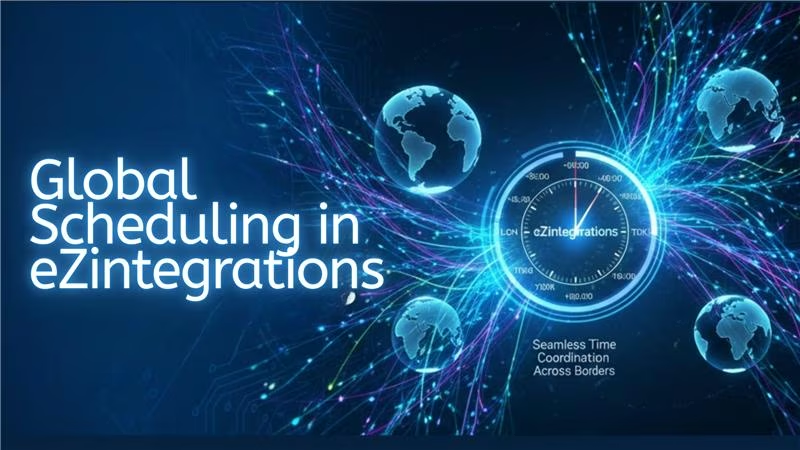
eZintegrations introduces timezone-smart scheduling built for global teams. Whether triggering workflows at region-specific hours or converting timestamps inside API calls, the platform ensures synchronized execution — no matter where your systems live.
You can choose schedule-based or interval-based automation, set cron triggers, assign a specific time zone (e.g., America/Los_Angeles), and automate adjustments like adding 32,400 seconds to convert from EST to JST.
This transforms automations in multiple time zones from a challenge into a strategic capability.
7 Ways Global Scheduling Automation Transforms Multi-Timezone Operations
1. Region-Aligned Workflow Execution
Run tasks at exact local times — 6 AM in Chicago, 10 PM in Singapore, or 8 AM in London — without manual adjustments. eZintegrations handles all conversions automatically.
2. Real-Time Timestamp Conversion
Convert timestamps across regions (PST → IST, EST → CET) for accurate, automated multi-timezone data handling.
3. Rolling Time-Window Processing
Pull data for the last 15 minutes, yesterday, or the current week — regardless of user or system timezone.
4. Cron Scheduling for Global Precision
Run tasks monthly, weekly, daily, or at custom intervals — tied to any timezone worldwide.
5. Parallel Multi-Zone Automation
Trigger regional workflows simultaneously. Each workflow respects its local timezone but remains globally aligned.
6. Compliance-Based Scheduling
Meet GDPR, HIPAA, and APAC regulations by running workflows during region-approved local windows.
7. Zero-Code Custom Logic With Python
Run advanced logic such as fiscal-calendar triggers, holiday-aware workflows, or ISO-week-based schedules.
Real-World Impact: Faster Operations & Lower Risks
What measurable benefits does global scheduling provide?
Global Scheduling Automation delivers instant benefits for businesses managing automations in multiple time zones:
-
30% reduction in operational delays
-
Consistent reporting accuracy across regions
-
Timely updates for global customers
-
Better decisions from synchronized data
Examples:
A healthcare provider unified U.S. and EU patient data with dramatically fewer errors. Logistics companies eliminated timezone mismatches, improving record accuracy and ROI. Retail brands aligned inventory syncs across continents to reduce stock discrepancies.
Why eZintegrations Makes Multi-Timezone Automation Easy
eZintegrations stands out with:
-
Timezone-aware triggers
-
Dynamic time handling inside API requests
-
Automatic conversions and offsets
-
No-code and low-code setup
-
Enterprise scalability
-
AI-powered automation support
It combines precision and simplicity so global teams can rely on flawlessly synchronized workflows.
Conclusion
Time zones shouldn’t slow global operations. With eZintegrations, automations in multiple time zones run accurately and predictably. From timestamp conversions to timezone-aware scheduling, the platform ensures your workflows always run at the right time — anywhere in the world.
Modern enterprises stay aligned, reduce delays, and operate at true global speed.
FAQ’s
Global Scheduling Automation enables businesses to run workflows at region-specific local times, ensuring synchronized operations across continents despite differing time zones.
Time zone differences cause delayed data syncs, misaligned reports, and inconsistent timestamps. Without timezone-aware tools, global teams often face gaps in operations and decision-making.
eZintegrations automatically converts timestamps across regions, supports custom offsets, and enables region-specific triggers such as PST→IST or EST→CET without manual adjustment.
Yes. eZintegrations supports cron scheduling for daily, weekly, monthly, or custom intervals, and allows every trigger to be tied to any global timezone for precise execution.
Use cases include regional reporting, inventory syncs, patient data updates, financial reconciliations, shipment processing, and compliance-based tasks that must run in specific local windows.
Yes. The platform supports real-time pulls and rolling windows using keywords like today, yesterday, min_time, and max_time, regardless of the system’s timezone.
Absolutely. eZintegrations allows Python-based logic for advanced scenarios like ISO week-based scheduling, holiday skipping, fiscal year alignment, and multi-zone custom workflows.
Organizations experience up to 30% fewer delays, improved reporting accuracy, synchronized data across regions, enhanced transparency, and better decisions driven by real-time consistency.
The platform supports compliance-based scheduling, allowing workflows to run only during permitted regional windows to meet standards like GDPR, HIPAA, and APAC data regulations.
Its timezone-aware triggers, dynamic time handling, no-code/low-code setup, Python extensibility, and enterprise-scale automation make it an ideal platform for running global operations in sync. 1. What is Global Scheduling Automation in eZintegrations?
2. Why do global operations struggle with time zones?
3. How does eZintegrations handle timezone conversions?
4. Can workflows be scheduled using cron expressions?
5. What types of automation benefit from global scheduling?
6. Does eZintegrations support real-time and rolling time-window processing?
7. Can I run custom logic for complex scheduling needs?
8. What business impact does Global Scheduling Automation deliver?
9. How does eZintegrations ensure compliance across regions?
10. What makes eZintegrations a game-changer for global enterprises?