How to Automate Email Purchase Orders to Epicor ERP
$0.00
|
Table of Contents
Description
| Problem Before: | Purchase orders received through email required manual forwarding and manual data entry into Epicor ERP, leading to delays and occasional errors. |
|---|---|
| Solution Overview: | An email parser extracts purchase order information from incoming emails and automatically creates structured purchase order records inside Epicor ERP. |
| Key Features: | Email content extraction; purchase order data parsing; Epicor API integration; validation rules. |
| Business Impact: | Improves procurement efficiency and reduces manual errors in purchase order processing. |
| Productivity Gain: | Eliminates manual purchase order entry from email attachments and messages. |
| Cost Savings: | Reduces operational effort and labor costs associated with manual purchase order processing. |
| Security & Compliance: | Encrypted email transmission and secure Epicor authentication |
Email to Epicor – Purchase Order Automation
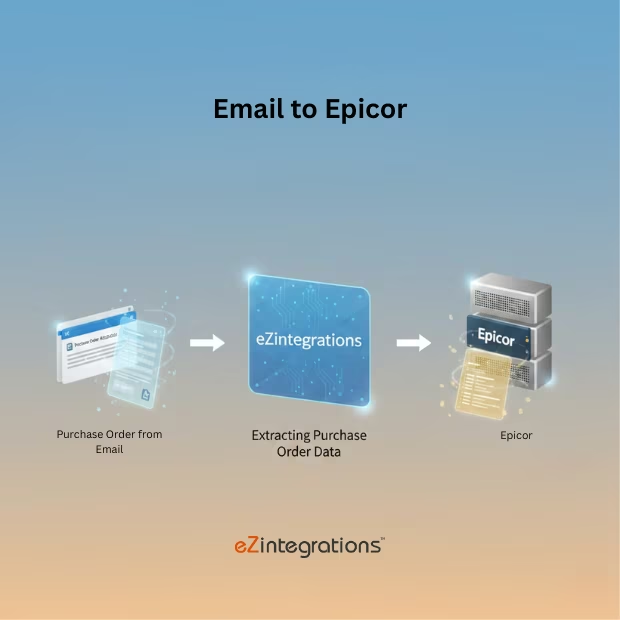
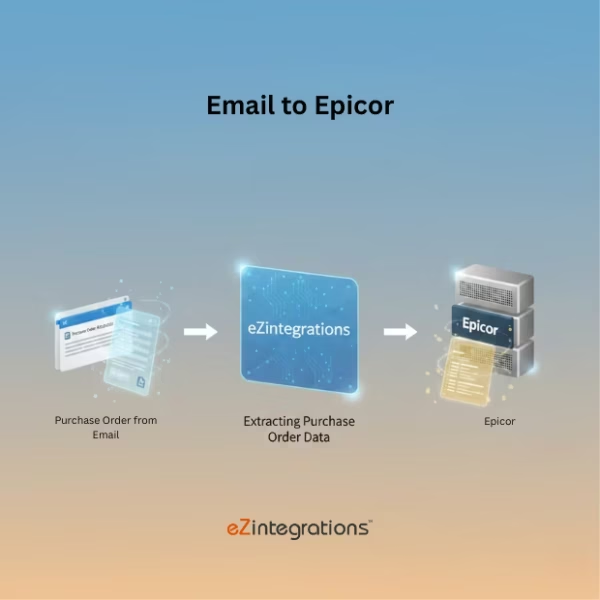
The Email to Epicor Purchase Order workflow automatically extracts purchase order details from incoming emails and creates purchase orders directly inside Epicor ERP. By eliminating manual email forwarding and data entry, the workflow allows procurement teams to process purchase orders faster and with greater accuracy.
Automated Email-to-ERP Purchase Order Integration
The workflow monitors incoming emails, extracts purchase order data using intelligent email parsing, validates key fields, and posts structured records into Epicor ERP in near real time. Purchasing and finance teams benefit from improved efficiency, fewer data entry errors, and faster procurement operations.
Watch Demo
| Video Title: | How to Automate LinkedIn Lead Research & Generate Personalized Icebreakers? |
|---|---|
| Duration: | 01:28 |
Outcome & Benefits
| Time Savings: | Reduces manual purchase order entry time by up to 80% |
|---|---|
| Cost Reduction: | Lower procurement processing costs through automated data capture |
| Accuracy: | Improved purchase order accuracy with automated validation rules |
| Productivity: | Faster purchase order processing for procurement teams |
Industry & Function
| Function: | Purchase Order Automation |
|---|---|
| System Type: | Email to ERP Workflow |
| Industry: | Manufacturing & Distribution |
Functional Details
| Use Case Type: | Purchase Order Automation |
|---|---|
| Source Object: | |
| Target Object: | ERP Purchase Order |
| Scheduling: | Real-time or batch |
| Primary Users: | Procurement teams |
| KPI Improved: | Purchase Order processing time; accuracy |
| AI/ML Step: | Optional AI-assisted email content extraction |
| Scalability Tier: | Enterprise |
Technical Details
| Source Type: | |
|---|---|
| Source Name: | Purchase Order Emails |
| API Endpoint URL: | Epicor API |
| HTTP Method: | POST |
| Auth Type: | OAuth / ERP Credentials |
| Rate Limit: | ERP-based |
| Pagination: | – |
| Schema/Objects: | Purchase Order fields |
| Transformation Ops: | Format validation; mapping |
| Error Handling: | Invalid Purchase Order flagged for review |
| Orchestration Trigger: | On email received |
| Batch Size: | Single or multiple Purchase Orders |
| Parallelism: | Multi-Purchase Order processing |
| Target Type: | ERP |
| Target Name: | Epicor |
| Target Method: | API / Connector |
| Ack Handling: | ERP response logged |
| Throughput: | High Purchase Order volume |
| Latency: | Seconds per Purchase Order |
| Logging/Monitoring: | Purchase Order processing logs |
Connectivity & Deployment
| On-Premise Supported: | Yes |
|---|---|
| Supported Protocols: | SMTP; API |
| Security & Compliance: | Encrypted email transmission and secure Epicor authentication |
FAQ
1. What is the 'Email to Epicor – Purchase Order' workflow?
It is an automated workflow that extracts purchase order details from incoming emails and posts them directly into Epicor ERP, removing manual entry and speeding up processing.
2. How does the workflow process purchase orders from email?
The workflow reads incoming emails, extracts purchase order information using AI-based document understanding, validates it, and automatically posts the orders into Epicor ERP.
3. What purchase order information is extracted?
It extracts PO numbers, vendor details, line items, quantities, prices, taxes, delivery dates, and other metadata required for accurate ERP posting.
4. Who typically uses this workflow?
Purchasing and Finance teams use this workflow to accelerate purchase order processing, reduce errors, and improve operational efficiency.
5. What are the benefits of automating PO transfer via email?
Automation ensures faster and accurate purchase order processing, reduces manual effort, improves compliance, and enhances efficiency.
6. Can this workflow handle multiple purchase orders in one email?
Yes, the workflow can process multiple purchase orders from a single email if the documents are formatted consistently.
7. Is validation applied before posting to ERP?
Yes, configurable validation rules ensure that all extracted purchase order data is complete and accurate before posting to Epicor ERP.
8. What systems does this workflow integrate with?
The workflow integrates with Epicor ERP and enterprise email systems to enable automated purchase order ingestion.
Case Study
| Customer Name: | Industrial Equipment Supplier |
|---|---|
| Problem: | Purchase orders received via email were manually entered into Epicor ERP, resulting in processing delays and occasional data entry errors. |
| Solution: | An automated workflow was deployed to extract purchase order data from incoming emails and create purchase order records directly inside Epicor ERP |
| ROI: | Reduced operational effort and improved procurement efficiency. |
| Industry: | Manufacturing & Distribution |
| Outcome: | Procurement teams eliminated manual entry and significantly improved purchase order processing speed. |