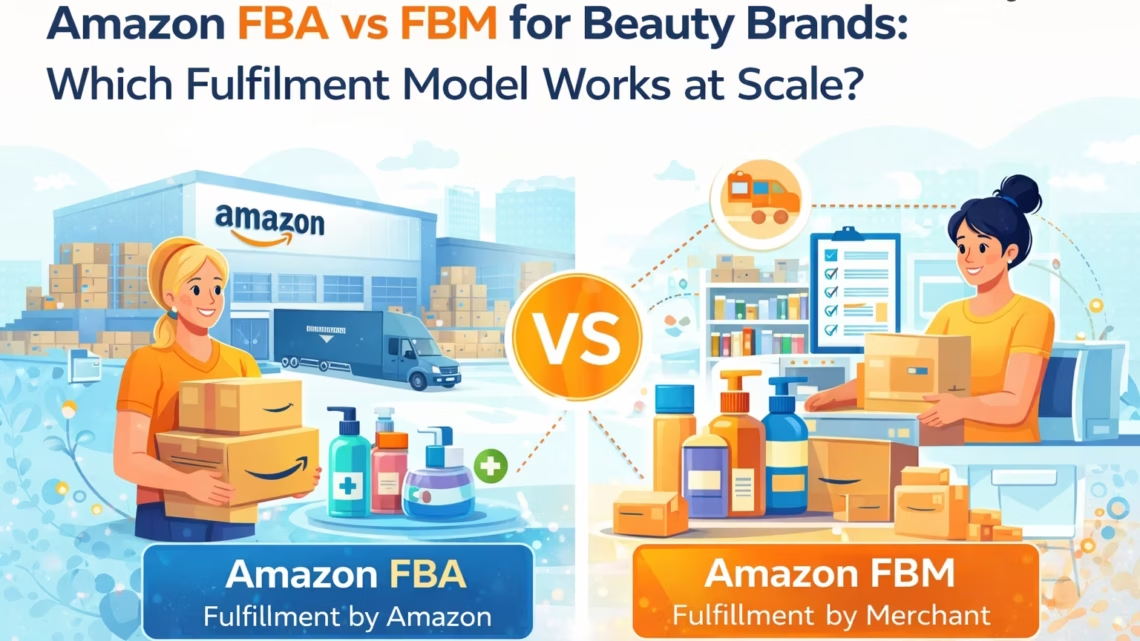
Amazon FBA vs FBM for Beauty Brands: Which Fulfilment Model Works at Scale?
April 11, 2026Amazon FBA (Fulfillment by Amazon) stores your beauty products in Amazon’s fulfilment centres and handles picking, packing, shipping, and customer service. FBM (Fulfilled by Merchant) means you or your 3PL ship each order to the customer. For beauty brands at scale, FBA is typically best for high-velocity hero SKUs (bestselling lip glosses, foundations) that justify the storage fees and inventory pre-positioning cost; FBM is better for limited editions, bundles, high-value gift sets, oversized products, or SKUs where you need full control over packaging and presentation. Most scaling beauty brands run a hybrid model: eZintegrations automates both via the Amazon SP-API, posting FBA sell-through data and FBM order fulfilment to the same ERP in one workflow.
TL;DR
FBA: Amazon warehouses and ships your products. You pre-position inventory at Amazon FCs. Amazon handles Prime eligibility, customer service, and returns. You pay storage fees, fulfilment fees, and FBA prep costs. FBM: you or your 3PL fulfil each order. You control packaging, presentation, and shipping speed. You handle customer service for fulfilment issues. No storage fees, but you pay your own fulfilment costs. The ERP integration difference: FBA inventory lives at Amazon (tracked via SP-API GET /fba/inventory/v1/summaries), not at your 3PL. FBM orders require a fulfilment request to your 3PL and a shipment confirmation back via SP-API. The integration logic for each is different. Most beauty brands at $5M+ GMV run a hybrid: FBA for hero SKUs, FBM for limited editions, bundles, and high-value gift sets. eZintegrations handles both models in one workflow: FBA sell-through and replenishment alerts from SP-API, FBM order routing to your 3PL and shipment confirmation back to Amazon. Both post to the same ERP.
What Is FBA and FBM for Beauty Brands
You have a lipstick collection on Amazon. 47 SKUs. Six shades in standard sizes, three shades in deluxe size, four limited edition holiday shades, and two gift sets bundling lipstick with liner.
Amazon will gladly help you sell all 47 SKUs. The question is who picks, packs, and ships each order. That is the FBA vs FBM decision.
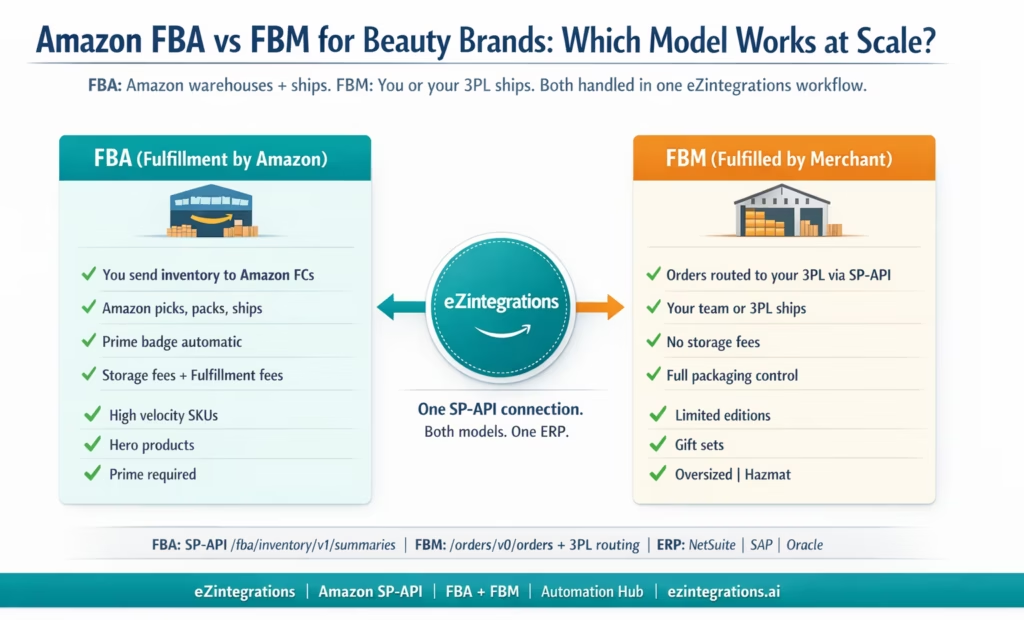
FBA (Fulfillment by Amazon): you send inventory to Amazon’s fulfilment centres (FCs). When a customer orders, Amazon picks it from the FC shelf, packs it, ships it, and handles the return if needed. Your product gets the Prime badge. You are charged per unit: storage fee per cubic foot per month, fulfilment fee per unit shipped.
FBM (Fulfilled by Merchant): when a customer orders, the order notification goes to you (via SP-API) or your 3PL. You (or your 3PL) pick, pack, and ship. You confirm the shipment back to Amazon with a tracking number. The product can still be on Amazon, but without the automatic Prime badge (unless you qualify for Seller-Fulfilled Prime).
For beauty brands, both models have clear strengths and clear failure modes. Neither is universally better. The right answer depends on the SKU, the order velocity, the product characteristics, and how your ERP and 3PL are set up.
FBA: How It Works and What It Costs
The FBA Process
- You create a shipment plan in Seller Central (or via SP-API
POST /inbound/vnd/shipments), specifying which products and quantities you are sending to Amazon FCs. - You or your 3PL prepares the inventory per Amazon’s FBA prep requirements: FNSKU labels printed and applied to each unit, poly-bagged if required (Amazon’s beauty category has specific bagging requirements for liquids and powders), cartons packed and labelled.
- The inventory is shipped to the assigned Amazon FC (Amazon assigns which FC based on their inventory placement system).
- Amazon receives and processes the inventory. Units appear in your FBA Available inventory (visible via SP-API
GET /fba/inventory/v1/summarieswithdetails=true). - When a customer orders, Amazon fulfils. You see a “Shipped” status in SP-API orders. No action required from you for fulfilment.
- Amazon handles returns, refunds, and customer service for fulfilment issues.
FBA Fee Structure for Beauty Brands
FBA fees for beauty products depend on unit weight and dimensions. Beauty products are typically lightweight, which is a cost advantage. As of 2026, indicative FBA fees:
- Fulfilment fee per unit: $3.22-$4.75 for small standard size (under 0.75 lb). Most lip glosses, mascaras, and travel-size skincare fall here.
- Monthly storage fee: $0.78/cubic foot (January-September), $2.40/cubic foot (October-December). Beauty gift sets and larger items accumulate storage fees faster.
- Long-term storage fee: units stored longer than 365 days incur an additional $6.90/cubic foot monthly. Near-expiry beauty products are at risk of this fee if not managed proactively.
The FBA cost equation for beauty: a lip gloss with a $2.80 COGS sold at $14.99 has approximately $4.50 in FBA fees (fulfilment + estimated storage). That is 30% of the sale price in fees before advertising, COGS, or overhead. For high-velocity SKUs with good margins, this is workable. For low-velocity or high-cost items, FBA can erode margins significantly.
FBA Inventory Challenges Specific to Beauty
Expiry date management. Amazon requires beauty products with expiry dates to have a minimum of 90 days remaining shelf life on receipt at the FC. Products received with less than 90 days are subject to removal or disposal. Your ERP and 3PL must track lot expiry dates and prevent near-expiry units from being sent to Amazon FCs.
Prep requirements. Amazon’s beauty category has specific prep rules: liquids must be poly-bagged in sealed bags, loose powders must be poly-bagged or shrink-wrapped, fragile items require bubble wrap. Incorrect prep generates an FBA prep non-compliance fee ($0.50+ per unit). These requirements must be built into your FBA shipment workflow.
FNSKU labelling. Amazon requires FNSKU (Fulfillment Network Stock Keeping Unit) labels on every unit. The FNSKU is an Amazon-specific identifier: different from your ERP SKU and different from the retail UPC. Your FBA shipment workflow must generate and apply FNSKU labels before shipment to Amazon. eZintegrations maps ERP SKU to FNSKU via the Amazon Catalog Items API.
Commingling risk. If you opt for Amazon’s commingled inventory (stickerless), your units are mixed with other sellers’ identical ASINs. For beauty brands, this can result in counterfeit or expired competitor units being sent to your customers. Most beauty brands opt for labelled (non-commingled) inventory to protect brand reputation.
FBM: How It Works and What It Costs
The FBM Process
- Your product listing is active on Amazon. No inventory pre-positioned at Amazon.
- A customer places an order on Amazon. The order appears in SP-API
GET /orders/v0/orderswithFulfillmentChannel: MFN(Merchant Fulfilled Network). - Your integration (eZintegrations) receives the order, maps the ASIN to your ERP SKU, creates an ERP sales order, and routes a fulfilment request to your 3PL.
- Your 3PL picks, packs, and ships the order per your packaging specs.
- eZintegrations receives the shipment confirmation from the 3PL (tracking number) and calls SP-API
POST /orders/v0/orders/{orderId}/shipmentto confirm fulfilment to Amazon. - Amazon marks the order as shipped. The customer receives the tracking notification.
- You or your 3PL handle returns (Amazon routes return requests to you as the seller).
FBM Fee Structure
For FBM, you pay Amazon’s referral fee (typically 8-15% of sale price for beauty, varies by subcategory) but not FBA fees. Your costs include your own fulfilment cost (3PL pick, pack, and ship fee, typically $4-$8 per unit for standard beauty orders) and shipping carrier cost. For a $14.99 lip gloss, FBM total fees might be: $1.50 referral + $5.00 3PL fulfilment + $3.50 carrier = $10.00 total fulfilment cost vs $4.50 FBA fee. FBM is often more expensive per unit than FBA for small standard items because you cannot match Amazon’s carrier rate negotiation.
The FBM cost advantage appears for: heavier or larger items (where FBA fees scale up faster than your own carrier rate), high-value items (where the referral fee is large but FBA adds little), gift sets and bundles (which require custom kitting your 3PL can do, but Amazon FC cannot easily do), and oversized or hazmat items (FBA surcharges can be prohibitive).
FBM Advantages Specific to Beauty
Packaging control. FBM shipments go out in your branded packaging. You can include inserts, samples, loyalty program cards, and unboxing tissue paper. FBA uses Amazon’s standard box or poly-mailer. For premium beauty brands where the unboxing experience is part of the brand promise, FBM preserves this.
No minimum shelf life constraint. Your 3PL can ship products with 60 days remaining shelf life to a DTC customer (who will use it within weeks). Amazon FC requires 90 days minimum. For near-expiry clearance or limited edition products with a tight window, FBM enables fulfilment that FBA would reject.
Hazmat and restricted beauty items. Many beauty products contain aerosol sprays, flammable nail polishes, or restricted chemical ingredients. Amazon classifies these as Hazmat and charges FBA Hazmat surcharges or outright restricts some items from FBA. FBM has no such restrictions (as long as your 3PL carrier allows the shipment).
Gift sets and bundles. Custom gift sets require kitting at the fulfilment stage: combining a lipstick, liner, and branded box into a single shippable unit. Amazon FC does not kit items on demand. FBA gift sets must be pre-kitted and shipped to the FC as a single unit (with a separate FNSKU for the kit). Your 3PL can kit-to-order, handling gift set assembly only when the order arrives, without tying up pre-kitted inventory.
The Beauty Brand Decision Framework: When FBA Wins, When FBM Wins
Use this framework to decide the fulfilment model per SKU, not per brand.
FBA Is the Better Choice When:
The SKU has high velocity and stable demand. FBA’s per-unit efficiency and Prime eligibility advantage outweigh storage costs when the product turns quickly. A hero foundation that sells 200 units per day benefits from FBA: the inventory moves fast, storage fees are minimal per unit sold, and Prime eligibility drives conversion.
The product is small, lightweight, and compliant with FBA prep requirements. Most beauty standard sizes (mascara, lip gloss, travel skincare) are small standard FBA items with low fulfilment fees. Weight-based FBA fees are favourable for products under 1 lb.
Prime badge is essential to conversion. For commoditised beauty categories (basic moisturisers, everyday mascara), Prime is often the deciding factor for a conversion. A non-Prime listing loses to a Prime listing at the same price.
You have enough volume to justify the per-unit prep cost. FBA prep (FNSKU labelling, poly-bagging, prep centre costs) is typically $0.50-$1.50 per unit. At 5,000+ units per shipment, this cost is manageable. At 100 units, it is proportionally large.
FBM Is the Better Choice When:
The SKU is a limited edition or seasonal item. A holiday gift set available for 8 weeks does not justify the inbound shipping lead time and storage fees of FBA. FBM ships direct from your 3PL when ordered.
The product is a bundle or gift set assembled to order. Custom kitting is your 3PL’s domain. FBM handles kit-to-order economically. FBA requires pre-kitted inventory with its own FNSKU.
The product has a short shelf life or is near expiry. Amazon’s 90-day minimum shelf life constraint means near-expiry units must go FBM or be sold off-Amazon. A limited batch of a reformulated shade with 75 days remaining goes FBM, not to an Amazon FC.
The product is hazmat, oversized, or has FBA surcharges that eliminate margin. Large pump dispensers, aerosol hairsprays, or oversized bundles carry FBA fees that can exceed the product’s margin at scale. FBM ships these at your standard carrier rate.
Brand presentation and unboxing matter. Luxury beauty brands, subscription boxes, and DTC experience-first brands typically prefer FBM for the packaging and insert control it enables.
The Hybrid Model: Running FBA and FBM Simultaneously
The most common strategy for beauty brands at scale is not choosing between FBA and FBM. It is running both for different SKUs simultaneously.
A typical hybrid approach:
| SKU Type | Fulfilment Model | Reason |
|---|---|---|
| Hero SKUs top 5 bestsellers | FBA | High velocity, Prime drives conversion |
| Everyday SKUs stable medium velocity | FBA | Consistent demand, manageable storage |
| Limited edition shades | FBM | Short window, no justification for FBA inbound |
| Gift sets and holiday bundles | FBM | Kit-to-order, custom packaging |
| Oversized or heavy SKUs | FBM | FBA surcharge eliminates margin |
| Near expiry clearance | FBM | Below Amazon’s 90-day minimum |
| Hazmat items aerosols nail polish | FBM | FBA Hazmat surcharge or restriction |
| New product launches | FBM initially then FBA | Test velocity before committing to FBA |
The hybrid model creates an integration complexity: a single Amazon order page might contain one item fulfilled by Amazon (FBA) and one item fulfilled by you (FBM, called a split order). Your ERP and integration must handle both cases from the same SP-API order response.
In the SP-API order response, FulfillmentChannel: AFN (Amazon Fulfillment Network) identifies FBA items. FulfillmentChannel: MFN (Merchant Fulfillment Network) identifies FBM items. The integration filters by this field: FBA items create ERP accounting records only (no 3PL fulfilment request), FBM items create ERP sales orders and route to the 3PL.
How FBA and FBM Affect Your ERP Integration
This is where FBA and FBM diverge most significantly from an operations and data perspective. Understanding the difference is critical for designing an ERP integration that handles both accurately.
FBA: Inventory Lives at Amazon
For FBA, your inventory is physically at an Amazon FC, not at your 3PL. This means:
Your ERP must track two inventory pools: – Inventory at your 3PL: available to sell on FBM channels and to be replenished to Amazon FCs – Inventory at Amazon FCs: available to sell on Amazon FBA only
If your ERP shows 3,400 units of Rose Gloss and 1,800 of those are at Amazon FCs, only 1,600 are available for non-Amazon orders. If your ops team does not know this split, they may commit the Amazon-FC units to a Walmart order.
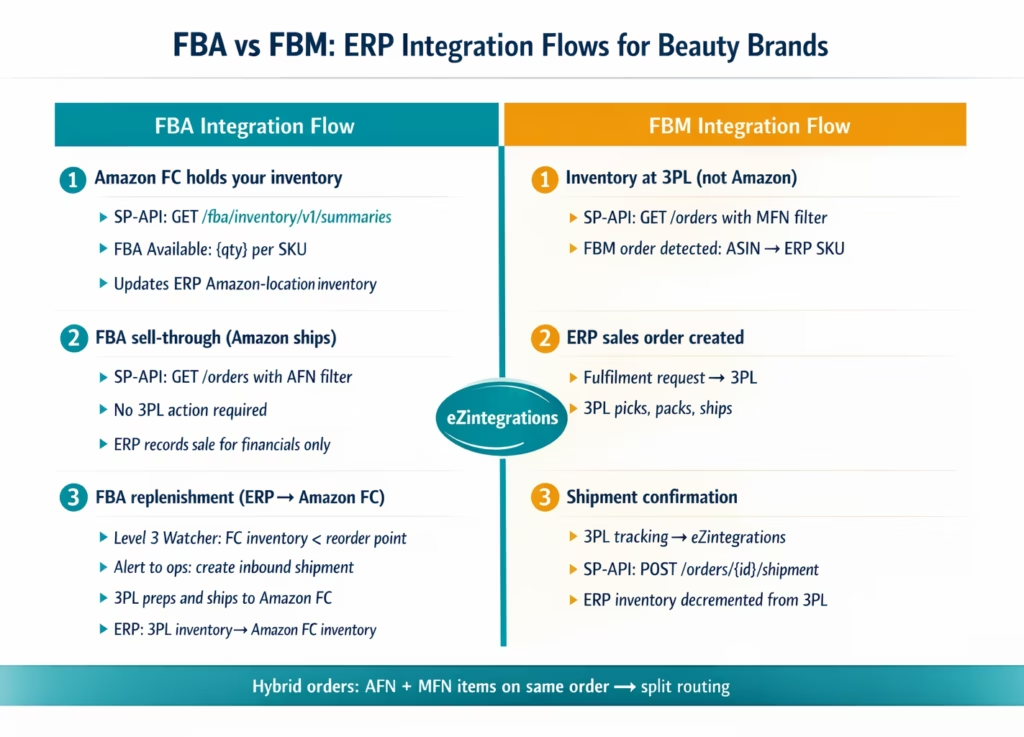
FBA sell-through does not create a fulfilment request. When Amazon sells a unit on your behalf, you do not receive a fulfilment order to process. Amazon handles it. The inventory at the FC decreases by one unit. Your ERP must track this by polling GET /fba/inventory/v1/summaries and updating the Amazon-location inventory in your ERP to reflect the sell-through.
FBA replenishment requires active monitoring. When Amazon FC inventory drops below a threshold (your reorder point), you must create a shipment plan and send more inventory. This replenishment flow (ERP → FBA inbound shipment → Amazon FC) is a critical integration that many beauty brands manage manually, resulting in FBA stockouts.
FBM: Standard Order-to-Fulfilment Flow
For FBM, the integration is the standard flow described in Row 145 and Row 148:
- SP-API poll detects new FBM orders (
FulfillmentChannel: MFN) - ERP sales order created
- Fulfilment request sent to 3PL
- 3PL ships, tracking number returned
- SP-API shipment confirmation posted
- ERP inventory decremented from 3PL location
The key difference from FBA: FBM directly consumes your 3PL inventory. FBA consumes your Amazon FC inventory, which must be replenished from your 3PL inventory on a separate cycle.
FBA SP-API Integration: Inventory Tracking and Replenishment
Tracking FBA Inventory
eZintegrations polls FBA inventory via the SP-API:
GET https://sellingpartnerapi-na.amazon.com/fba/inventory/v1/summaries
  ?details=true
  &granularityType=Marketplace
  &granularityId=ATVPDKIKX0Der
  &marketplaceIds=ATVPDKIKX0Der

Authorization: Bearer {lwa_access_token}
Response includes per-ASIN/FNSKU: – afnFulfillableQuantity: units Amazon can immediately ship to customers – afnReservedQuantity: units reserved for pending orders (being picked, packed, or in transit to customer) – afnUnsellableQuantity: units in unfulfillable condition (damaged, expired) – afnWarehouseQuantity: total units at Amazon FCs
eZintegrations maps afnFulfillableQuantity to the Amazon-FC location in the ERP. This is the quantity that Amazon can sell on your behalf at any given moment. Polling frequency: every 30-60 minutes.
FBA Replenishment Alert
Level 2 (AI Workflows): for FBA inbound management, Goldfinch AI Document Intelligence validates Amazon FC receiving confirmations against expected shipment quantities and flags discrepancies. For FBM, Level 2 handles non-standard order formats and ASIN mapping edge cases.
Level 3 Watcher monitors afnFulfillableQuantity against a configurable reorder threshold per SKU:
IF afnFulfillableQuantity < reorder_threshold THEN
    ALERT ops team: "FBA reorder needed for {ASIN}: {qty} remaining, threshold {threshold}"
    CREATE replenishment task in ERP
    CHECK 3PL available quantity for the corresponding SKU
For a beauty brand with seasonality (holiday gift season), the reorder threshold should dynamically adjust: higher thresholds in October-November to ensure adequate Amazon FC cover through the peak period.
Level 4 (Goldfinch AI): orchestrates the full FBA-FBM hybrid workflow as a Workflow Node for autonomous management of both fulfilment channels. The Goldfinch AI Chat UI enables ops managers to query the combined Amazon inventory position in natural language: “What is our FBA fulfillable quantity for Velvet Foundation vs our reorder threshold?”, “Which ASINs are scheduled for FBA inbound this week?”, or “Show all FBM orders pending 3PL confirmation today.”
FBA Inbound Shipment (3PL to Amazon FC)
When replenishment is confirmed, the FBA inbound shipment workflow: 1. ERP picks the lot with the longest remaining shelf life (FEFO: First Expiry, First Out) and verifies it meets Amazon’s 90-day minimum. 2. Fulfilment request sent to 3PL with prep instructions: apply FNSKU labels, poly-bag per Amazon beauty category requirements, pack in Amazon-compliant master carton quantities. 3. SP-API creates the inbound shipment plan: POST /inbound/vnd/shipments with the item list. 4. Amazon assigns the FC destination. 3PL ships to the assigned FC. 5. When Amazon receives and processes the inventory, afnFulfillableQuantity increases. eZintegrations detects the increase, posts a goods receipt to the ERP (Amazon-FC location increases, 3PL location decreases).
FBM SP-API Integration: Order Routing and Shipment Confirmation
FBM Order Detection
The SP-API order poll filters for FBM orders using the FulfillmentChannel field:
GET /orders/v0/orders
  ?MarketplaceIds=ATVPDKIKX0Der
  &OrderStatuses=Unshipped
  &FulfillmentChannels=MFN
  &CreatedAfter={timestamp}
MFN (Merchant Fulfillment Network) identifies FBM orders. AFN (Amazon Fulfillment Network) identifies FBA orders: these are processed by Amazon and require no fulfilment action from you.
FBM Order Processing
For each FBM order:
1. Order items are extracted: ASIN, QuantityOrdered, ItemPrice, ShipServiceLevel.
2. ASIN is mapped to ERP SKU via the mapping table.
3. ERP sales order created with channel tag source: Amazon_FBM.
4. Fulfilment request sent to 3PL (DHL, Kenco, UPS SCS depending on routing rules).
5. ShipServiceLevel determines the SLA the 3PL must meet: SecondDay means 2-day delivery is required.
Shipment Confirmation to Amazon
When the 3PL ships:
POST https://sellingpartnerapi-na.amazon.com/orders/v0/orders/{orderId}/shipment
Content-Type: application/json

{
  "packageReferenceId": "pkg-001",
  "carrierCode": "UPS",
  "trackingNumber": "1Z9W4872...",
  "shipDate": "2026-03-30T14:00:00Z",
  "orderItems": [
    { "orderItemId": "{id}", "quantity": 1 }
  ]
}
This closes the Amazon order and triggers the customer shipment notification. If the FBM shipment is late relative to the promised delivery date, Amazon’s system may issue a Late Shipment Rate (LSR) defect. Automating the SP-API shipment confirmation within minutes of the 3PL carrier scan prevents LSR defects from manual confirmation delays.
Before vs After: Manual FBA/FBM Management vs Automated
| Process Step | Manual FBA FBM Management | Automated with eZintegrations |
|---|---|---|
| FBA inventory tracking | Manual Seller Central check or spreadsheet | SP API FBA inventory summaries update ERP Amazon location every 30 to 60 minutes |
| FBA sell through ERP update | Manual journal entry or end of day reconciliation | SP API orders with AFN filter update ERP financial records only |
| FBA replenishment trigger | Manual detection when listing goes out of stock | Watcher triggers alert when fulfilable quantity falls below threshold |
| FBA inbound shipment preparation | Manual instructions sent to 3PL | FNSKU mapping and prep instructions sent automatically with replenishment task |
| FBM order detection | Seller Central dashboard or email alerts | SP API polling every 2 to 5 minutes detects MFN orders automatically |
| FBM fulfilment routing | Operations team manually sends orders to 3PL | Automated routing sends MFN orders to 3PL within seconds |
| FBM shipment confirmation | Manual entry or API call risk of late shipment rate | Triggered automatically from 3PL shipment event within minutes |
| Hybrid order handling | Manual split of FBA and FBM lines | Automated routing AFN lines to accounting MFN lines to fulfilment |
| ASIN to FNSKU mapping | Maintained manually in spreadsheet | Managed dataset populated via Amazon catalog API |
| FBA versus FBM inventory split | Separate spreadsheets for tracking | ERP maintains Amazon fulfilment center and 3PL locations |
| Expiry date enforcement | Manual check before FBA inbound | Automated lot expiry validation ensures compliant inventory |
| Near expiry stock routing | Only identified if manually checked | Automated alerts route near expiry stock to FBM or clearance |
| Amazon FBA stockout response | Reactive when sales drop | Proactive reorder alerts triggered before stockout |
Step-by-Step: A Day in the Life of a Hybrid Beauty Brand’s Amazon Integration
Here is how eZintegrations manages both FBA and FBM in a single day for Lumière Cosmetics.
Inventory position at 6:00 AM: FBA (Amazon FCs): 2,100 units of Velvet Foundation (hero SKU, FBA) – 3PL (DHL Atlanta): 800 units of Velvet Foundation (replenishment stock for Amazon FC) – 3PL (DHL Atlanta): 450 units of Holiday Glow Set (limited edition, FBM only)
6:00 AM: FBA inventory sync. Level 3 polls SP-API FBA summaries: afnFulfillableQuantity: 2,100 for Velvet Foundation ASIN B09X4JT2Z1. ERP Amazon-location inventory updated to 2,100.
Reorder threshold for Velvet Foundation is 1,800 units. 2,100 > 1,800. No replenishment alert.
9:05 AM: Amazon orders arrive. SP-API poll detects 31 new orders: – 27 orders for Velvet Foundation (FBA, FulfillmentChannel: AFN): Amazon handles these. eZintegrations creates ERP financial records for the 27 orders. No 3PL action. ERP Amazon-location count will update on next FBA summary poll (Amazon’s fulfillable quantity does not decrement in real time from order placement; it decrements when Amazon ships). – 4 orders for Holiday Glow Set (FBM, FulfillmentChannel: MFN): these require fulfilment. eZintegrations creates 4 ERP sales orders and sends 4 fulfilment requests to DHL Atlanta.
9:05 AM: FBM fulfilment routed. 4 Holiday Glow Set orders routed to DHL Atlanta. DHL confirms receipt.
1:30 PM: DHL ships FBM orders. DHL processes and ships all 4 Holiday Glow Set orders. DHL push API fires shipment events with tracking numbers. eZintegrations receives the events: – 4 × SP-API POST /orders/v0/orders/{orderId}/shipment calls: Amazon orders marked as shipped, customers notified. – 4 × ERP item fulfilments posted. – DHL 3PL inventory decremented: 450 – 4 = 446 Holiday Glow Sets remaining.
2:00 PM: Afternoon FBA inventory sync. SP-API FBA summaries polled again. Amazon has shipped some of the morning’s FBA orders. afnFulfillableQuantity: 2,067 (Amazon shipped ~33 units since morning, some from this morning’s orders, some from overnight orders Amazon was processing). ERP Amazon-location updated to 2,067.
2,067 still above the 1,800 reorder threshold. No replenishment alert.
4:45 PM: FBA replenishment alert fires. Level 3 detects that afnFulfillableQuantity for Velvet Foundation has dropped to 1,750 (high daily velocity). This is below the 1,800 reorder threshold. Alert fires:
“FBA Reorder Alert: Velvet Foundation B09X4JT2Z1. FBA fulfillable: 1,750. Threshold: 1,800. Reorder recommended: 2,000 units. 3PL available: 800 units at DHL Atlanta. Recommend sending 800 available units. Lead time to Amazon FC: 3-5 days.”
The ops manager confirms: send 800 units. eZintegrations creates the FBA inbound shipment plan via SP-API. Instructions sent to DHL Atlanta: apply FNSKU labels for ASIN B09X4JT2Z1, poly-bag each unit per Amazon beauty category requirements, ship to assigned FC.
6:00 PM: End-of-day reconciliation. ERP Amazon-location: 1,750 (current FBA fulfillable). ERP 3PL location: 800 (pending FBA inbound, now committed). ERP Amazon-FC-inbound: 800 (in transit to FC). Both channels see correct available inventory. Zero manual reconciliation.
Key Outcomes and Results
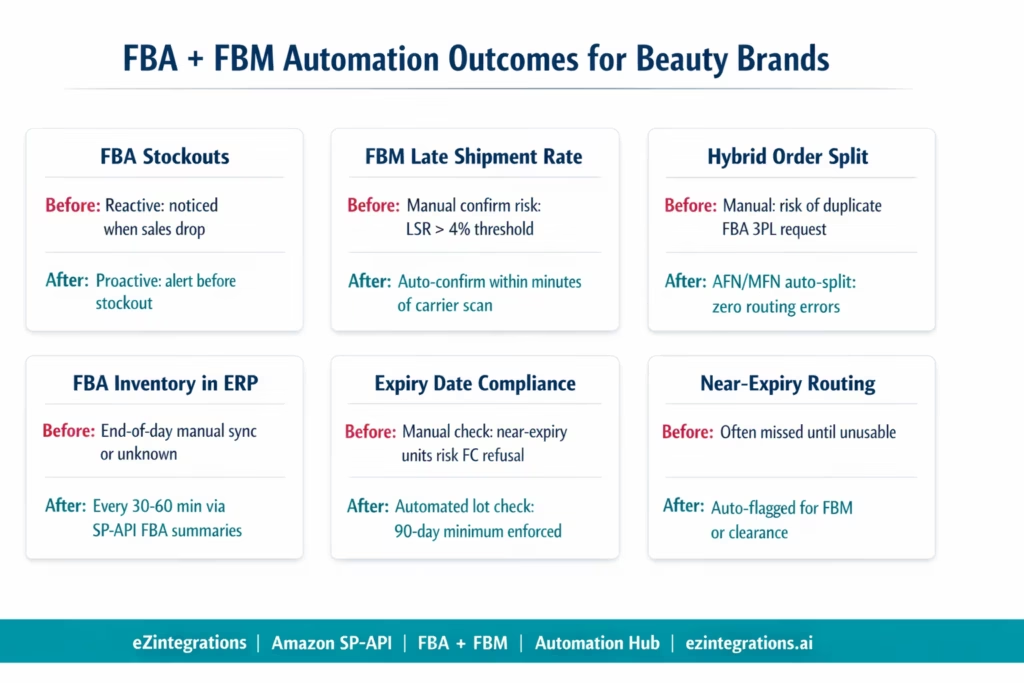
FBA stockout prevention: automated replenishment alerts fire when afnFulfillableQuantity drops below the configurable threshold. For beauty brands with daily velocity of 50-500 units on hero FBA SKUs, this prevents the out-of-stock event that suppresses the Amazon listing in search rankings. FBA stockouts are difficult to recover from because Amazon’s algorithm deprioritises recently out-of-stock listings.
FBM Late Shipment Rate (LSR) prevention: automated SP-API shipment confirmation within minutes of 3PL carrier scan prevents the manual confirmation delays that generate LSR defects. Amazon’s performance threshold requires LSR below 4% of orders. Manual FBM confirmation processes frequently push beauty brands above this threshold during high-volume periods.
Hybrid order accuracy: the automatic AFN/MFN split in the SP-API order processing prevents FBA orders from accidentally generating 3PL fulfilment requests (which causes duplicate shipments) and prevents FBM orders from being ignored (which causes missed fulfilment and LSR defects).
FBA inventory visibility in ERP: with FBA sell-through posted to the ERP every 30-60 minutes, the ERP’s cost-of-goods calculations and inventory valuation are accurate. Many beauty brands run FBA without ERP integration and discover incorrect COGS and inventory values at year-end when they reconcile.
Expiry date compliance: automated lot expiry check before every FBA inbound shipment ensures no near-expiry units (below 90 days remaining) are sent to Amazon FCs, preventing FBA removal fees and Amazon account health issues.
Near-expiry routing: near-expiry lots that cannot go to Amazon FC are automatically flagged for FBM routing (where you control the customer relationship and can communicate the remaining shelf life) or off-Amazon clearance. Manual processes often miss this routing logic until units are already unsellable.
How to Get Started
Step 1: Audit Your Current SKUs and Assign Fulfilment Models
Before configuring the integration, categorise each of your Amazon ASINs: which are FBA, which are FBM, and which you want to run as hybrid (both channels). For each FBA ASIN, note the FNSKU (available in Seller Central under Manage FBA Inventory). For each FBM ASIN, confirm which 3PL handles fulfilment and what the SLA is.
Set reorder thresholds per FBA SKU: how many units at Amazon FC triggers a replenishment alert. A reasonable starting point is 14 days of average daily sales at the FC. If Velvet Foundation sells 80 units per day on FBA, set the reorder threshold at 1,120 units (80 × 14).
Step 2: Import the Amazon FBA + FBM Integration Template
Go to the Automation Hub and import the Amazon FBA + FBM Integration template. The template includes: SP-API FBA inventory summary polling with ERP Amazon-location update, FBA replenishment alert with threshold logic, FBA inbound shipment prep instruction generation, SP-API FBM order detection and 3PL routing, SP-API shipment confirmation from 3PL event, and the AFN/MFN hybrid order split logic.
Step 3: Configure Credentials, ASIN/FNSKU Mapping, and Thresholds
Add your SP-API credentials (LWA Client ID and Secret, Seller ID, Marketplace ID). Connect your ERP (NetSuite, SAP, or Oracle). Connect your 3PL (DHL, Kenco, or UPS SCS). Upload your ASIN-to-ERP SKU mapping and ASIN-to-FNSKU mapping. Set reorder thresholds per FBA SKU. Configure expiry date rules: minimum remaining days for FBA inbound (default: 90 days). Set the FBM routing rule: which SKUs go to which 3PL, and at what SLA level.
Step 4: Validate with FBA-Only, Then Activate FBM
Run the FBA inventory tracking and replenishment alert workflow first for 3-5 business days without activating FBM order routing. Verify that FBA summaries are polling correctly, ERP Amazon-location is updating, and replenishment alerts fire correctly. Then activate the FBM order routing and confirm that FBM orders are routed to your 3PL and shipment confirmations reach Amazon. Finally, test a hybrid order scenario (one AFN item and one MFN item on the same order) to confirm the split routing works correctly.
Total configuration time: 4-6 hours from template import to both FBA and FBM workflows live.
FAQs
1. How does eZintegrations handle both Amazon FBA and FBM for beauty brands
eZintegrations manages FBA using the Amazon Selling Partner API FBA Inventory API to poll fulfilable quantities every thirty to sixty minutes update the Amazon fulfilment center location in the ERP and trigger replenishment alerts when stock drops below threshold. FBM is handled through order polling where merchant fulfilled orders are detected routed to the 3PL and shipment confirmation is posted automatically once fulfilment occurs. Both FBA and FBM flows operate within the same ERP with inventory tracked as separate locations for Amazon and 3PL.
2. How long does it take to set up FBA and FBM integration
Setup typically takes four to six hours from template import to production go live. This includes SP API credential setup ASIN to SKU and FNSKU mapping ERP and 3PL connection replenishment threshold configuration expiry rule setup and end to end testing for both FBA and FBM workflows.
3. What is the difference between FBA inventory and FBM inventory in the ERP
FBA inventory represents stock stored at Amazon fulfilment centers and is committed to Amazon sales channels while FBM inventory represents stock stored at a warehouse or 3PL used for direct fulfilment. Both can exist simultaneously for the same SKU but only FBM inventory is available for non Amazon channels while FBA inventory requires removal orders to be redirected.
4. How does the integration handle Amazon 90 day expiry requirement for FBA beauty products
The system performs an automated lot expiry validation before creating FBA inbound shipments. It checks ERP lot records calculates remaining shelf life and only selects inventory with at least ninety days remaining. Lots below the threshold are automatically routed to FBM or clearance workflows preventing rejection by Amazon and protecting account health.
5. Should a beauty brand use FBA FBM or both
Most growing beauty brands use a hybrid model. FBA is optimal for high velocity small products where Prime drives conversion and demand is predictable. FBM is better for limited editions bundles oversized or hazmat items and near expiry stock. New products often start with FBM to validate demand before moving to FBA. eZintegrations manages both models within a single workflow and routes orders automatically based on fulfilment channel.
One Platform for Both Sides of Your Amazon Business
FBA and FBM are not competing strategies. For a beauty brand at scale, they are complementary tools for different product situations. Your hero foundation goes FBA: high velocity, Prime-eligible, small and light. Your holiday gift set goes FBM: limited edition, custom kitting, branded unboxing. Your new reformulated shade goes FBM first, then migrates to FBA once velocity is confirmed.
The operational challenge is managing both simultaneously without two separate workflows, two separate tracking spreadsheets, and two separate reconciliation processes. eZintegrations handles the full SP-API connection for both models in one workflow: FBA inventory polling, replenishment alerts, FBM order routing, shipment confirmation, and ERP posting all in one place.
Explore the Amazon FBA + FBM Integration Templates in the Automation Hub.
Or book a free demo with your Amazon Seller ID, your ASIN list (FBA vs FBM split), and your ERP type. We will walk through the FNSKU mapping and replenishment threshold configuration in the session.
For the multi-channel context (Amazon + Walmart in one ERP), see the 3PL integration guide.