How to Sync Sales Orders from CRM or eCommerce to WMS Automatically
$90.00
| Workflow Name: |
Sales Order to WMS Fulfillment |
|---|---|
| Purpose: |
Automatically route confirmed sales orders from Salesforce CRM or Magento/Shopify eCommerce to Manhattan or HighJump WMS for pick; pack; and ship – and sync WMS fulfillment status updates back to the CRM or storefront in real time |
| Benefit: |
Eliminates manual order routing delays; prevents SLA breaches from late fulfillment handoffs; and keeps customers updated on order status without Customer Service team intervention |
| Who Uses It: |
Order Management Specialist; Customer Service Representative; Supply Chain Operations Manager |
| System Type: |
Bi-Directional Event-Triggered iPaaS Workflow, CRM/eCommerce to WMS Integration |
| On-Premise Supported: |
Yes – eZintegrations connects to on-premises Manhattan WMS; HighJump WMS; and other warehouse or ERP systems via IPSec Tunnel. eZintegrations is a browser-based; cloud-hosted platform and does not require any on-premises software installation. |
| Industry: |
B2B Industrial Distribution |
| Outcome: |
100% of confirmed sales orders now appear in Manhattan WMS within 5 minutes of Salesforce confirmation. Same-day fulfillment SLA compliance reached 99.6% in week 1 (vs. 71% before deployment). Customer Service representatives see live Manhattan WMS pick/pack/ship status directly in Salesforce; eliminating the need to call the warehouse for order status updates. |
| Tags: |
sales order WMS fulfillment; order-to-fulfillment automation; Salesforce WMS integration; Shopify WMS routing; Magento fulfillment automation; Manhattan WMS integration; order management automation; eCommerce fulfillment automation; CRM WMS integration; order routing workflow; fulfillment status sync; supply chain automation |
| AI Credits Required: |
No – all five workflow steps are standard iPaaS operations (API read from CRM/eCommerce; data mapping; WMS order creation via REST API; status polling/webhook; status write-back). Covered fully under the Unlimited plan. No Goldfinch AI tools are invoked. |
Table of Contents
| Problem Before: |
When a sales order is confirmed in Salesforce CRM or a Shopify/Magento eCommerce storefront; it does not automatically appear in the warehouse management system. An Order Management Specialist manually copies order details – ship-to address; line items; quantities; SKUs; shipping method – into Manhattan or HighJump WMS. At 300 to 500 orders per day; this consumes 3 to 6 FTE hours daily. Routing delays of 2 to 4 hours per order are common; pushing fulfillment outside the same-day SLA window. According to Gartner; order fulfillment delays are the leading cause of customer satisfaction score (CSAT) decline in B2C and B2B retail – and Customer Service teams spend an estimated 30% of their time handling “where is my order” inquiries caused by status visibility gaps between CRM and WMS. |
|---|---|
| Solution Overview: |
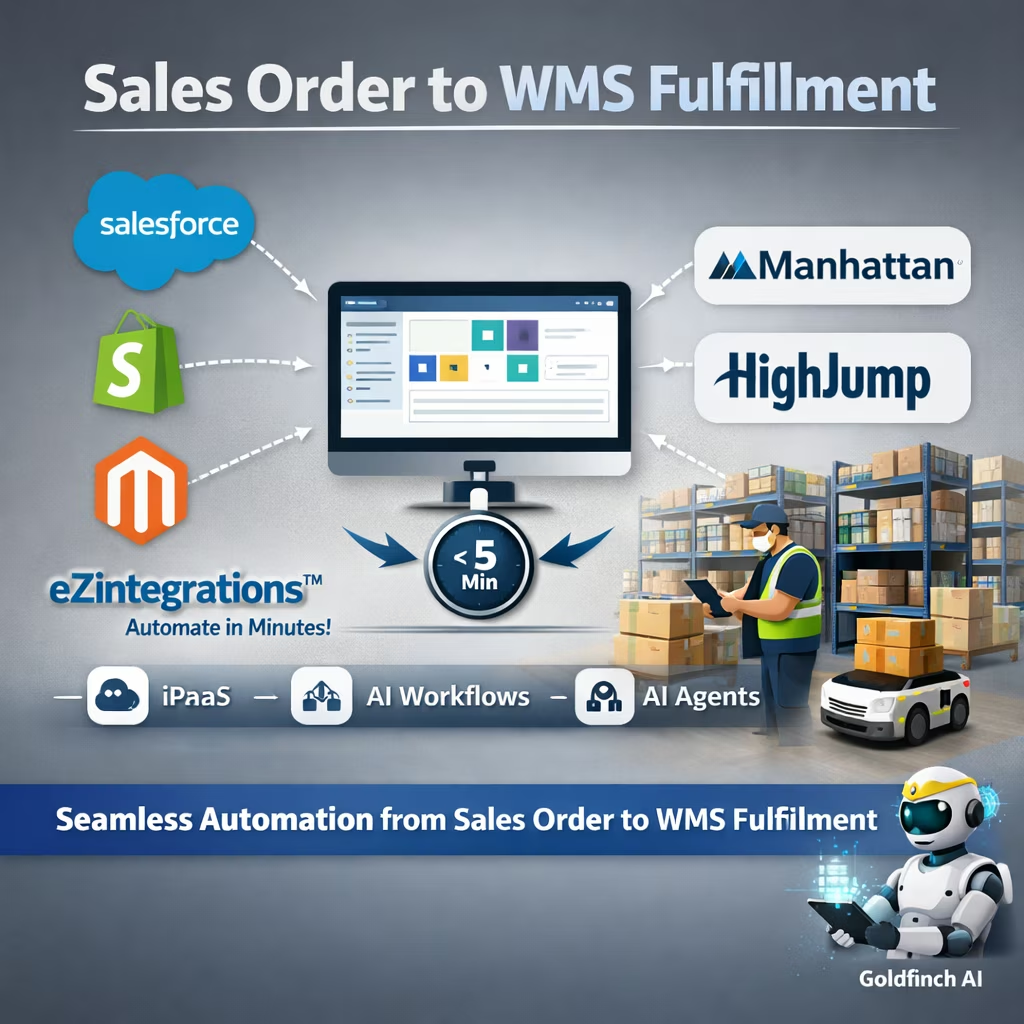
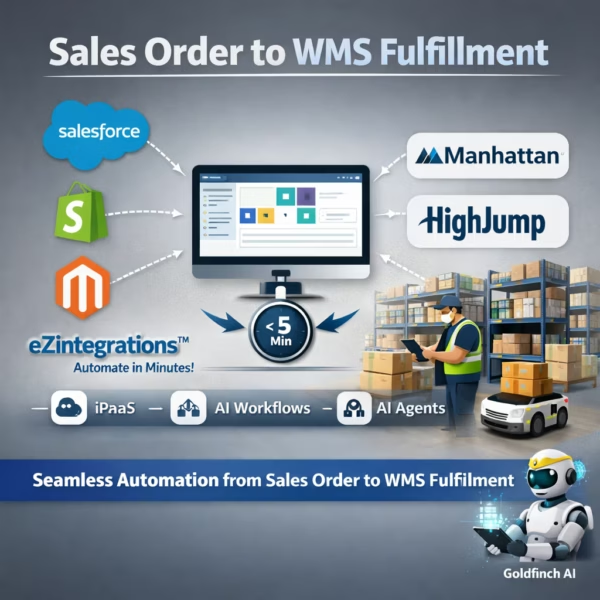
The Sales Order to WMS Fulfillment workflow from eZintegrations reads confirmed sales orders from Salesforce CRM or Magento/Shopify via REST API the moment they are confirmed; maps order fields to the WMS order schema; creates the fulfillment order in Manhattan or HighJump WMS; and syncs WMS status updates (picked; packed; shipped; tracking number) back to the CRM and storefront in real time. |
| Key Features: |
Real-time order confirmation event capture from Salesforce CRM (webhook); Shopify (webhook); or Magento (REST API polling at 5-minute intervals) Configurable field mapping from CRM/eCommerce order schema to WMS fulfillment order schema (ship-to; line items; SKU cross-reference; shipping carrier/method) Fulfillment order creation in Manhattan Active WMS or HighJump WMS via REST API in under 5 minutes from order confirmation Bi-directional WMS-to-CRM/storefront status sync: picked; packed; shipped; and tracking number pushed back to Salesforce Order object and Shopify/Magento order record Exception queue with order-level validation errors and Order Management Specialist alert for unmapped SKUs; invalid ship-to addresses; or WMS API failures |
| Business Impact: |
Removes the 2 to 4-hour manual routing delay that pushes orders outside same-day SLA; eliminates the status visibility gap that drives “where is my order” calls to Customer Service; and enables Customer Service to see live WMS fulfillment status directly in Salesforce without switching systems. |
| Productivity Gain: |
Order Management teams at 300 to 500 orders per day reclaim 3 to 6 FTE hours daily previously spent on manual order transcription between CRM/eCommerce and WMS; redirecting that capacity to exception management and carrier escalation. |
| Cost Savings: |
Organizations routing 5,000+ orders per month typically realize $70,000 to $130,000 in annual savings from labor reduction; eliminated SLA breach penalties; and reduced Customer Service call volume from real-time order status visibility in CRM. |
Description
Sales order WMS fulfillment automation from eZintegrations routes confirmed orders from Salesforce, Shopify, or Magento directly to your Manhattan or HighJump WMS — in under 5 minutes, with no manual transcription. eZintegrations is an enterprise automation platform covering iPaaS, AI Workflows, AI Agents, and Goldfinch AI agentic automation.
How Does Sales Order WMS Fulfillment Automation Work to Route Confirmed Orders from Salesforce or Shopify to a WMS for Pick, Pack, and Ship?
The moment a sales order is confirmed in Salesforce CRM or your Shopify or Magento storefront, a webhook or API poll triggers the eZintegrations sales order WMS fulfillment workflow. Order fields are mapped to the WMS schema — ship-to address, line items, SKU cross-references, shipping method — and a fulfillment order is created in Manhattan or HighJump WMS via REST API. As the WMS updates the order status through pick, pack, and ship stages, those status updates and the tracking number sync back to the originating CRM or storefront in real time.
According to Gartner, fulfillment delays are the leading driver of CSAT decline in retail — and Customer Service teams spend 30% of their time on “where is my order” calls that stem entirely from the CRM-WMS status gap. Sales order WMS fulfillment automation closes that gap by keeping both systems in sync from the moment the order is confirmed.
Deploy sales order WMS fulfillment in under 1 business day. No middleware platform or professional services required.
Watch Demo
| Video Title: |
Sales Order WMS Fulfillment Demo: Salesforce to Manhattan WMS in Under 5 Minutes with Real-Time Status Sync |
|---|---|
| Duration: |
3 to 5 minutes |
Outcome & Benefits
| Time Savings: |
Order routing time from 2 to 4 hours (manual) to under 5 minutes; Order Management team daily hours on manual transcription reduced from 3 to 6 hours to under 30 minutes of exception review |
|---|---|
| Cost Reduction: |
$70,000 to $130,000 annual savings from labor reduction; eliminated SLA breach penalties; and reduced Customer Service call volume from real-time order status visibility |
| Accuracy: |
99%+ order routing accuracy with SKU cross-reference validation; shipping address validation before WMS creation; zero manual transcription errors on mapped orders |
| Productivity: |
300 to 500 orders per day routed automatically; Customer Service team sees live WMS status in Salesforce without switching systems; same-day fulfillment SLA achievable for orders confirmed before cut-off |
Performance Metrics
| Metric | Before (Manual/Batch) | After (Real-Time Sync) | Improvement |
|---|---|---|---|
| Order Routing Time | 2 to 4 hours per order | Under 5 minutes | 95%+ faster |
| Daily FTE Hours on Order Transcription | 3 to 6 hours/day | Under 30 min/day (exceptions) | 90%+ reduction |
| Same-Day Fulfillment SLA Compliance | Variable, at risk for late orders | 99%+ for orders before cut-off | Fully restored |
| Customer Service “WISMO” Call Volume | 30% of CS time (Gartner benchmark) | Reduced by 60 to 80% | Real-time visibility |
Industry & Function
| Function: |
Order Management; Supply Chain Operations; Customer Service; eCommerce Operations |
|---|---|
| System Type: |
Bi-Directional Event-Triggered iPaaS Workflow, CRM/eCommerce to WMS Integration |
| Industry: |
B2B Industrial Distribution |
Functional Details
| Use Case Type: |
Bi-Directional Event-Triggered Integration; Order Routing and Status Sync Workflow |
|---|---|
| Source Object: |
Confirmed sales order from CRM or eCommerce – includes order ID; customer ID; ship-to name; ship-to address; order lines (SKU; quantity; unit price); shipping method/carrier; requested ship date; and order confirmation timestamp |
| Target Object: |
Fulfillment order in WMS – includes WMS order ID; ship-to address; fulfillment lines (WMS item number; quantity; unit of measure); carrier/service level; ship date; and wave/batch assignment |
| Scheduling: |
Real-time event-driven via Salesforce webhook on Opportunity/Order object status change to “Confirmed”; Shopify webhook on orders/fulfilled trigger; Magento REST API polling at 5-minute intervals for new confirmed orders; WMS status sync on configurable polling interval (default 10 minutes) or WMS outbound event where supported |
| Primary Users: |
Order Management Specialist; Customer Service Representative; Supply Chain Operations Manager |
| KPI Improved: |
Order routing time; same-day fulfillment SLA compliance; Customer Service “WISMO” call volume; Order Management FTE hours per order; order accuracy rate; customer CSAT score |
| AI/ML Step: |
N/A – standard iPaaS workflow with no AI steps; covered under Unlimited plan |
| Scalability Tier: |
Enterprise – supports 500+ orders per day at standard configuration; scales to 5,000+ orders per day at enterprise tier with parallel processing threads |
Technical Details
| Source Type: |
Cloud CRM and Cloud eCommerce Source Name (CRM): Salesforce CRM (https://developer.salesforce.com/docs/atlas.en-us.api_rest.meta/api_rest/) – Order object or Opportunity with Order object; webhook via Salesforce Outbound Messaging or Platform Events Source Name (eCommerce): Shopify (https://shopify.dev/docs/api/admin-rest) – Orders API; webhook on orders/paid or orders/fulfilled event | Magento 2 (https://developer.adobe.com/commerce/webapi/rest/) – Orders API; REST polling at configurable interval |
|---|---|
| API Endpoint URL: |
Salesforce: /services/data/v59.0/sobjects/Order/{OrderId} | Shopify: /admin/api/2024-01/orders.json?status=any&financial_status=paid | Magento: /rest/V1/orders?searchCriteria=status&value=confirmed |
| HTTP Method: |
GET (polling); POST (webhook push from Salesforce/Shopify on order event) |
| Auth Type: |
OAuth 2.0 (Salesforce); OAuth 2.0 Bearer Token (Shopify); Bearer Token with Basic Auth fallback (Magento 2) |
| Rate Limit: |
Salesforce: 100,000 API calls per 24 hours per org; Shopify: 40 requests per second (REST); Magento: configurable per deployment |
| Pagination: |
Salesforce: SOQL query with OFFSET for polling; Shopify: Link header with page_info cursor; Magento: searchCriteria pagination with page size and page number |
| Schema/Objects: |
Sales order fields: order ID; order date; customer ID; ship-to name; ship-to address (street; city; state/province; postal code; country); order lines (SKU; quantity; unit price; line total); shipping method; carrier preference; requested ship date; order source (CRM/storefront). Mapped to WMS order fields: WMS order number; ship-to fields normalized to WMS address format; WMS item number (cross-referenced from CRM/eCommerce SKU); quantity; UOM; carrier/service level code; priority flag |
| Transformation Ops: |
SKU cross-reference lookup (eCommerce/CRM SKU to WMS internal item number via configurable mapping table); ship-to address normalization and validation against USPS/postal standards; shipping method code mapping (CRM/eCommerce carrier name to WMS carrier/service level code); currency normalization; multi-line order splitting if WMS has per-line order limits; order priority flag assignment based on shipping method (expedited; standard; economy) |
| Error Handling: |
SKU not found in WMS item master routes to exception queue with order ID and unmapped SKU for Order Management Specialist review. Address validation failure routes to exception with order ID and raw address. WMS API failures retry up to 3 times with exponential backoff; persistent failures alert Order Management Specialist via email within 5 minutes. No confirmed order is silently dropped – every order is logged to the workflow audit trail regardless of outcome. |
| Orchestration Trigger: |
Salesforce Platform Event or Outbound Message on Order status = Confirmed (primary); Shopify webhook on orders/paid; Magento REST polling at 5-minute intervals; WMS status sync on 10-minute polling cycle or WMS event (where supported) |
| Batch Size: |
1 order per webhook event; up to 200 orders per REST polling batch at 5-minute interval |
| Parallelism: |
Up to 50 concurrent workflow threads per tenant; supports simultaneous processing from multiple storefronts and CRM org instances |
| Target Type: |
Cloud WMS or On-Premises WMS (connected via IPSec Tunnel) |
| Target Name: |
Manhattan Active WMS (https://www.manh.com/products/manhattan-active-warehouse-management) or HighJump WMS (https://www.korber.com/solutions/supply-chain/warehouse-management/) |
| Target Method: |
Manhattan Active WMS: REST API POST – /api/v2/orders (fulfillment order creation); HighJump WMS: REST API POST to fulfillment order endpoint per deployment configuration |
| Ack Handling: |
WMS returns WMS order number on successful fulfillment order creation; eZintegrations logs WMS order number; writes it back to the source CRM/eCommerce order record as a reference field. WMS status updates (picked; packed; shipped; tracking number) are polled at 10-minute intervals or received via WMS outbound event and written back to Salesforce Order object or Shopify/Magento order status field. |
| Throughput: |
500+ orders per day at standard configuration; scales to 5,000+ orders per day at enterprise tier |
| Latency: |
Under 5 minutes from order confirmation to WMS fulfillment order creation in standard real-time webhook mode; under 10 minutes for Magento polling mode |
| Logging/Monitoring: |
Full execution log per order (timestamp; source order ID; WMS order number; SKU mapping results; address validation status; WMS creation status; status sync events); real-time monitoring dashboard in eZintegrations console; configurable SLA breach alerts if WMS fulfillment order is not created within 15 minutes of order confirmation |
Connectivity & Deployment
| Supported Protocols: |
REST API; Webhooks; HTTPS; OAuth 2.0; Bearer Token; SFTP (batch order file fallback); IPSec Tunnel (on-premises WMS connectivity) |
|---|---|
| Security & Compliance: |
HIPAA-eligible configuration available; GDPR-compliant data handling (customer ship-to address and order data handled with configurable retention and right-to-erasure support); SOC Type II certified. TLS 1.3 encryption in transit; AES-256 at rest. Customer PII (ship-to name; address) masked in workflow logs per GDPR configuration. RBAC enforced on SKU mapping table management; exception queue access; and audit log read access. |
| Tenancy Model: |
Both single-tenant and multi-tenant deployments are available. Single-tenant provides dedicated infrastructure with full data isolation – recommended for retailers handling high-value order data and PII at scale. Multi-tenant is the default shared-cloud deployment. Both support on-premises WMS connectivity via IPSec Tunnel. |
| On-Premise Supported: |
Yes – eZintegrations connects to on-premises Manhattan WMS; HighJump WMS; and other warehouse or ERP systems via IPSec Tunnel. eZintegrations is a browser-based; cloud-hosted platform and does not require any on-premises software installation. |
FAQ
1. What is the Sales Order to WMS Fulfillment workflow?
Sales order WMS fulfillment automation by eZintegrations automatically routes confirmed sales orders from Salesforce CRM, Shopify, or Magento to Manhattan Active WMS or HighJump WMS for pick, pack, and ship — in under 5 minutes from order confirmation, with no manual transcription. WMS fulfillment status updates (picked, packed, shipped, tracking number) are synced back to the originating CRM or storefront in real time, so Customer Service and customers see live order status without switching systems.
2. What data does this workflow process?
This workflow processes confirmed sales order records containing order ID, customer ID, ship-to name and address, order lines (SKU, quantity, unit price), shipping method/carrier, requested ship date, and order confirmation timestamp. All fields are mapped from the CRM or eCommerce order schema to the WMS fulfillment order schema — including SKU cross-reference to WMS internal item number and shipping method code mapping to WMS carrier/service level.
3. How does sales order WMS fulfillment automation improve order management?
Sales order WMS fulfillment automation eliminates the 2 to 4-hour manual routing delay that pushes confirmed orders outside the same-day fulfillment SLA window. Gartner identifies fulfillment delays as the leading cause of CSAT decline in retail, and estimates that 30% of Customer Service contact volume is driven by order status visibility gaps between CRM and WMS. This workflow closes both gaps simultaneously — orders route in under 5 minutes and WMS status updates sync back to Salesforce and the storefront in real time.
4. Who typically uses this workflow?
Order Management Specialists and Supply Chain Operations Managers in retail, B2B distribution, and eCommerce businesses configure and monitor this workflow. Customer Service Representatives benefit from live WMS fulfillment status visible directly in Salesforce without switching to the WMS. The exception queue is the primary daily touchpoint — your team reviews only orders that failed SKU cross-reference, address validation, or WMS API creation, not the full order volume.
5. Can eZintegrations connect to on-premises WMS systems like Manhattan on-prem?
Yes. eZintegrations connects to on-premises Manhattan WMS, HighJump, and other warehouse management systems via IPSec Tunnel — no on-premises software installation is required. eZintegrations is a browser-based, cloud-hosted platform, so your on-premises WMS participates in the sales order WMS fulfillment workflow securely through the encrypted tunnel without any agent deployed on your servers.
6. What systems does this workflow connect?
This workflow connects Salesforce CRM or Shopify/Magento eCommerce as the order source to Manhattan Active WMS or HighJump WMS as the fulfillment target via REST API. WMS status updates sync back to the originating CRM or storefront. On-premises WMS deployments connect via IPSec Tunnel.
7. What are the key benefits of sales order WMS fulfillment automation?
Key benefits include under 5 minutes from order confirmation to WMS fulfillment creation (vs. 2 to 4 hours manually), 99%+ order routing accuracy with SKU and address validation, same-day fulfillment SLA compliance restored for all orders confirmed before cut-off, 60 to 80% reduction in Customer Service 'WISMO' call volume from real-time order status visibility, and $70,000 to $130,000 in annual savings at 5,000+ orders per month. Deploys in under 1 business day.
8. How does this workflow handle exceptions or errors?
When an order contains an unmapped SKU, an invalid ship-to address, or encounters a WMS API failure, eZintegrations routes the order record with field-level error detail to a monitored exception queue. The Order Management Specialist receives an alert email within 5 minutes with the order ID and specific error description. WMS API failures retry automatically up to 3 times with exponential backoff before alerting. No confirmed order is silently dropped — every order is logged to the workflow audit trail regardless of outcome.
Resources
Case Study
| Customer Name: |
Mid-market B2B industrial distributor (name withheld – reference available on request) |
|---|---|
| Problem: |
The order management team processed 420 orders per day from Salesforce CRM across 3 distribution centers using Manhattan WMS. Each order was manually copied from Salesforce into Manhattan by an Order Management Specialist – average 8 minutes per order; 56 FTE hours per day across the team. Orders confirmed after 2:00pm regularly missed the 4:00pm WMS cut-off for same-day fulfillment; generating SLA breach penalties of $18,000 per quarter from key accounts with contractual shipping commitments. Customer Service handled an average of 85 “where is my order” calls per day because Salesforce showed no WMS status updates. |
| Solution: |
Deployed the eZintegrations Sales Order to WMS Fulfillment workflow in 1 business day; connecting Salesforce as the source via Platform Events and Manhattan Active WMS as the target via REST API. SKU cross-reference table loaded for 12,000 active SKUs. Shipping method mapping configured for 8 carrier/service level combinations. WMS status sync configured at 10-minute polling intervals to push Manhattan order status back to the Salesforce Order object. Exception queue configured to alert the Order Management team lead within 5 minutes of any routing failure. |
| ROI: |
Order routing FTE hours reduced from 56 to under 4 hours per day ($312,000 annual labor savings at blended team cost). SLA breach penalties eliminated from week 1 ($72,000 annual protection). Customer Service “WISMO” call volume reduced from 85 to 14 calls per day (83% reduction). |
| Industry: |
B2B Industrial Distribution |
| Outcome: |
100% of confirmed sales orders now appear in Manhattan WMS within 5 minutes of Salesforce confirmation. Same-day fulfillment SLA compliance reached 99.6% in week 1 (vs. 71% before deployment). Customer Service representatives see live Manhattan WMS pick/pack/ship status directly in Salesforce; eliminating the need to call the warehouse for order status updates. |