How to Sync Order Data from Shopify to Shiphawk
$0.00
| Workflow Name: |
Order-to-Shipment Sync: Shopify → Shiphawk |
|---|---|
| Purpose: |
Automatically send Shopify orders to Shiphawk |
| Benefit: |
Faster shipment creation and fewer errors |
| Who Uses It: |
E-commerce teams; Logistics; IT |
| System Type: |
E-commerce Integration Workflow |
| On-Premise Supported: |
Yes |
| Industry: |
E-commerce / Logistics |
| Outcome: |
Real-time shipments in Shiphawk |
Table of Contents
Description
| Problem Before: |
Manual order export/import caused delays |
|---|---|
| Solution Overview: |
Fetch Shopify orders via API and push to Shiphawk |
| Key Features: |
API fetch; validation; mapping; auto-create shipments; logs |
| Business Impact: |
Reduces errors and speeds fulfillment |
| Productivity Gain: |
Removes manual shipment entry |
| Cost Savings: |
Reduces labor time and errors |
| Security & Compliance: |
Encrypted API calls; secure creds |
Order to Shipment Sync – Shopify to Shiphawk
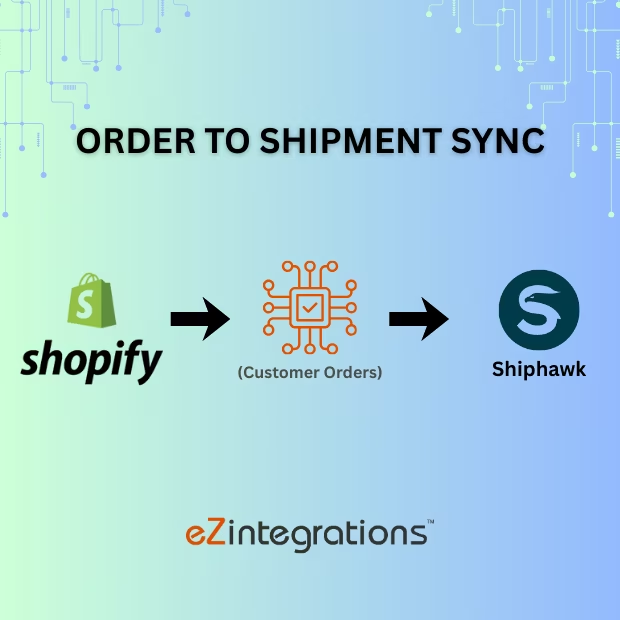
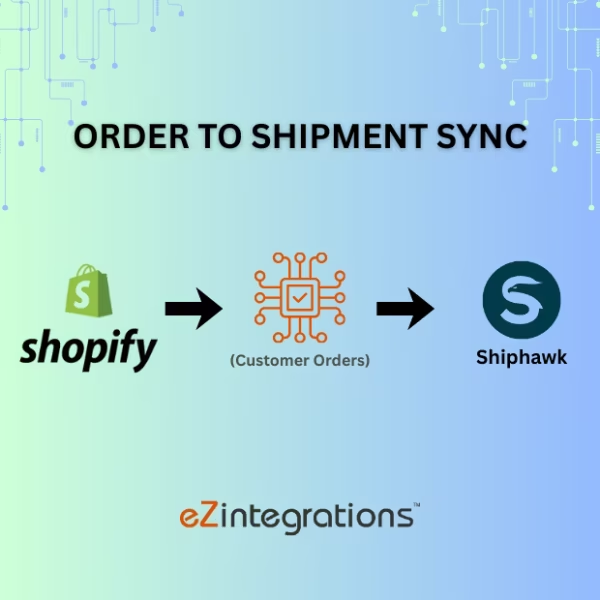
This workflow enables Order to Shipment Sync by automatically transferring Shopify orders to Shiphawk for shipment creation. It ensures orders are converted into shipments in real time without manual processing.
Automated Order Conversion for Faster Shipping Operations
The system retrieves order details from Shopify, validates and transforms the data, and creates shipments in Shiphawk in real time. This workflow helps e-commerce, logistics, and IT teams reduce errors, accelerate shipment creation, and maintain accurate shipping records.
Watch Demo
| Video Title: |
Shopify to Oracle Fusion Cloud Customers |
|---|---|
| Duration: |
02:36 |
Outcome & Benefits
| Time Savings: |
Eliminates manual entry |
|---|---|
| Cost Reduction: |
Lowers manual effort |
| Accuracy: |
High via validated sync |
| Productivity: |
Faster updates |
Industry & Function
| Function: |
Shipment synchronization |
|---|---|
| System Type: |
E-commerce Integration Workflow |
| Industry: |
E-commerce / Logistics |
Functional Details
| Use Case Type: |
Shipment Integration |
|---|---|
| Source Object: |
Shopify Orders |
| Target Object: |
Shiphawk Shipments |
| Scheduling: |
Real-time or batch |
| Primary Users: |
Logistics; Operations |
| KPI Improved: |
Shipment speed; accuracy |
| AI/ML Step: |
Not required |
| Scalability Tier: |
Enterprise |
Technical Details
| Source Type: |
Shopify API |
|---|---|
| Source Name: |
Customer Orders |
| API Endpoint URL: |
Shopify Orders API endpoint |
| HTTP Method: |
GET |
| Auth Type: |
OAuth 2.0 / Shopify API Keys |
| Rate Limit: |
Based on Shopify API limits |
| Pagination: |
Supported via API tokens |
| Schema/Objects: |
Orders; items; quantities; shipping data |
| Transformation Ops: |
Mapping; validation; formatting for Shiphawk |
| Error Handling: |
Retry failed calls; log API errors |
| Orchestration Trigger: |
Scheduled or real-time pull |
| Batch Size: |
Configurable batch size |
| Parallelism: |
Multiple batches processed |
| Target Type: |
Shipping Platform |
| Target Name: |
Shiphawk |
| Target Method: |
Shiphawk API |
| Ack Handling: |
API response logged |
| Throughput: |
Thousands of shipments/day |
| Latency: |
Few seconds per batch |
| Logging/Monitoring: |
Sync logs; error logs; metrics |
Connectivity & Deployment
| On-Premise Supported: |
Yes |
|---|---|
| Supported Protocols: |
HTTPS; REST |
| Security & Compliance: |
Encrypted API calls; secure creds |
FAQ
1. What is the Order to Shipment Sync workflow from Shopify to Shiphawk?
It is an e-commerce integration workflow that automatically sends Shopify orders to Shiphawk to create shipments in real time.
2. What order data is synced from Shopify to Shiphawk?
The workflow syncs order details including customer information, shipping addresses, line items, quantities, order totals, and delivery instructions.
3. How does the order-to-shipment process work?
The workflow captures new or updated orders from Shopify, validates and maps the data, and automatically creates corresponding shipments in Shiphawk.
4. Is shipment creation performed in real time?
Yes, shipments can be created in real time or near real time based on configuration and business needs.
5. Who uses this workflow?
E-commerce teams use it to manage order fulfillment, logistics teams handle shipping operations, and IT teams monitor and support the integration.
6. What are the benefits of automating order-to-shipment sync?
Automation speeds up shipment creation, reduces manual errors, improves fulfillment accuracy, and ensures real-time shipment availability in Shiphawk.
7. Does this workflow support on-premise environments?
Yes, the workflow supports on-premise systems through secure integration components where required.
8. What is the outcome of this integration?
The outcome is real-time shipment creation and visibility in Shiphawk, enabling faster and more efficient e-commerce logistics operations.
Resources
Case Study
| Customer Name: |
Shopify Customers |
|---|---|
| Problem: |
Manual syncing caused delays and errors |
| Solution: |
Automated Shopify → Shiphawk Shipment Sync |
| ROI: |
Faster shipment flow and reduced effort |
| Industry: |
E-commerce / Logistics |
| Outcome: |
Real-time shipments in Shiphawk |