Enterprise iPaaS Platform: The Complete Guide for IT Leaders
March 10, 2026An enterprise iPaaS (Integration Platform as a Service) connects your business applications, databases, and data workflows in the cloud without custom code. It replaces manual data entry, eliminates system silos, and automates processes across ERP, CRM, and every other enterprise system. Modern platforms like eZintegrations also include AI Workflows, AI Agents, and Agentic AI natively.
TL; DR
An enterprise iPaaS connects every app, database, and workflow in your business without custom development. – Legacy platforms like MuleSoft, Oracle OIC, and Boomi require specialist developers, cost six figures annually, and take months to implement. – eZintegrations is a fully managed enterprise iPaaS with 1,000+ ready-to-import templates, 99.9% SLA uptime, and AI-native capabilities built in from day one. – Implementation on eZintegrations takes hours to days, not weeks to months. – The world’s largest FMCG company, a global Industrial Goods leader, and a recognized global Pharma company all run on eZintegrations.
What is an Enterprise iPaaS Platform?
An enterprise iPaaS (Integration Platform as a Service) is a cloud-based platform that connects your business applications, databases, and automated workflows without requiring custom code or specialist developers.
According to Gartner, iPaaS is defined as a suite of cloud services enabling development, execution, and governance of integration flows connecting any combination of on-premises and cloud-based processes, services, applications, and data. In plain language: it’s the infrastructure that makes your disconnected systems talk to each other.
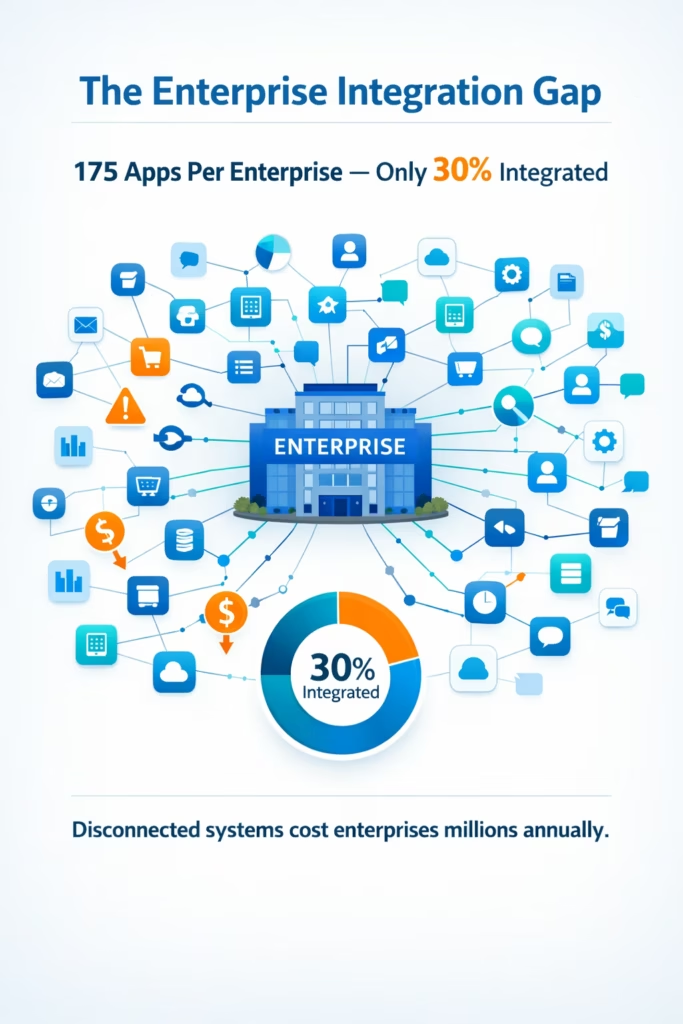
Think of it as the central nervous system of your enterprise technology stack. Your ERP, CRM, WMS, databases, and SaaS tools all generate data independently. Without an iPaaS, that data sits in silos, your teams copy it manually between systems, and errors multiply. With an enterprise iPaaS, data flows automatically, in real time, across every system you run.
Modern enterprise iPaaS platforms like eZintegrations go further. They don’t just move data. They include AI Workflows, AI Agents, and Agentic AI capabilities that allow your systems to make decisions, resolve errors, and act autonomously without human intervention.
Why Enterprise Systems Need Integration in 2026
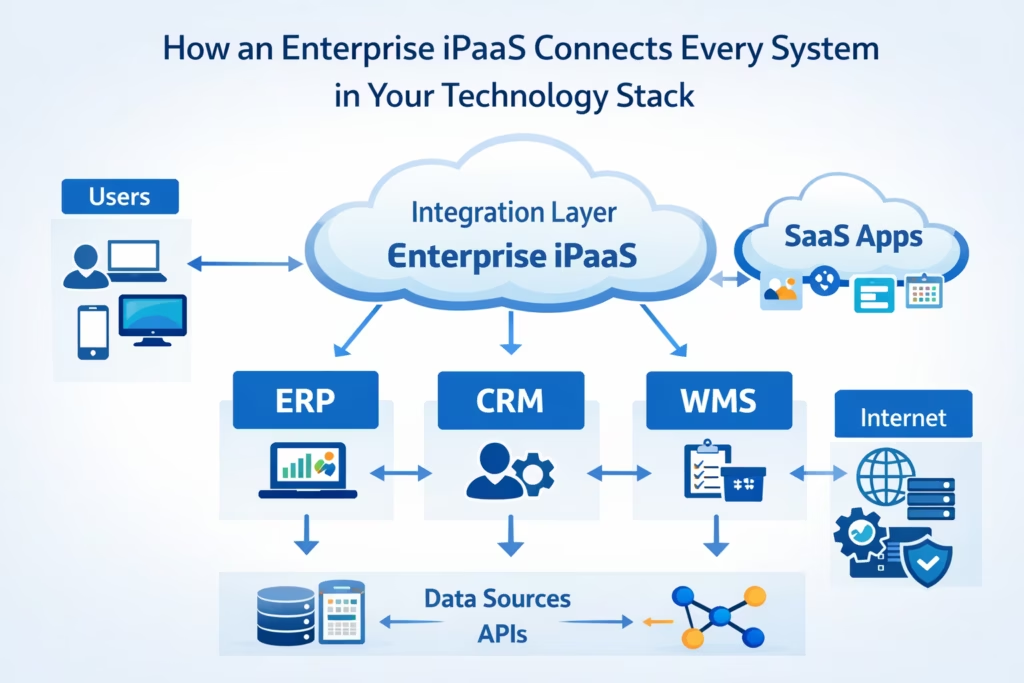
The average enterprise runs 175 different software applications, according to MuleSoft’s Connectivity Benchmark Report, yet fewer than 30% of those apps are integrated with each other.
That gap is where productivity dies. Your finance team exports data from NetSuite into Excel, then manually uploads it into Salesforce. Your logistics team waits for an overnight batch job to sync warehouse data with your ERP. Your operations team catches errors three days after they happen because no one was watching the pipeline.
The cost isn’t just time. Disconnected systems create compliance risks, data quality problems, and frustrated employees who spend hours on work that should be automated. IDC research estimates that poor data integration costs enterprises an average of $9.7 million per year in lost productivity.
The enterprise teams winning in 2026 are the ones that have solved this problem at the platform level, not by writing more custom code, but by deploying an enterprise iPaaS that automates integration across every system they operate.
How Enterprise iPaaS Works: The Architecture Explained
An enterprise iPaaS works by sitting between your existing systems and acting as a managed integration layer that routes, transforms, and automates data flows across all of them.
Here’s how the architecture works in practice. Your source systems (SAP, Salesforce, NetSuite, your databases) send data to the iPaaS through connectors. The iPaaS transforms that data into the right format, applies any business logic you’ve defined, and delivers it to the destination system. All of this happens in real time, or on a scheduled trigger, depending on your workflow design.
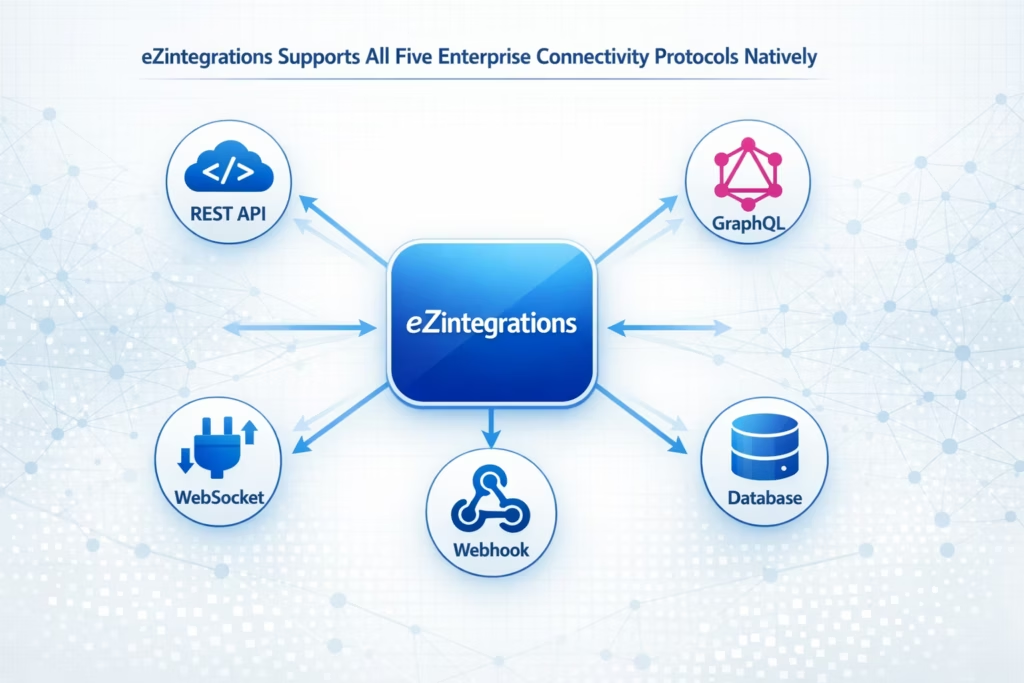
Modern enterprise iPaaS platforms support multiple connectivity protocols natively:
- REST APIs: The standard for connecting modern SaaS applications
- GraphQL: For flexible, efficient querying of complex data structures
- WebSockets: For real-time, bidirectional data streaming between systems
- Webhooks: For event-driven triggers that fire when something happens in a source system
- Databases: For direct connection to SQL, NoSQL, and cloud databases
eZintegrations supports all five protocols natively in a single platform. Most legacy platforms like MuleSoft or Oracle OIC require separate configuration and specialist knowledge for each.
Enterprise-grade platforms also include built-in queue management and pagination. Queue management ensures high-volume data pipelines don’t drop records under load. Pagination handles large datasets by fetching them in controlled chunks rather than overwhelming your systems with a single massive request.
Enterprise iPaaS vs ESB vs Custom Integration: What’s the Difference?
Most enterprise IT teams have tried at least one of three approaches to integration before landing on iPaaS: custom-built connectors, an Enterprise Service Bus (ESB), or a point-to-point tool. Each has serious limitations at enterprise scale.
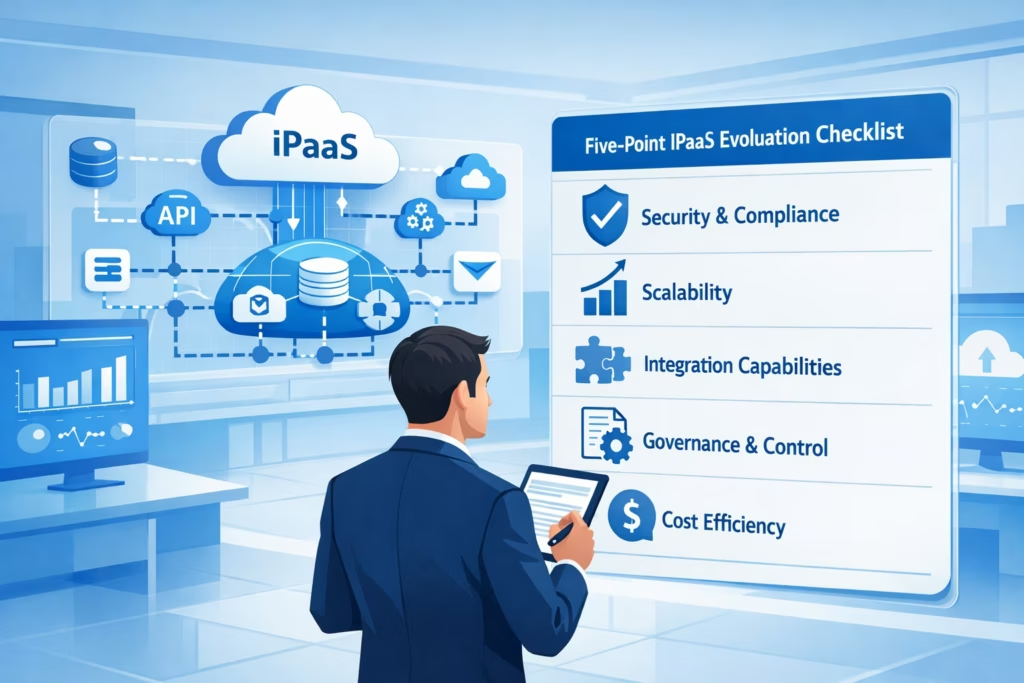
Here’s how the three approaches compare:
| Approach | Setup Time | Developer Need | Maintenance | AI Capable | Cloud-Native |
|---|---|---|---|---|---|
| Custom Code | Months | High | Very High | No | No |
| ESB (e.g. IBM MQ) | Months | Very High | Very High | No | No |
| Legacy iPaaS (MuleSoft/OIC) | Weeks to Months | High | High | Limited | Partial |
| eZintegrations iPaaS | Hours to Days | None | Fully Managed | Yes (Native) | Yes |
Custom integration gives you full control but creates a maintenance nightmare. Every new system you add requires a developer to write, test, and maintain new connectors. When systems update their APIs, your connectors break.
ESBs were designed for on-premises enterprise architecture and are expensive to run, difficult to scale, and completely disconnected from modern cloud-native SaaS ecosystems.
Legacy iPaaS platforms like MuleSoft and Oracle OIC solved the cloud problem but introduced new ones: high licensing costs, requirement for certified specialist developers, and slow implementation timelines. According to Forrester Research, enterprises using traditional iPaaS platforms spend an average of 40% of their integration budget on maintenance rather than new development.
eZintegrations takes a different approach. It’s fully managed by Bizdata, meaning your team never touches upgrades, patches, or maintenance. You get enterprise-grade integration capability without the enterprise-grade complexity.
The 5 Criteria Every IT Leader Should Use to Evaluate an Enterprise iPaaS
Choosing the wrong enterprise iPaaS platform is a multi-year, multi-million-dollar mistake. Most IT leaders regret their decision within 18 months because they optimized for features rather than total fit.
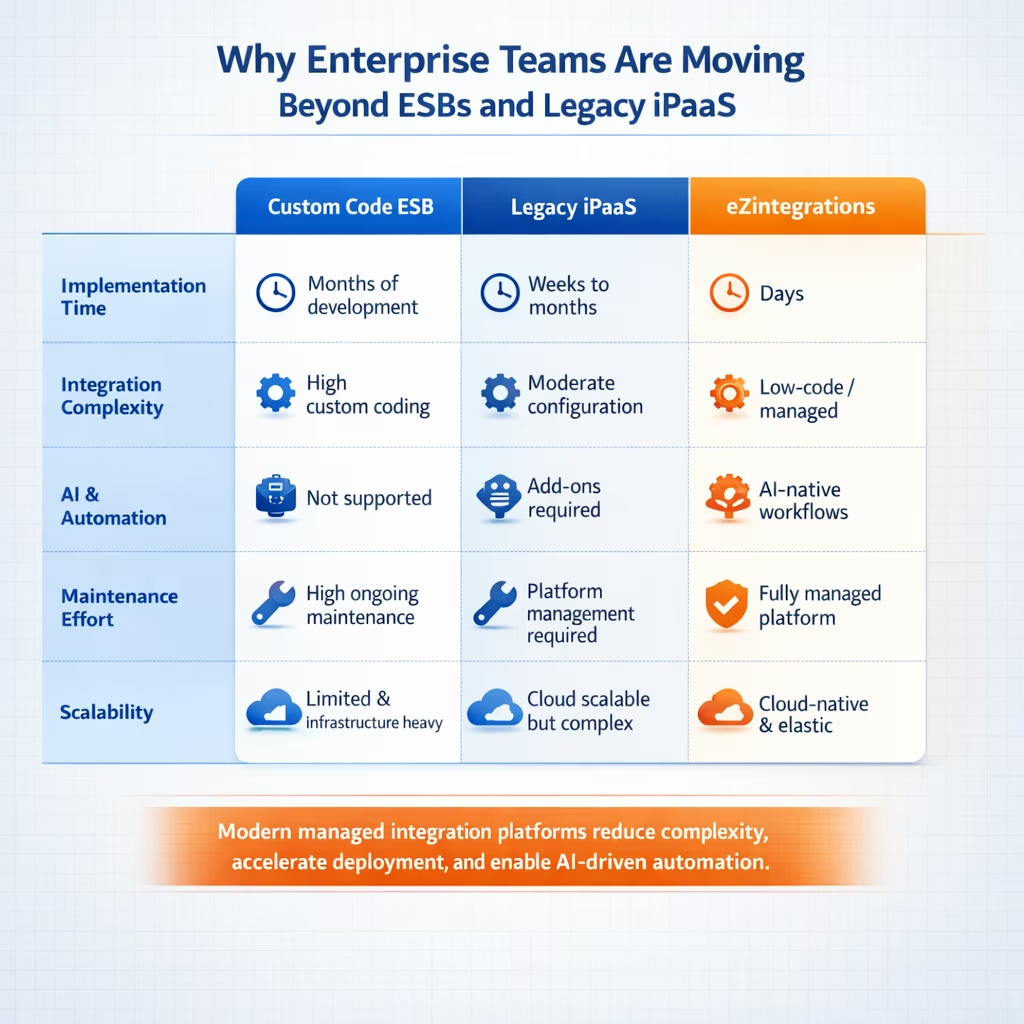
Here are the five criteria that separate good decisions from bad ones:
1. Is It Fully Managed or Do You Own the Maintenance?
This is the question most buyers forget to ask. Legacy platforms put the maintenance burden on you. You’re responsible for upgrades, patches, and keeping the platform running. With eZintegrations, Bizdata manages everything. Your team focuses on building workflows, not maintaining infrastructure.
2. How Long Does Implementation Actually Take?
MuleSoft and Oracle OIC implementations routinely take 3 to 6 months for a single integration. eZintegrations gets you live in hours to days using pre-built templates. For an IT Director under delivery pressure, that difference is the entire project timeline.
3. Does It Support All the Protocols Your Stack Requires?
Most enterprise stacks include a mix of REST APIs, databases, webhooks, and real-time data streams. If your iPaaS doesn’t support GraphQL or WebSocket natively, you’ll be writing custom connectors within 12 months. Verify full protocol support before you sign.
4. Does It Have AI Built In, or Bolted On?
By 2026, Gartner predicts that 80% of enterprise integration projects will require AI capabilities. Platforms that bolt AI on as an add-on can’t deliver the same performance as platforms where AI is a native architectural component. eZintegrations includes AI Workflows, AI Agents, and Agentic AI as first-class platform features.
5. What Is the Real Total Cost of Ownership?
Published licensing fees are only the beginning. Add in certified developer salaries, professional services for implementation, ongoing maintenance costs, and upgrade fees. For MuleSoft, the total cost of ownership for a mid-to-large enterprise typically runs $200,000 to $500,000 per year. eZintegrations delivers comparable capability at a fraction of that cost.
What Makes eZintegrations Different from Legacy iPaaS Platforms?
eZintegrations is built on four capabilities that legacy platforms either don’t have natively or charge extra for: full managed infrastructure, all-protocol connectivity, 1,000+ pre-built templates, and AI-native automation across four distinct pillars.
Here’s what that means in practice for your team:
Fully Managed by Bizdata: Zero Maintenance for Your Team
Every upgrade, patch, and performance optimization is handled by Bizdata. Your team never experiences downtime from a platform update. eZintegrations carries a 99.9% uptime SLA, so your integrations run reliably without your IT team babysitting the infrastructure.
Compare that to MuleSoft or Boomi, where your team owns the upgrade cycle, manages the runtime environments, and fields the support tickets when something breaks after a patch.
All Protocols in One Platform: REST, GraphQL, WebSocket, Webhooks, Databases
Most enterprise stacks are not homogeneous. You’re running a mix of legacy ERP systems with database connections, modern SaaS apps with REST APIs, real-time event streams over WebSockets, and event-driven triggers via webhooks. eZintegrations connects all of them from a single platform without separate specialist configuration for each protocol.
1,000+ Ready-to-Import Templates: Go Live in Hours, Not Months
The Automation Hub contains over 1,000 production-ready integration and AI agent templates across all four pillars: Workflows, AI Workflows, AI Agents, and Agentic AI. Your team imports a template, configures it to your environment, and deploys. The same integration that takes 3 months on MuleSoft takes hours on eZintegrations.
Ready to see what your first integration looks like? Explore 1,000+ ready-to-import templates in the Automation Hub and go live in hours, not months.
AI-Native: Workflows, AI Workflows, AI Agents, and Agentic AI
eZintegrations is structured around four pillars that represent a natural progression of automation maturity:
- Workflows (iPaaS): Standard integration pipelines that connect systems and move data automatically
- AI Workflows: Intelligent pipelines that use AI to transform, route, and enrich data dynamically
- AI Agents: Autonomous agents that execute multi-step tasks across systems without human intervention
- Agentic AI: The most advanced tier, where AI reasons, plans, and acts independently across complex enterprise workflows
No other enterprise iPaaS platform offers all four natively. MuleSoft, Oracle OIC, and Boomi treat AI as an add-on. In eZintegrations, it’s the architecture.
Real-World Use Cases: How Enterprise Teams Use iPaaS
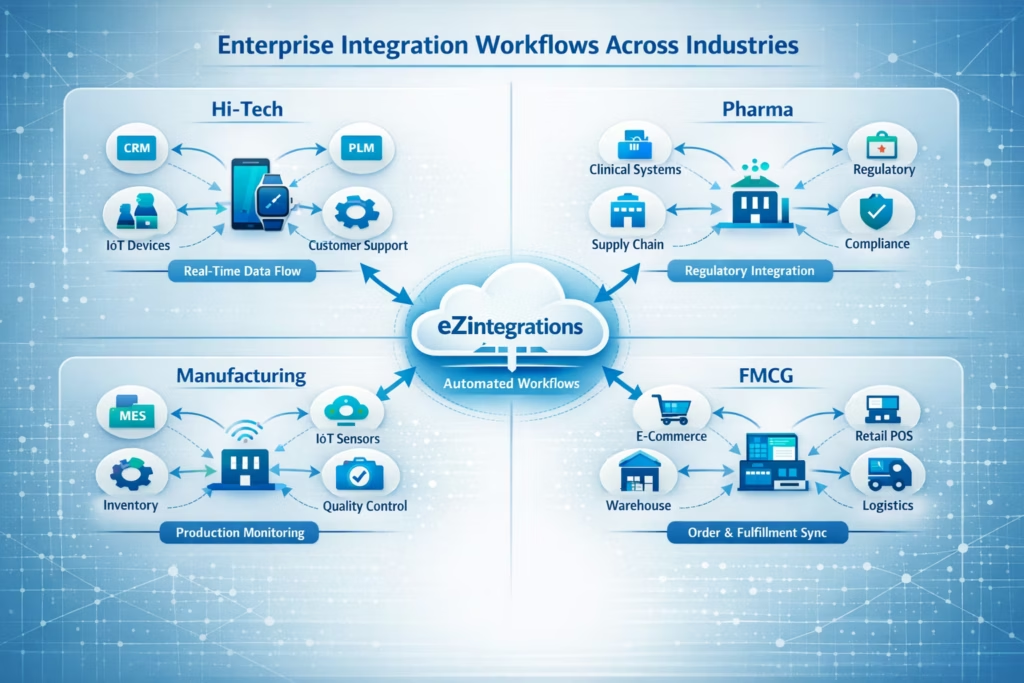
The best way to understand what an enterprise iPaaS delivers is to see what it actually does for the teams using it. Here are four use cases from the industries eZintegrations serves today.
Hi-Tech and SaaS Companies: Connecting a Complex Multi-System Stack
A global Hi-Tech company runs Salesforce for CRM, NetSuite for ERP, a custom product database, and multiple third-party SaaS tools. Before eZintegrations, their operations team spent 15+ hours per week manually syncing data between systems. After deploying eZintegrations using pre-built Salesforce-NetSuite templates, that process became fully automated. Their team reclaimed those hours within the first week.
Pharma and Life Sciences: Compliance-Ready Integration Without Custom Code
A globally recognized Pharma company needed to connect Veeva, SAP, LIMS, and regulatory submission systems while maintaining compliance across every data flow. The complexity made custom development too risky. eZintegrations provided pre-built pharma templates with built-in audit trails and data governance controls, delivering compliant integration without a single line of custom code.
Industrial Manufacturing: ERP to Shop Floor in Real Time
A global Industrial Goods company needed real-time data flow between SAP ERP, their MES (Manufacturing Execution System), and production floor systems across multiple facilities. Legacy batch-processing integrations were creating 24-hour data lags that caused inventory errors and production delays. eZintegrations replaced the batch pipeline with real-time WebSocket connections, eliminating the lag entirely.
Retail and FMCG: Order to Fulfilment Without Human Touchpoints
The world’s largest FMCG company in the USA and globally uses eZintegrations to automate order processing, inventory sync, and fulfilment workflows across their retail and distribution network. What previously required manual intervention at multiple handoff points now runs end-to-end without human touchpoints, at global scale.
How Long Does Enterprise iPaaS Implementation Actually Take?
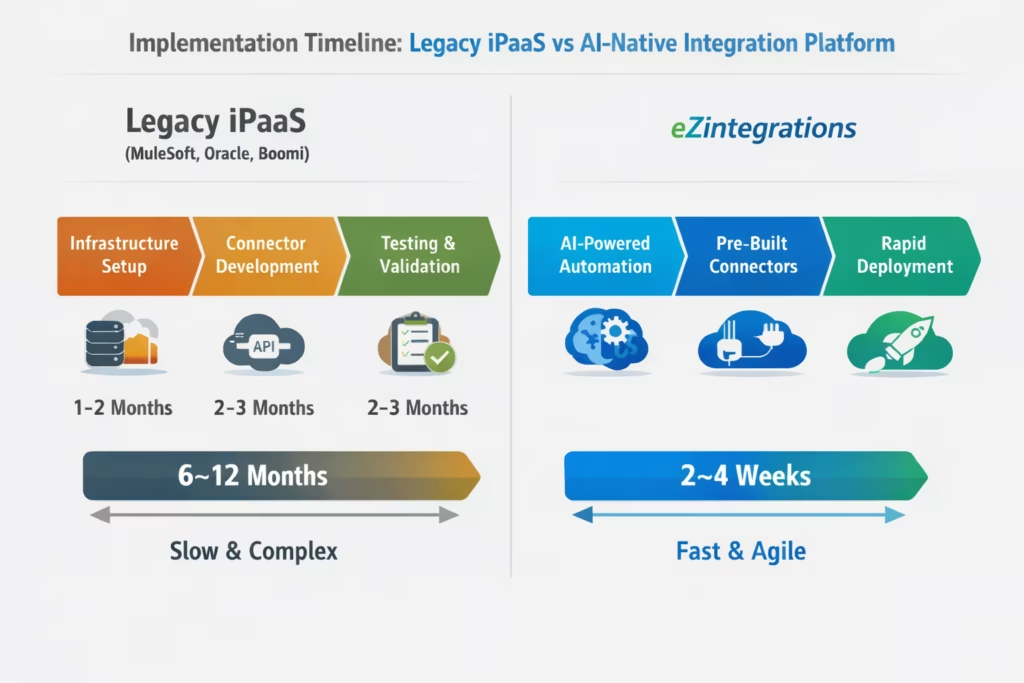
Implementation time is the most underestimated factor in enterprise iPaaS decisions. Most buyers focus on features and pricing, then discover the implementation timeline is 6 to 12 months.
Here’s a realistic comparison of implementation timelines:
| Platform | Simple Integration | Complex Multi-System | Enterprise-Wide Deployment |
|---|---|---|---|
| MuleSoft | 4 to 8 weeks | 3 to 6 months | 12+ months |
| Oracle OIC | 4 to 8 weeks | 3 to 6 months | 12+ months |
| Boomi | 3 to 6 weeks | 2 to 4 months | 9 to 12 months |
| eZintegrations | Hours to days | Days to weeks | Weeks to months |
The difference is the Automation Hub. When you start from a production-ready template rather than a blank canvas, you eliminate the majority of the build time. Your team’s effort shifts from development to configuration.
eZintegrations implementations go live in hours to days for standard use cases, and days to weeks for complex multi-system deployments. Enterprise-wide rollouts that would take a year on MuleSoft typically complete in weeks to months on eZintegrations.
This isn’t a claim. It’s what the world’s largest FMCG company, a global Industrial Goods leader, and a recognized global Pharma company all experienced when they deployed eZintegrations across their operations.
What Does Enterprise iPaaS Cost? (And What Are You Really Paying For?)
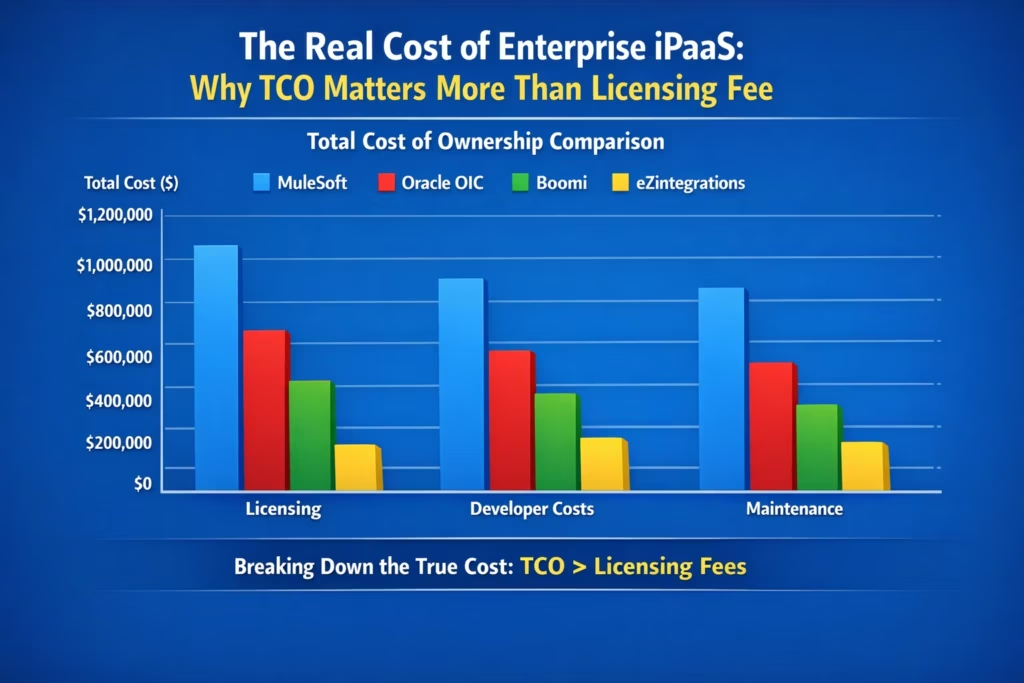
The published licensing fee for an enterprise iPaaS is only one part of the total cost. For most legacy platforms, it’s the smallest part.
Here’s what the full cost picture looks like for a typical enterprise:
MuleSoft / Oracle OIC / Boomi: – Platform licensing: $100,000 to $300,000+ per year – Certified developer salaries or consulting fees: $150,000 to $300,000+ per year – Professional services for implementation: $50,000 to $200,000 per project – Upgrade and maintenance overhead: 40% of your integration team’s time – Total realistic TCO: $300,000 to $800,000+ per year
eZintegrations: – Platform licensing: Transparent, contact for enterprise pricing at ezintegrations.ai/pricing – Developer requirement: None for standard workflows. Business users build with the no-code interface. – Implementation cost: Minimal. Templates replace custom development. – Maintenance: Zero. Bizdata manages everything. – Total realistic TCO: Significantly lower, with faster time to value.
According to G2 reviews of enterprise iPaaS platforms, total cost of ownership is the number one factor that causes buyers to switch platforms within 24 months of their initial purchase. Getting the TCO calculation right before you sign matters more than any individual feature comparison.
Want to see transparent pricing? View eZintegrations pricing plans and calculate your real total cost of ownership before your next vendor call.
Frequently Asked Questions
1. What is the difference between iPaaS and traditional middleware?
Traditional middleware like ESBs runs on premises requires specialist configuration and is designed for fixed point to point connections. iPaaS is cloud native supports dynamic multi directional integration and can connect hundreds of systems simultaneously. eZintegrations also adds AI native capabilities that traditional middleware cannot support.
2. Do we need developers to use an enterprise iPaaS?
Not with eZintegrations. The platform is no code first which allows IT generalists and business users to build deploy and manage integrations without writing code. Developers can still extend workflows for advanced customization but they are not required for most enterprise use cases.
3. How secure is an enterprise iPaaS for sensitive data?
Enterprise iPaaS platforms enforce security at the integration layer through encryption in transit and at rest role based access controls and full audit trails. eZintegrations is used by global Pharma and FMCG enterprises that operate under strict data governance requirements and the platform is built with enterprise grade security and a 99.9 percent uptime SLA.
4. Can eZintegrations replace MuleSoft or Oracle OIC?
Yes eZintegrations is a full enterprise iPaaS that supports protocols used by MuleSoft and Oracle OIC along with native support for GraphQL and WebSocket. It also introduces AI workflows AI agents and agentic AI capabilities that are not natively available in MuleSoft or Oracle OIC while also supporting migration through pre built templates in the Automation Hub.
5. What industries does eZintegrations serve?
eZintegrations supports industries such as Hi Tech Medical Devices Pharma Retail CPG Industrial Goods and Industrial Manufacturing. Customers include global FMCG leaders industrial goods companies and major pharmaceutical organizations operating at enterprise scale.
6. How is eZintegrations different from Zapier or Make?
Zapier and Make are designed for simple low volume automation between consumer SaaS tools. They lack enterprise governance do not support GraphQL or WebSocket natively and do not provide AI native capabilities. eZintegrations is built for enterprise scale integration complexity and security.
7. What happens when eZintegrations releases updates or patches?
Bizdata manages all upgrades patches and performance optimizations for eZintegrations. Updates are deployed without downtime so integrations continue running without interruption. This removes the operational burden commonly seen with self managed platforms such as MuleSoft or Boomi.
Conclusion: The Enterprise iPaaS Decision You’ll Be Living With for Years
Choosing an enterprise iPaaS platform isn’t a tactical decision. It’s a foundational one. The platform you choose today will define how fast your team can deliver integrations, how much you spend maintaining them, and whether you can take advantage of AI automation as it becomes a competitive necessity.
The legacy platforms built the market. But they were designed for a world where developers owned integration, timelines were measured in months, and AI wasn’t part of the conversation.
eZintegrations was built for 2026 and beyond. Fully managed by Bizdata so your team focuses on outcomes rather than infrastructure. All protocols natively. 1,000+ production-ready templates so you go live in hours, not months. AI Workflows, AI Agents, and Agentic AI built in from the ground up.
The world’s largest FMCG company chose it. A global Industrial Goods leader chose it. A recognized global Pharma company chose it. They chose it because it delivered what the legacy platforms promised but never quite delivered: enterprise integration that actually works, at a pace and cost that makes business sense.
If you’re evaluating enterprise iPaaS platforms right now, the most valuable hour you can spend is seeing eZintegrations in action.
Book a Free Demo at ezintegrations.ai/book-a-demo
Or start by exploring 1,000+ production-ready templates and see how fast your first integration can go live.