
Oracle Database to API Integration in 3 steps
$0.00
| Workflow Name: |
Database → API: Oracle Users Data Sync |
|---|---|
| Purpose: |
Fetch data from Oracle DB; transform; and send via API |
| Benefit: |
Automates data transformation and sync |
| Who Uses It: |
DB Admins; Integration Teams; Developers |
| System Type: |
Database Integration Workflow |
| On-Premise Supported: |
Yes |
| Industry: |
Enterprise IT / Database Operations |
| Outcome: |
Transformed data available in Users_Data2 in real-time |
Table of Contents
Description
| Problem Before: |
Manual data extraction and transformation caused errors and delays |
|---|---|
| Solution Overview: |
Connect Oracle DB; transform data; and sync via API to Users_Data2 |
| Key Features: |
DB fetch; single-to-multiline transform; API push; logging |
| Business Impact: |
Faster; accurate data integration |
| Productivity Gain: |
Eliminates manual DB extraction and transformation |
| Cost Savings: |
Reduces labor and error correction |
| Security & Compliance: |
Encrypted API calls; secure DB credentials |
Database to API – Oracle Users Data Sync
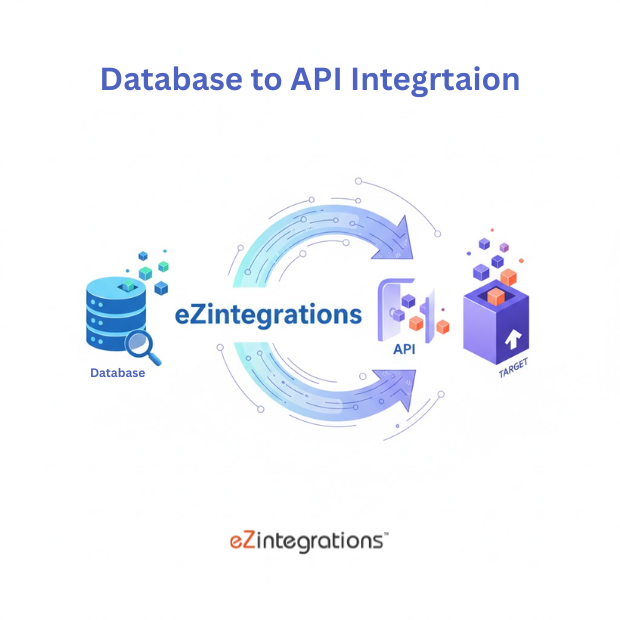
This workflow enables Oracle database API sync by fetching user data from an Oracle database, transforming it into the required format, and securely sending it to target systems through APIs. It eliminates manual extraction and scripting while ensuring consistent data delivery.
Automated Data Transformation and API Delivery
The system reads structured data from Oracle DB, applies validation and transformation rules, and publishes the results via API in near real time. This workflow helps database administrators, integration teams, and developers automate data exchange, reduce errors, and maintain reliable system-to-system communication.
Watch Demo
| Video Title: |
Database to Database Integration |
|---|---|
| Duration: |
05:41 |
Outcome & Benefits
| Time Savings: |
Removes manual extraction and transformation |
|---|---|
| Cost Reduction: |
Reduces manual labor |
| Accuracy: |
High via automated transform |
| Productivity: |
Faster data updates |
Industry & Function
| Function: |
Data fetch; transformation; API sync |
|---|---|
| System Type: |
Database Integration Workflow |
| Industry: |
Enterprise IT / Database Operations |
Functional Details
| Use Case Type: |
DB to API Integration |
|---|---|
| Source Object: |
Users_Data |
| Target Object: |
Users_Data2 |
| Scheduling: |
Real-time or batch |
| Primary Users: |
DB Admins; Developers |
| KPI Improved: |
Data sync speed; accuracy |
| AI/ML Step: |
Not required |
| Scalability Tier: |
Enterprise |
Technical Details
| Source Type: |
Oracle Database |
|---|---|
| Source Name: |
Users_Data table |
| API Endpoint URL: |
Custom Oracle DB API endpoint |
| HTTP Method: |
POST |
| Auth Type: |
OAuth 2.0 / DB credentials |
| Rate Limit: |
Based on DB/API configuration |
| Pagination: |
Not applicable |
| Schema/Objects: |
Users_Data table columns |
| Transformation Ops: |
Single-to-multiline operation; validation |
| Error Handling: |
Retry on failure; log errors |
| Orchestration Trigger: |
On schedule or event-driven |
| Batch Size: |
Single or multiple records |
| Parallelism: |
Concurrent API calls |
| Target Type: |
API |
| Target Name: |
Automated DB fetch → transform → API sync |
| Target Method: |
API POST |
| Ack Handling: |
API response logged |
| Throughput: |
Thousands of records/day |
| Latency: |
Few seconds per batch |
| Logging/Monitoring: |
Sync logs; error logs |
Connectivity & Deployment
| On-Premise Supported: |
Yes |
|---|---|
| Supported Protocols: |
HTTPS; REST |
| Cloud Support: |
Hybrid |
| Security & Compliance: |
Encrypted API calls; secure DB credentials |
FAQ
1. What is the Database to API – Oracle Users_Data Sync workflow?
It is an automated workflow that fetches user data from an Oracle database, transforms it as required, and sends it to a target system via API.
2. How does the workflow extract and send Oracle user data?
The workflow connects securely to the Oracle database, retrieves user records, applies data transformations and validations, and pushes the structured data to the destination API.
3. What type of data is synced in this workflow?
It typically includes user IDs, names, roles, contact details, status, and other attributes stored in the Oracle database.
4. How frequently can the workflow run?
The workflow can run in real-time, on a scheduled basis, or on-demand depending on integration requirements.
5. What happens if data transformation or API delivery fails?
The workflow logs errors, retries automatically, and notifies DB admins or integration teams for manual review if required.
6. Who uses this workflow?
Database administrators, integration teams, and developers use this workflow to automate data movement and integration from Oracle databases.
7. What are the benefits of automating database-to-API sync?
Automation eliminates manual data handling, ensures consistent transformations, improves data accuracy, and accelerates system integrations.
8. What system type does this workflow support?
This is a database integration workflow designed to sync Oracle database data with external systems via APIs.
Resources
Case Study
| Solution: |
Automated DB fetch ? transform ? API sync |
|---|---|
| Customer Name: |
Internal Database Users |
| Problem: |
Manual DB operations caused errors |
| ROI: |
Faster integration; fewer errors |
| Industry: |
Enterprise IT / Database Operations |
| Outcome: |
Transformed data available in Users_Data2 in real-time |